

December 7, 2025, 7:55 am | Read time: 3 minutes
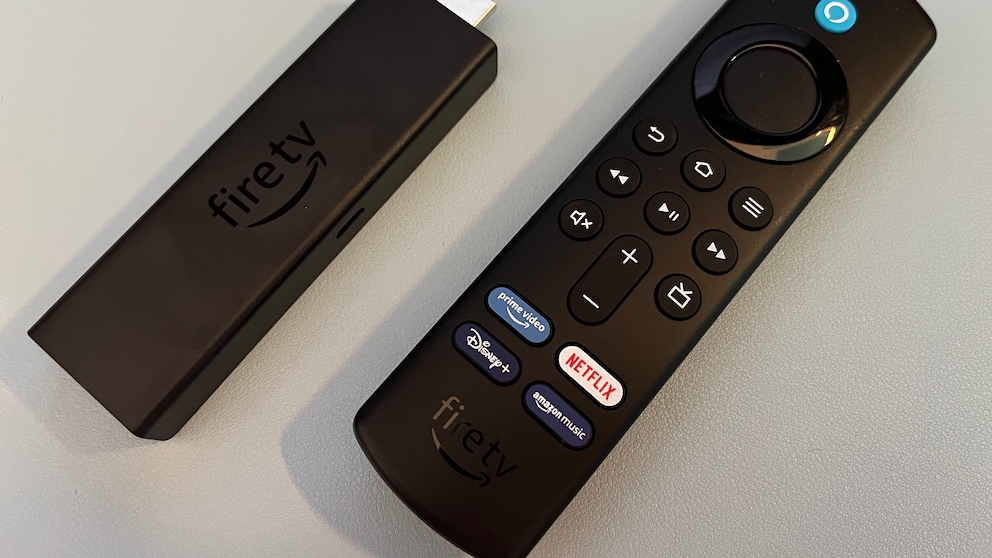
Many Amazon customers automatically opt for the 4K stick when streaming—after all, “more resolution” sounds like “better.” But this is where you can quickly fall into a cost trap: Amazon’s Fire TV Stick 4K often doesn’t deliver its supposed advantage.
For those who neither have premium subscriptions nor receive true UHD content, it ends up being a waste of money. A closer look behind the marketing promises shows why the cheaper HD stick is a much more sensible choice for the majority of viewers—and in which cases 4K is actually worthwhile.
Fire TV Stick HD Often the Better Choice
Amazon regularly offers its Fire TV sticks at significantly reduced prices. But not every deal is truly worthwhile. Many choose the Fire TV Stick 4K without knowing that the cheaper HD stick can offer the same benefits—at half the price. We explain why opting for the more expensive version often doesn’t pay off.
Amazon’s Fire TV Stick 4K is considered a powerful streaming device that combines platforms like Netflix, Sky, DAZN, YouTube, and traditional TV apps. However, the UHD resolution, for which buyers pay extra with the 4K model, rarely offers advantages in practice. The affordable HD version provides nearly all the functions—just without native 4K picture quality. But that hardly matters in everyday use.
Cheaper Often Doesn’t Mean Worse
Currently, the Fire TV Stick HD costs around 26 euros. In comparison, the 4K stick is often offered at prices starting from 39 euros. The price difference usually isn’t worth it, as many streaming providers only offer UHD in the more expensive premium subscription. So, those using Netflix or Disney+ with a standard subscription will only see a Full-HD picture even with a 4K stick.
Even with traditional television, it’s evident: UHD-quality content is generally rare on Fire TV sticks. Even providers like MagentaTV or HD+ do not deliver 4K images on their apps for Fire TV. For UHD TV streaming, you usually need special devices from the provider itself—such as the MagentaTV Stick.

Amazon Fire TV, Roku, Google TV Streamer, and Apple TV: A Comprehensive Overview of Streaming Sticks
Amazon Launches Prime Video Ultra and Raises Prices
No Real 4K Advantage with YouTube, Netflix & Co.
YouTube theoretically offers 4K content freely accessible, but the HDR function is not supported on Fire TV devices. Those who primarily use YouTube or Twitch in high quality may benefit from the 4K stick—but only to a limited extent. Additionally, older 4K models may struggle with modern video formats.
The Fire TV Stick 4K only offers a real advantage under certain conditions: These include a UHD-capable TV (at least 32 inches), a premium subscription with streaming services that offer 4K content, fast internet, and a stable Wi-Fi connection. Without all these, the cheaper HD model is a much better choice.
Also interesting: Never Operate the Amazon Fire TV Stick Without a Power Adapter
Buying Used Comes with Risks
We generally advise against buying used Fire TV sticks. Since June 2025, the Netflix app has partially stopped working on older devices—despite an active subscription. If you come across free pay-TV offers when purchasing from third-party providers, you should also be cautious. There is a risk of being involved in illegal offerings.
In summary, for those who stream cost-consciously and don’t value UHD, the Fire TV Stick HD saves real money—without having to forgo essential functions.