

October 17, 2023, 11:59 am | Read time: 6 minutes
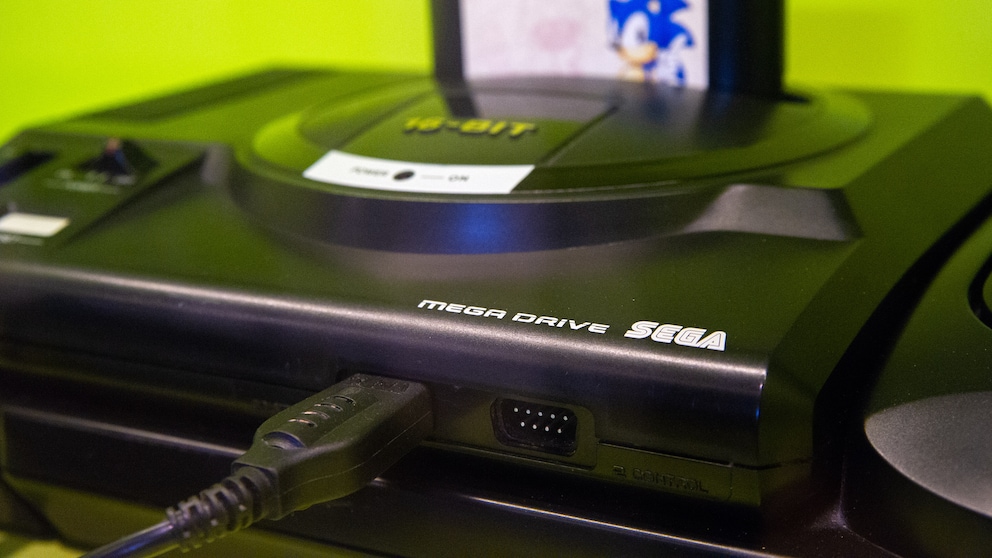
Today, everyone knows Nintendo and its consoles. However, there was once a strong competitor: the Sega Mega Drive. But the company couldn’t sustain its success with it. Why is that?
When it comes to console competition, many gamers think of the PlayStation vs. Xbox battle, or Sony against Microsoft. Yet, years earlier, there was a fierce struggle for dominance in the gaming console market. Back then, Nintendo and Sega faced off in the ring. Sega landed the first blow in 1988 with the Mega Drive, ushering in the 16-bit era for home gaming consoles. Nintendo followed suit two years later. Why did Sega still lose? Read the full story.
Vote on the most annoying iPhone feature!
From 8 to 16 Bit
By the late 1980s, the Amiga or Atari ST had long replaced the C64 in living rooms. Only home computer nostalgists still enjoyed the 8-bit block graphics of a C64. The new gaming standard was 16-bit. However, a pure gaming console with this new technical standard was not yet available.
At this time, Nintendo dominated the gaming console market with its Entertainment System, or NES for short, which still relied on 8-bit. The Japanese were already working on a modern successor, but due to their leading position, there was no rush in the development department.
The Japanese rival Sega was considered a top-notch manufacturer of arcade machines. The processor technology used in these machines was suitable for developing a 16-bit console. Therefore, Sega suddenly saw an opportunity to dethrone Nintendo. On October 29, 1988, Sega introduced its Mega Drive system, the first 16-bit gaming console. Did Sega win the console war against Nintendo with this? No, just one round.
Also interesting: PlayStation, Xbox, Switch, or Steam Deck – which console is worth it for whom
Bumpy Start for the Sega Mega Drive
In Japan, initially, no one was interested in Sega’s technical marvel. Gamers there preferred playing with Nintendo’s consoles, namely the NES and the also very popular Famicom. The flop at home was partly due to the limited number of games. Games like “Space Harrier II,” “Altered Beast,” and “Super Thunder Blade” did not yet fully exploit the graphical capabilities of the Mega Drive.
The situation was quite different in other parts of the world. Ironically, and especially in the U.S., Sega’s gaming console became a hit. However, Sega could not use the name Mega Drive there. Another American company owned the naming rights, so Sega opted for the name Genesis specifically for the U.S. market.
Even though the modest response at home was painful, Sega marketed its 16-bit gaming console all the more skillfully abroad. With catchy slogans, the Japanese console manufacturer managed to challenge Nintendo’s top spot, at least in the U.S. and many European countries.
Don’t want to miss any important news about gaming and consoles? Then subscribe to our channel on WhatsAppp!
From Sonic the Hedgehog to FIFA Soccer
An animal game hero contributed significantly to this. Sonic the Hedgehog quickly won the hearts of gaming fans. The cool blue hedgehog actually managed to make Nintendo’s superhero Mario look like an ordinary handyman.
Unlike Nintendo, Sega was generous with licensing. This pleased game developers, who eagerly released games for the Sega Mega Drive. As a result, the number of Mega Drive games grew rapidly.
Among the third-party developers of Mega Drive games was a company called EA Sports, then one of countless game producers. For the Sega Mega Drive, EA Sports developed games like “NHL Hockey,” “John Madden Football,” “PGA Tour Golf,” and “FIFA International Soccer.”
The sports games initially thrilled the gaming scene in the U.S. Later, EA Sports games celebrated great success worldwide–a trend that continues to this day. In the end, both Sega and EA Sports benefited.
Mega Drive, SNES & PlayStation
In total, nearly 900 games were released for Sega’s Mega Drive. The console sold over 30 million units. It was essentially a success story for Sega, but only for a limited time.
Because competitor Nintendo, of course, did not remain idle. The development of a 16-bit console took some time, but by the end of 1990, it finally arrived: The Super Nintendo Entertainment System, or SNES for short, entered the 16-bit era as the reigning champion.
There were some technical criticisms of the SNES, such as its slower main processor, whose clock speed did not match that of the Mega Drive. Fans in Japan didn’t care. Here, Nintendo defended its leading position with the SNES.
In other regions, such as the U.S. or Europe, Sega and Nintendo fought head-to-head for the throne in the gaming console market. But the duel soon turned into a three-way battle. By the end of 1994, Sony released its PlayStation, shaking up the console market significantly.
Also interesting: The best gaming monitors – and what to look for when buying

What Ever Happened to the Video Game Maker Sega?
The GameCube Was Meant to Change Everything–But Nintendo Failed
Sega Mega Drive Fades Away Quietly
Meanwhile, Sega tried to defend its market position. But in further developments–keyword Sega Saturn and Dreamcast–the Japanese console manufacturer became increasingly entangled. The 16-bit pioneer soon couldn’t keep up with the rapid pace on a technical level. To bring the Mega Drive system up to date, Sega regularly offered add-on modules. However, the bulky additional devices were not well received by gamers.
In 1997, Sega ceased development of the Mega Drive and shortly thereafter exited the console business entirely. What remains are memories of games like “Disney’s Aladdin,” “Shinobi III: Return of the Ninja Master,” “Thunder Force,” “Gunstar Heroes,” or “Streets of Rage,” as well as, of course, the blue hedgehog Sonic the Hedgehog, the mascot and longtime flagship of the Sega Mega Drive.
How Is Sega Doing Today?
Sega has not disappeared from the gaming business. After withdrawing from the console business, the company focused on software and arcade machines. Its in-house titles also appeared promptly on other consoles, primarily the PlayStation.
Despite some ups and downs along the way, Sega remains a significant player in the gaming world today. The company also recently celebrated success with the live-action adaptation of “Sonic.” In 2019, the Sega Mega Drive Mini, a nostalgic reissue of the device, was released. And even though the Mega Drive couldn’t sustain its success in the long run, many still recognize the name and look of the iconic gaming console today.