

July 26, 2025, 2:22 pm | Read time: 4 minutes
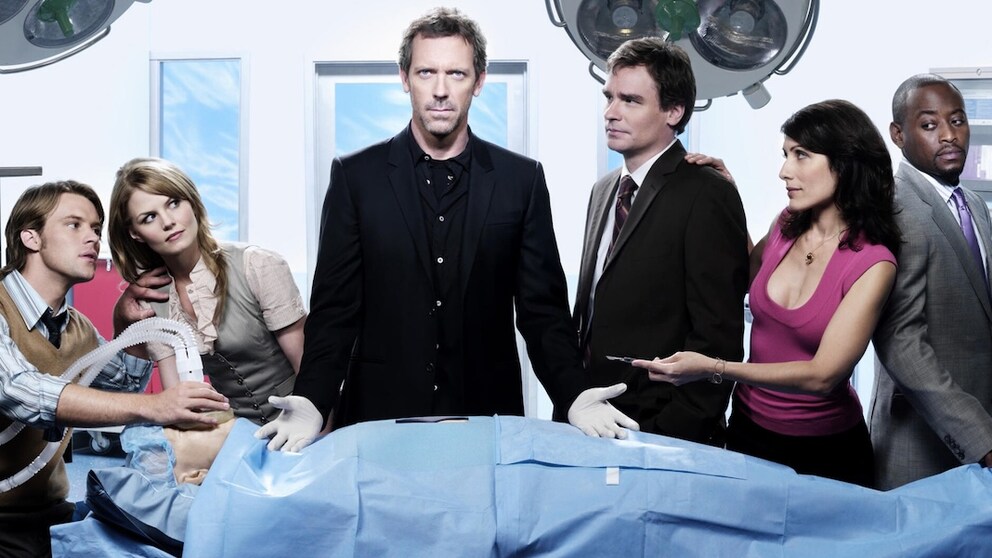
For nearly eight years and 177 episodes, Gregory House, better known as “Dr. House,” tackled the most extraordinary diseases of his patients. Now, the fictional TV character has become the focal point of a scientific study. A team led by Denis Čerimagić, a neurologist and assistant professor at the Dubrovnik Polyclinic, has delved deeply into the popular TV series. What the doctor and his team have discovered, he shared with TECHBOOK.
The idea for the study came to Denis Čerimagić because he and his colleagues regularly discussed the cases of “Dr. House.” Interest in the TV series has been particularly high among medical students since its first broadcast from 2004 to 2012. In Germany, there was even a seminar titled “Dr. House Revisited–or: Would We Have Saved the Patient in Marburg?”
“It makes every student proud when watching the series with family and being able to diagnose before ‘Dr. House’ does,” explains Denis Čerimagić, highlighting the fascination with the TV series, especially in medical circles.
Learning from “Dr. House’s” Mistakes
Of course, the series is rife with errors. In every episode, things happen that hopefully would never occur in reality. For instance, each member of the medical team performs tasks outside their specialty. “My team and I focused on neurological topics,” explains the physician. “The results of our study can never be conclusive because doctors from other specialties would likely find many more errors than we neurologists did.”
The Hippocratic Oath serves as the foundation for what is known today as “medical professionalism,” including confidentiality, accountability, and selfless action. “We can be sure that Hippocrates would not have approved of the unconventional behavior of the fictional ‘Dr. House,’ despite his diagnostic brilliance,” Denis Čerimagić notes with a wink.
Series as Educational Material
Nevertheless, practicing doctors and especially aspiring medical professionals can learn something from “Dr. House’s” methods. According to Denis Čerimagić, this includes recalling the enthusiasm and idealism when taking the Hippocratic Oath. These two virtues particularly characterize “Dr. House,” even though the TV doctor left the beginning of his medical career far behind.
Moreover, since the COVID-19 pandemic, medical education increasingly relies on virtual teaching and online learning methods. In this context, fictional TV series can also be insightful. “There is a growing opinion that these series can be useful for training in targeted anamnesis, clinical examination, and the application of the principles of medical ethics and professionalism.”

Cult Series Returns! What the Trailer Reveals

These Are the 10 Longest-Running TV Series Still Airing
Rare Medical Phenomena
Often, individual episodes serve as examples of how things should not be done. But not only that. Since “Dr. House” typically deals with extremely rare medical phenomena, the series can provide unusual approaches for diagnostics. For example, in season seven, episode 11, it addresses a rare cobalt and chromium poisoning caused by a hip prosthesis.
In season five, also episode 11, the focus is on the “Beccaria sign.” “Since this name was unknown to us until then, we decided to check if it has a medical basis,” reports Denis Čerimagić. “After extensive research, we found that this symptom corresponds to the occurrence of pulsating headaches in pregnant women at the back of the head, accompanied by dizziness and drowsiness.”
Also interesting: Video Streaming Services in a Big Comparison
This again shows that while “Dr. House” initially satisfies the need for entertainment, the scriptwriters put a lot of effort into writing the episodes. With the “Beccaria sign,” they have brought a long-forgotten medical phenomenon back to memory.
Focus on Medical Errors and Teamwork
What the series conveys and why it is also educational for medical training: “The path to a final diagnosis is often complicated. It takes time to piece together all parts of the clinical mosaic,” emphasizes Denis Čerimagić. Medical errors are part of clinical practice, adds the neurologist. “If ‘Dr. House’ is used for training medical professionals, a focus should be on recognizing medical errors and illogic. Another should be on teamwork among doctors and the interdisciplinary approach to diagnosis and treatment.”
Denis Čerimagić wants to leave a cautionary note for viewers of TV series like “Dr. House,” which are set in hospital environments. “Although such series primarily serve entertainment, their partially fictional content can lead viewers and thus potential patients to have unrealistic expectations of health services.”
Here, too, doctors can learn from “Dr. House” how patient communication should not be conducted. More empathy and less cynicism, along with clear communication about what is medically possible and what is not, should always be the guiding principle.