

January 1, 2026, 3:25 pm | Read time: 8 minutes
There are series that have been running since the time when TV stations scheduled broadcasts via program guides. If you weren’t in front of your TV, then you were out of luck. Repeats were out of the question for an indefinite period. TECHBOOK went on a search and found some very old series gems that are still airing today.
Rank 10: Polizeiruf 110 (East Germany, West Germany – Since 1971)
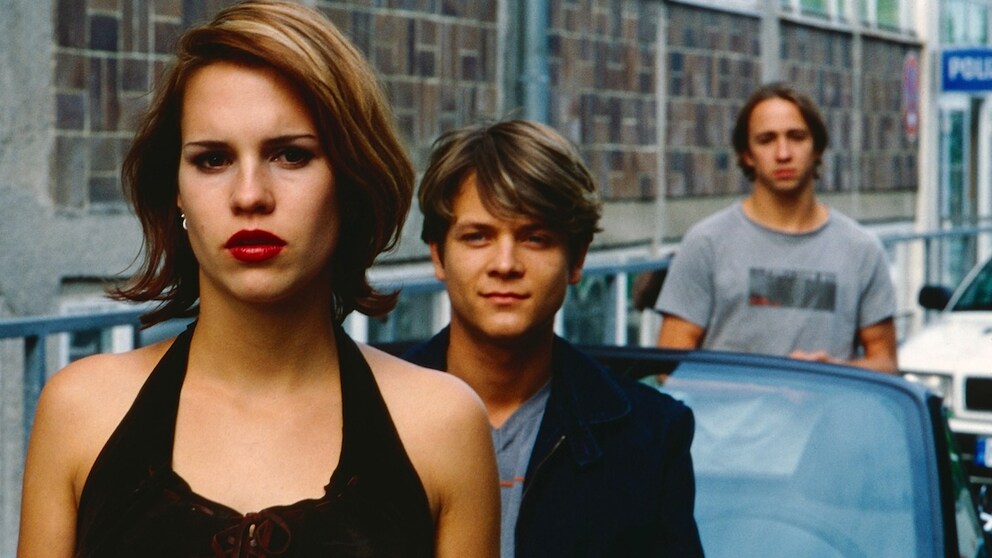
The country no longer exists, but the most famous East German crime series is still running. On June 27, 1971, Lieutenant Peter Fuchs and his assistant, Vera Arndt, began their investigations in “Polizeiruf 110” on East German television. In the first episode, the two police officers deal with a post office robbery in which 70,000 East German marks were stolen.
Like “Tatort” in West Germany, “Polizeiruf 110” developed into a crime series that captivates viewers. To this day, detectives are on the hunt for criminals. The current cases air several times a year at the usual TV crime slot, Sunday evenings at 8:15 p.m. on ARD.
Also interesting: Police Series That Changed the Genre Forever
Rank 9: Tatort (West Germany – Since 1970)
A good half-year before the East German “Polizeiruf,” on November 29, 1970, a taxi drove to Leipzig in the new crime format “Tatort” on ARD in West Germany. No one could have foreseen that “Tatort” would become a real brand. From the beginning, there were fixed investigators from the individual ARD broadcasting stations. In the early days, these were mostly staid officers in trench coats.
An early exception was customs investigator Kressin, who was on the trail of criminals for WDR in James Bond style from 1971, before being replaced by the calm trench coat-wearing Inspector Haferkamp from Essen. He was followed in the early 1980s by perhaps the most famous and then-controversial “Tatort” character, Inspector Horst Schimanski from Duisburg. Sunday evening at 8:15 p.m. is a fixed “Tatort” slot. There are now fan clubs nationwide that watch new episodes together in front of the TV.
By the way, strictly speaking, the designation of “Tatort” is at least debatable. Nevertheless, many perceive the crime film series as a series, which is why we have included it here.
Rank 8: Sesame Street (USA, Germany – Since November 1969)
Children’s shows are perennial favorites on TV worldwide. On November 10, 1969, “Sesame Street,” one of the most famous children’s shows, first aired on TV screens. The mix of talking puppets, actors, and animated films continues to fascinate children around the world. In Germany, Sesame Street has been airing since 1973.
The puppets were conceived by a certain Jim Henson. He later developed another successful format with “The Muppet Show,” this time aimed more at an adult audience. Over the years, the German “Sesame Street” has increasingly diverged from the U.S. original. While Big Bird, Count von Count, Grover, Kermit, or Cookie Monster used to set the tone, Samson and Tiffy soon became the German star figures. Today, Elmo leads children through “Sesame Street.” The format airs in over 140 countries worldwide.
Also interesting: Netflix Grabs an Absolute Cult Series
Rank 7: Sazae-san (Japan – Since October 1969)
In Japan, the anime series “Sazae-san” started on October 5, 1969. TV viewers have been experiencing the daily life of the Fuguta family for more than 50 years. At the center of all stories is Sazae, a lively housewife and mother. Together with her husband Masuo, son Tarao, and her parents, the family lives under one roof. Sazae’s brother Katsuo and sister Wakame expand the family circle.
The episodes revolve around everyday stories, small misunderstandings, and neighborhood relationships. “Sazae-san” is the longest-running anime series and conveys traditional Japanese values and family cohesion. The regular broadcast time is Sunday evening. In Japan, the characters are famous nationwide. Although the series has been running for 56 years, the characters do not age. “Sazae-san” is based on a manga by the famous Japanese artist Machiko Hasegawa.
Rank 6: Days of Our Lives (USA – Since 1965)
A classic American soap opera debuted on November 8, 1965. The daily soap “Days of Our Lives” is set in the fictional town of Salem. Initially, the series tells the story of the wealthy Horton family. To add more variety to the stories, the writers introduced the Brady family, who live in somewhat simpler circumstances, over the years.
It doesn’t take much imagination to see what tensions arise from this setup. And that’s exactly what happens: dark family secrets, forbidden romances, and dramatic twists dominate the daily stories about the lives of the Hortons and Bradys. After nearly 15,000 episodes, TV viewers still can’t get enough.
Rank 5: Doctor Who (United Kingdom – Since November 1963)
Those who associate science fiction more with “Star Trek” or “Star Wars” may have never heard of “Doctor Who.” The BBC aired the first episode of “The Doctor,” who is not actually a doctor but can travel through space and time in a wondrous way, on November 23, 1963. “The Doctor” hails from the planet Gallifrey and travels in his TARDIS, a time machine disguised as a blue police call box.
Conveniently, “Doctor Who” can regularly regenerate his body. This spares the writers unnecessary dramatic explanations for the regular cast changes. “The Doctor” and his companions are in constant battle against aliens and dictators. With its mix of adventure, humor, and philosophical questions, “Doctor Who” has fascinated TV viewers for over six decades, primarily in the United Kingdom.
Rank 4: General Hospital (USA – Since April 1963)
A hospital series cannot be missing from such a ranking. In the American format “General Hospital,” a patient was first under the knife in the operating room on April 1, 1963. However, the episodes focus the least on medical stories. Medical emergencies and dramatic patient fates serve only as a framework to extensively stage the romances between doctors and other hospital staff.
The fictional General Hospital is located in the equally fictional Port Charles. The series reached its preliminary peak in the 1980s. At that time, the popular TV characters Luke and Laura, played by Anthony Geary and Genie Francis, got married. Over 30 million viewers watched this wedding episode. “General Hospital” has won countless TV awards in the U.S., including the Emmy.
Rank 3: Coronation Street (United Kingdom – Since 1960)
Anyone who remembers “Lindenstraße” essentially knows “Coronation Street” from the United Kingdom. This TV series started on December 9, 1960, on the BBC and served as the basis for Hans W. Geißendörfer’s series format “Lindenstraße” 25 years later. However, the stories of the residents there were told by 2020. In “Coronation Street,” British viewers can still look into the living rooms of the families living there. Here, too, it’s about a realistic depiction, in this case, of British society.
The focus is mainly on working-class people who regularly meet at the “Rovers Return” pub. The series often deals with the daily problems of everyday life, family dramas, and neighborhood conflicts. The character Ken Barlow, portrayed by actor William Roache, is an icon of the series. He has played his role continuously since the first episode. Like “Lindenstraße” on the WDR studio grounds, “Coronation Street” also exists as a permanent outdoor set. Over the decades, it has developed into a tourist attraction.

Netflix Snags Iconic Cult Series
This Series Now Has 16,000 Episodes
Rank 2: Unser Sandmännchen (East Germany, West Germany – since 1959)
Who doesn’t know it: The Sandman. Initially developed as a radio format in the 1950s, the first TV episode aired on November 22, 1959, on the Deutscher Fernsehfunk (DFF), the state broadcaster of East Germany. Even in this early phase of television, there were East and West German versions of the Sandman. All episodes are staged using the so-called stop-motion technique.
In both formats, the Sandman travels in fantastic vehicles around the world, experiences imaginative stories, and wishes the young audience a good night and sweet dreams at the end of each episode. With the end of East Germany, the East Sandman continues to live on TV. The character has accompanied generations of children to sleep, making the Sandman a significant part of German TV history.
Rank 1: Blue Peter (United Kingdom – Since 1958)
The leader in this ranking went on air almost exactly a year before the Sandman, on October 16, 1958. “Blue Peter” is not a classic TV series with self-contained stories. The British series is a colorful mix of “Sendung mit der Maus” and “1, 2 oder 3.” Each episode revolves around craft instructions and various competitions, garnished with reports and interviews.
“Blue Peter” combines education and entertainment in a child-friendly and playful way. The so-called Blue Peter badge, with which children are awarded by the hosts for special achievements, is legendary. This format has inspired several generations of British children and has been showered with TV awards for its educational quality. Its longevity especially shows the continued relevance of “Blue Peter” even in today’s more digitally oriented world.