


May 9, 2024, 9:54 am | Read time: 4 minutes
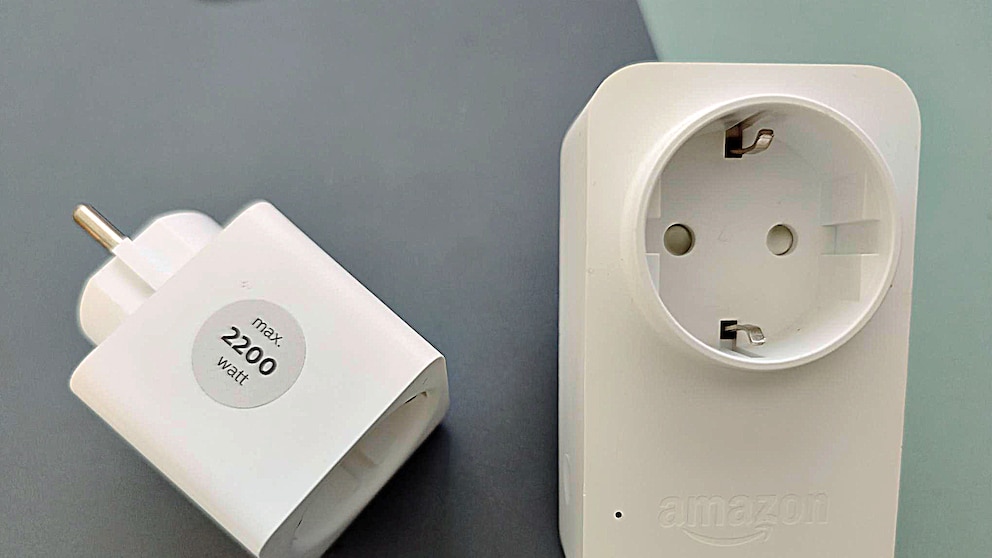
If you want to make your home a bit smarter without much effort, you can opt for smart plugs. Without a complicated smart home system, they offer the ability to turn lights on and off via voice or smartphone and set time-based rules for device control. However, when choosing the right model, there are a few points to consider.
The selection of smart plugs is large. They are available individually or as part of a more comprehensive smart home system. Their utility is nearly identical: They are a simple way to network your home without much effort. Lamps, electronic blinds, coffee machines, and more can be automatically controlled through them. The timer feature also helps smart plugs save electricity.
Overview
Devices are mostly controlled via an app, but some also offer connections to separate remote controls or other control devices such as motion sensors. Users should pay attention to how the smart plugs communicate. Wi-Fi is a straightforward option, but there are also models that use radio or DECT. This is confirmed by TÜV-Süd expert Florian Hockel. Each system has its advantages and disadvantages.
Smart Plugs with Wi-Fi
Connecting and controlling smart plugs via Wi-Fi is probably the simplest solution. Almost every user already has a Wi-Fi router at home and can easily integrate the devices. One advantage is that you don’t need to be within radio range to control the plugs. This usually works remotely with the help of an app provided by the manufacturer. Smart Wi-Fi plugs are available from Hama, as well as Ikea, TP-Link, Eve, and many other manufacturers.
The disadvantages: The plugs could be hacked via Wi-Fi. And they sometimes consume a lot of energy due to constant communication with the network. According to the TÜV expert, it is also possible that the Wi-Fi could be overloaded by many plugs—especially in apartment buildings. This is partly because many models use the already heavily loaded 2.4 GHz band.
Read also: The Best Smart Plugs for Your Home
The Case for the Radio System
Technically, Wi-Fi plugs are also radio plugs. However, the devices can also communicate via Bluetooth or specific smart home standards like Zigbee. The latter is one of the most popular radio standards in this area. Unlike Wi-Fi plugs, users need a separate central control unit, often called a hub, for pairing. This can be a separate small box from Philips Hue or a smart home system from Bosch or Magenta, for example. Some Amazon Echo speakers also have such a hub integrated.
Zigbee devices have the great advantage of expandability. There are countless devices on the market that can be integrated into a system and communicate with each other. Additionally, products can be used across different manufacturers. Such smart radio plugs are considered safer than the Wi-Fi option, according to the expert. They also consume less power.
The disadvantages: The setup is a bit more complicated. And this system is not immune to interference either. The plugs send their signals on specific radio channels and sometimes use their own transmission protocols. Theoretically, anyone who transmits on the right frequency (and is close enough) can control the devices. This could be neighbors, for example.
Read also: Beware of Smart Home Devices with Batteries!

Unprecedented! AVM Introduces Fritz!Smart Energy 250 at IFA
Fritzbox 6690 Pro Unveiled with Wi-Fi 7 and Smart Home Hub
DECT as an Alternative?
DECT (ULE) is another way to connect smart devices. Many may be familiar with DECT primarily from telephones. However, the manufacturer AVM uses this standard for its smart home solution. The additional term ULE stands for “Ultra Low Energy” and indicates energy-saving operation.
The spread of smart plugs with DECT (ULE) is relatively low, and the selection of models is limited. Besides AVM, Panasonic and Gigaset also offer suitable devices—even though Gigaset’s smart home system has been withdrawn from the market because the manufacturer had to file for bankruptcy. AVM even offers an app for remote control via the Fritzbox’s remote access. While some settings are possible, the DECT solution is not as convenient as the other two systems.
Expert Tip: Check Compatibility
If you already have a smart home system, you can theoretically connect it with smart plugs. However, you should check beforehand whether the systems are compatible, says TÜV expert Florian Hockel. Most smart home providers offer their own plugs as an extension, where users can be sure they are compatible. It is more challenging when combining different systems. Here, users should definitely seek advice or inquire with the manufacturers.
With material from dpa