


November 24, 2026, 8:32 am | Read time: 8 minutes
With the Echo Time, Amazon expands its Echo family with a device specifically designed for the nightstand. A round display, Alexa, smart home hub, and sleep sensors aim to bring the classic clock radio into the smart home. TECHBOOK tested it and reveals more details in the review.
The new format of the Echo Time is unusual and differentiates it more from other Echos than it might seem at first glance. However, Amazon charges accordingly for the additional features. The key question is whether the smart alarm clock offers enough added value in everyday life compared to a simpler Echo Spot.
Overview
Echo Time is larger than a classic alarm clock
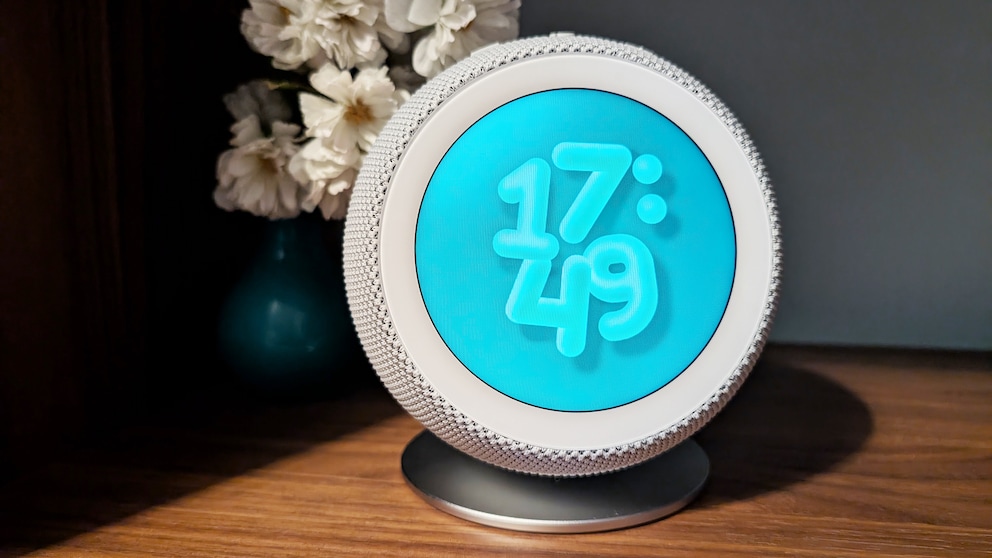
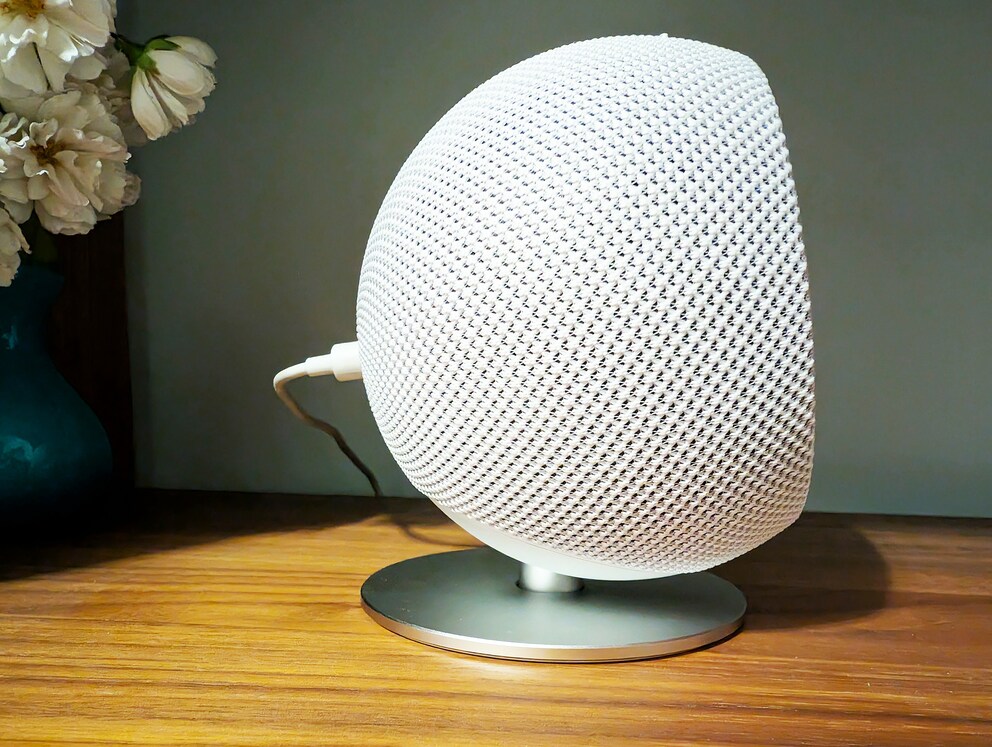
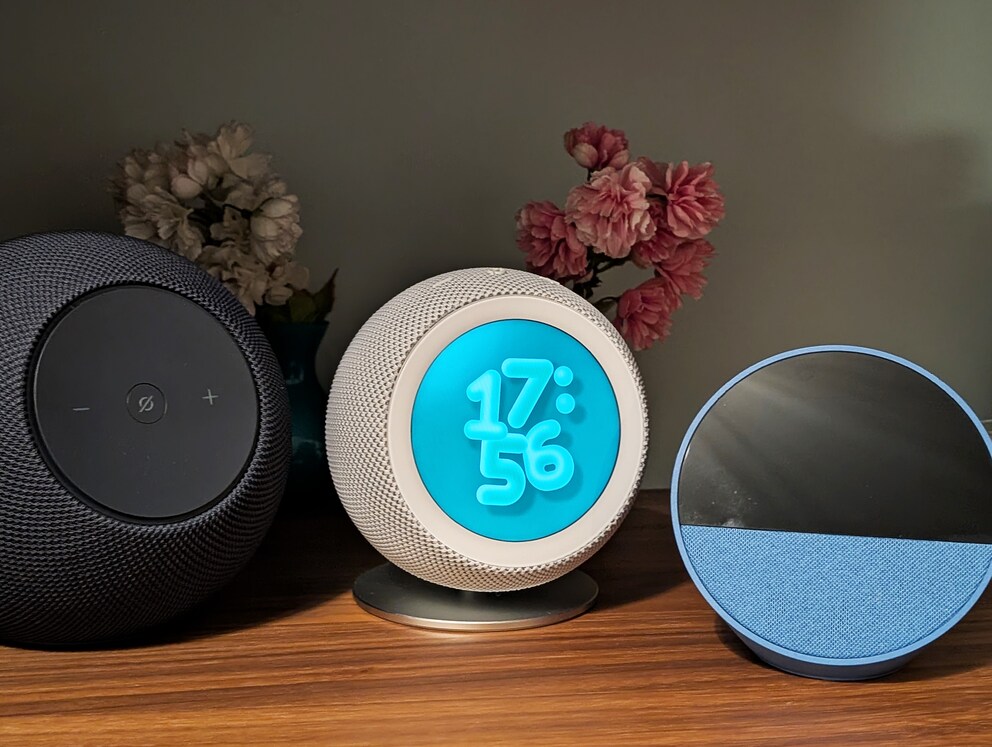
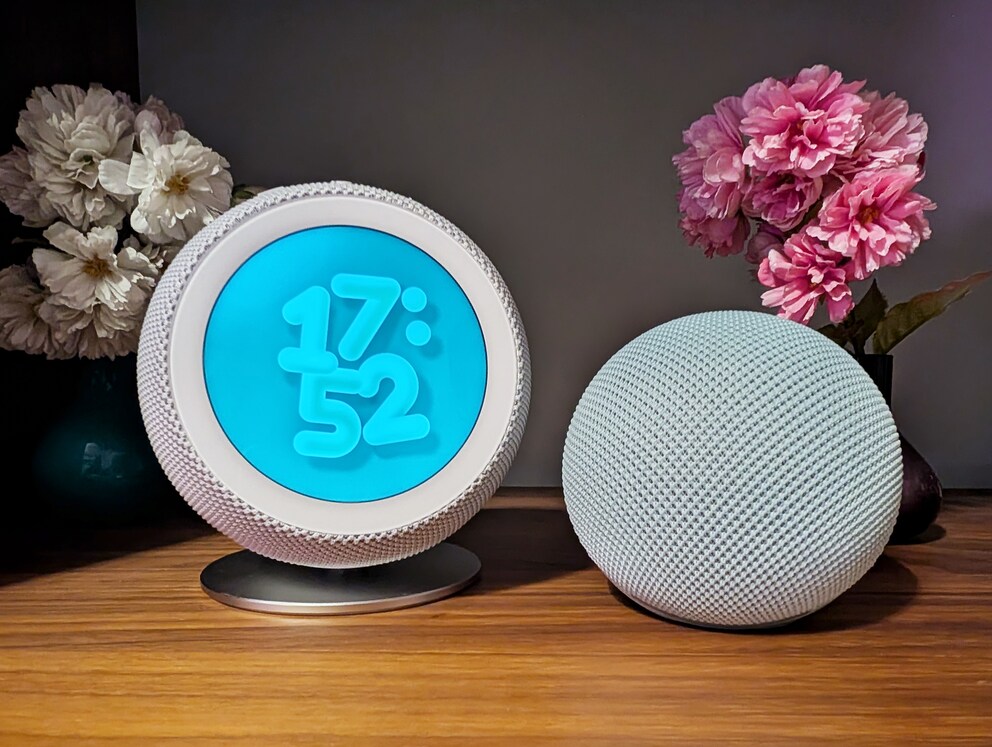
In glacier white, the Echo Time appears pleasantly understated. With a width of about 5 inches, the device is noticeably larger on a smaller nightstand than a classic digital alarm clock.
The combination of fabric and display is visually aligned with other Echo devices. However, the centerpiece is the circular 3.2-inch touchscreen. It can display various analog and digital clock faces, weather information, and smaller Alexa notifications. Hundreds of designs are available for selection. If desired, the Time can be placed on an optionally available stand that magnetically attaches to the base of the Echo, allowing it to be tilted at different angles. This way, the viewing angle on the nightstand can be better adjusted.
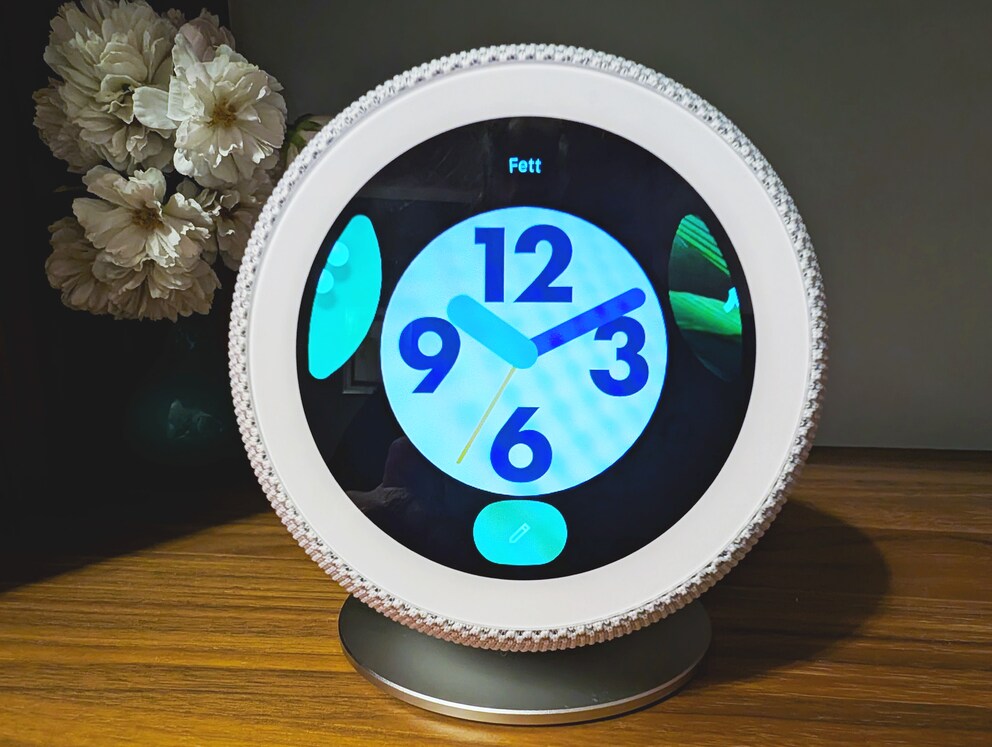
During the day, the display is sufficiently sharp and bright, but it does not reach the level of good OLED displays in terms of black representation and contrast. At night, the Echo Time automatically reduces brightness and blue light. This is especially useful for a display that is only a few inches from the bed. Before the actual alarm, the screen can also simulate a sunrise. In combination with compatible smart home lamps, a complete wake-up routine can be created.
The Echo Time does not have a camera. For a device explicitly intended for the bedroom, this omission seems sensible. The microphones can also be deactivated via a physical button.
Display operation instead of pure voice control
The screen is not just for display. Unlike Echos without a display, not all functions have to be controlled via Alexa. Some settings and information can be accessed directly through the touchscreen. This fits well with its location. Especially in the morning or late at night, it’s more convenient to tap a function briefly rather than giving a voice command for every action.
Nevertheless, Alexa remains the central access point for functions. Setting an alarm, starting music, retrieving weather information, or controlling smart home devices is usually faster by voice.
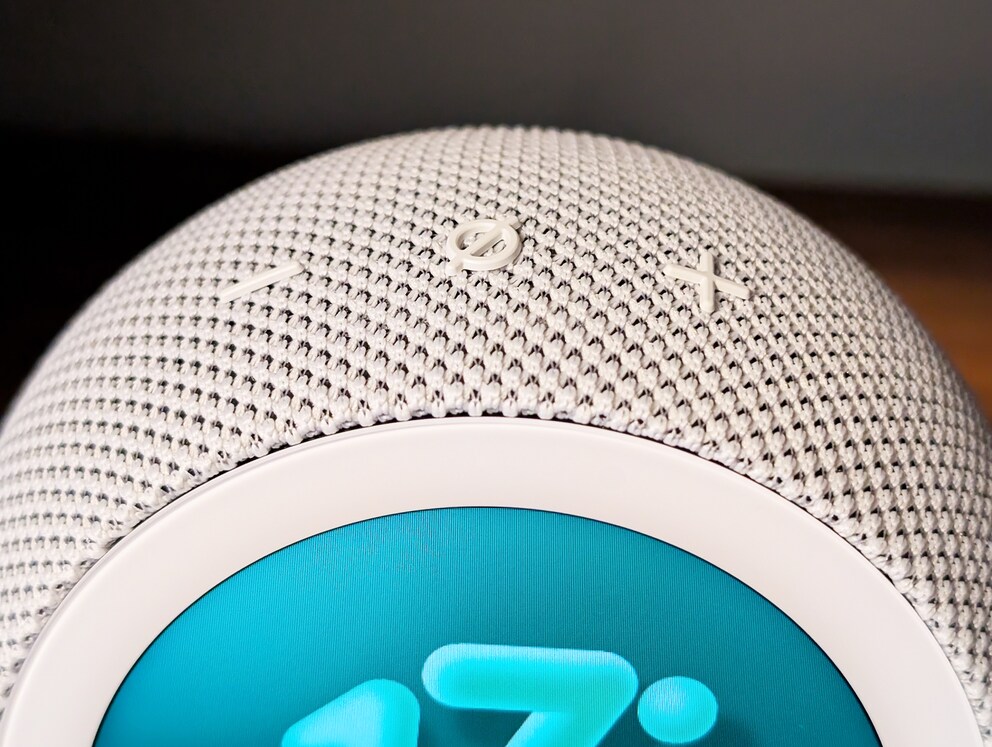
The physical deactivation of the microphones is also well implemented. However, this has consequences for the sleep sensors: If the microphones or the corresponding detection are deactivated, certain intelligent functions are no longer available.
Also interesting: Amazon Echo Studio (2025) review – new look, better sound
Setup via the Alexa app
The setup process is hardly different from other Echo devices. After connecting, the Echo Time is added via the Alexa app. This is followed by Wi-Fi connection, room assignment, and optionally music and smart home services.
In general, the setup is quick, especially if settings from Echos already integrated into the network are adopted. However, the Alexa app itself has become less clear. Over the years, numerous device classes, routines, services, and privacy settings have been added. Especially with Omnisense and more extensive smart home automations, some searching may be necessary.
The Echo Time supports Zigbee, Matter, and Thread and can function as a Thread border router. This allows numerous smart home devices to connect directly to Alexa without necessarily needing another hub.
The Echo Time monitors sleep
The most unusual feature of the Echo Time operates when the user is asleep. Omnisense combines presence and temperature sensors with ultrasound. This allows the Echo Time to detect breathing movements or the distance of the sleeping person. A smartwatch does not need to be worn for this.
It’s not just about recording sleep. The Echo Time can try to determine a more favorable time to wake up. A window of 10 to 60 minutes before the actual alarm time can be defined. If the system detects a lighter sleep phase during this period, the alarm can be triggered earlier. The wake-up tones start relatively gently and become more energetic with each snooze phase. Up to four repetitions are possible.
The concept is interesting but should not be confused with a medical sleep analysis. The accuracy of sleep phase detection has not yet been comprehensively independently tested. Those who must get up at a specific minute in the morning can disable the intelligent alarm and continue using a traditional alarm clock.
Privacy is inevitably a concern with such a device. The sleep analysis is optional and can be deactivated. This is particularly important because a sensor permanently placed next to the bed naturally captures more sensitive data than an Echo in the kitchen.
Can the Echo Time play music?
Music is not the new Time’s greatest strength. It plays voices, podcasts, audiobooks, nature sounds, and soft background music adequately, and it sounds fuller and more bass-rich than the smaller Echo Dot. However, the limits become audible with more demanding music pieces. The bass can seem somewhat soft and not very differentiated. In the highs, there is sometimes a lack of brilliance and detail.
For a nightstand speaker, this is entirely sufficient. However, given the price, the sound quality is only average. Those primarily looking for a good speaker for music should not choose the Echo Time solely because of its larger housing.
Echo Time is also a smart home hub
The device becomes more interesting due to its smart home capabilities. Zigbee, Matter, and Thread are included, and the Echo Time functions as a Thread border router. Depending on the technology used, lamps, sockets, sensors, thermostats, or locks can be directly integrated.
A practical application is directly in the bedroom. The sunrise function of the display can be combined with compatible lamps, so not only the screen but the entire room gradually becomes brighter.
However, the Echo is not a complete replacement for manufacturer hubs in every case. Specific scenes, firmware updates, and advanced device functions may still require the respective manufacturer’s app or bridge.

Amazon Echo Studio (2025) Review–New Look, Better Sound

Smart Window Sensors Save Heating Costs and Enhance Security
Echo Time or Echo Spot?
This is where the purchase decision becomes particularly interesting. After all, Amazon already offers an Alexa alarm clock with the Echo Spot.
The Echo Spot’s display measures 2.83 inches and occupies only part of the front. The new Echo Time offers a full, round 3.2-inch display. It also features adaptive night display, more extensive clock faces, contactless sleep detection, and a full-fledged smart home hub. However, this does not automatically mean that the Echo Time is the better choice for everyone.
Those who only want to see the time and weather, use Alexa, listen to some music, and be woken up in the morning can get these basic functions with the Echo Spot. The Time’s additional cost is primarily worthwhile if sleep sensors and smart home functions are actually used.
Also interesting: Amazon Echo Dot, Pop, and Spot – which is suitable for whom?
Conclusion on the Echo Time
The Echo Time is more than an Echo with a clock on the front. Display, alarm functions, sleep sensors, and smart home technology together create a coherent device for the bedroom.
Especially the combination of contactless sleep detection and intelligent waking sets it apart from cheaper Echo models. It is also positive that Amazon has omitted a camera and provides a physical way to turn off the microphones.
However, the price is a consideration. 214.99 euros is a lot for a device whose sound is only average and whose most interesting special feature still needs to prove its long-term reliability.
The Echo Time is therefore mainly worthwhile for users who are actually looking for an intelligent sleep and wake assistant. Those who only want Alexa, the time, and a regular alarm clock on the nightstand will find the Echo Spot a more sensible solution.
Advantages of the Echo Time
- well-thought-out concept specifically for the nightstand
- 3.2-inch touchscreen
- automatic night display
- sunrise function
- optional smart alarm without wearable
- no camera
- Zigbee, Matter, and Thread integrated
- well-suited for audiobooks, podcasts, and background music
Disadvantages of the Echo Time
- high MSRP at 214.99 euros
- sleep phase detection not yet comprehensively independently tested
- only average sound for the price
- not a replacement for a full-fledged smart display
- comparatively large housing
- optional stand costs extra