


November 25, 2026, 7:02 am | Read time: 9 minutes
For years, the Echo Dot has been one of the simplest ways to bring Alexa into a room. However, with the Echo Dot 2026, Amazon is changing this concept more than the familiar casing might suggest.
The new Echo Dot 2026 aims to be more than just an affordable Alexa speaker. Zigbee, Matter, Thread, new sensors, and a more powerful processor turn it into a small smart home hub. It also promises more bass and better voice recognition. At the same time, the price rises significantly. This raises a crucial question for owners of the fifth-generation Echo Dot: Is the upgrade worth it? We explored this in our test.
Overview
Amazon Stays True to the Sphere Design
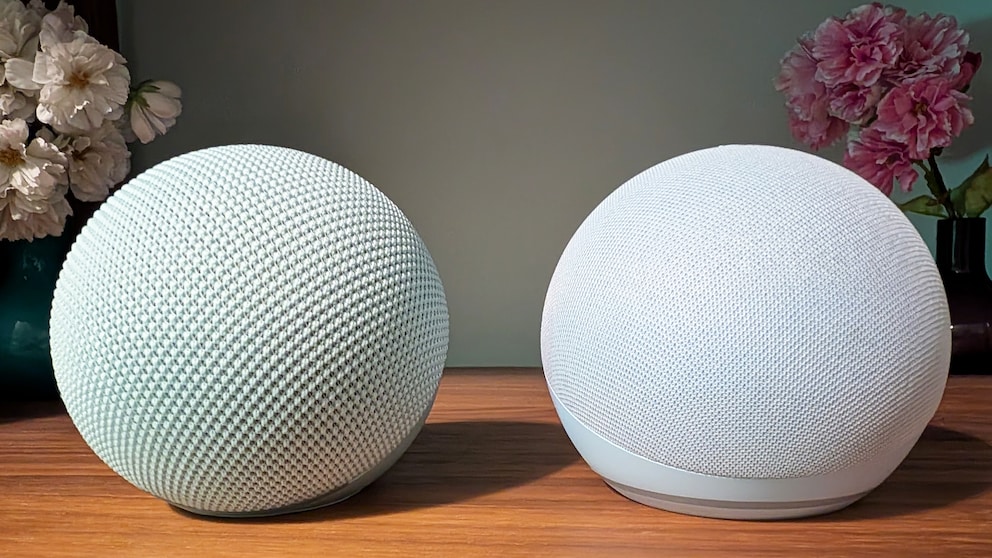
The familiar shape is essentially retained. The new generation is also a small, fabric-covered sphere. In agave green, the speaker appears slightly more striking than the classic black and white versions, but the muted color keeps it suitable for living rooms. It’s nice that the power adapter also comes in the same color, making the overall package more cohesive.
The dimensions have changed little compared to the direct predecessor. The current model is slightly taller than the fifth generation, but the footprint remains practically the same at approximately 9.9 by 9.9 centimeters.
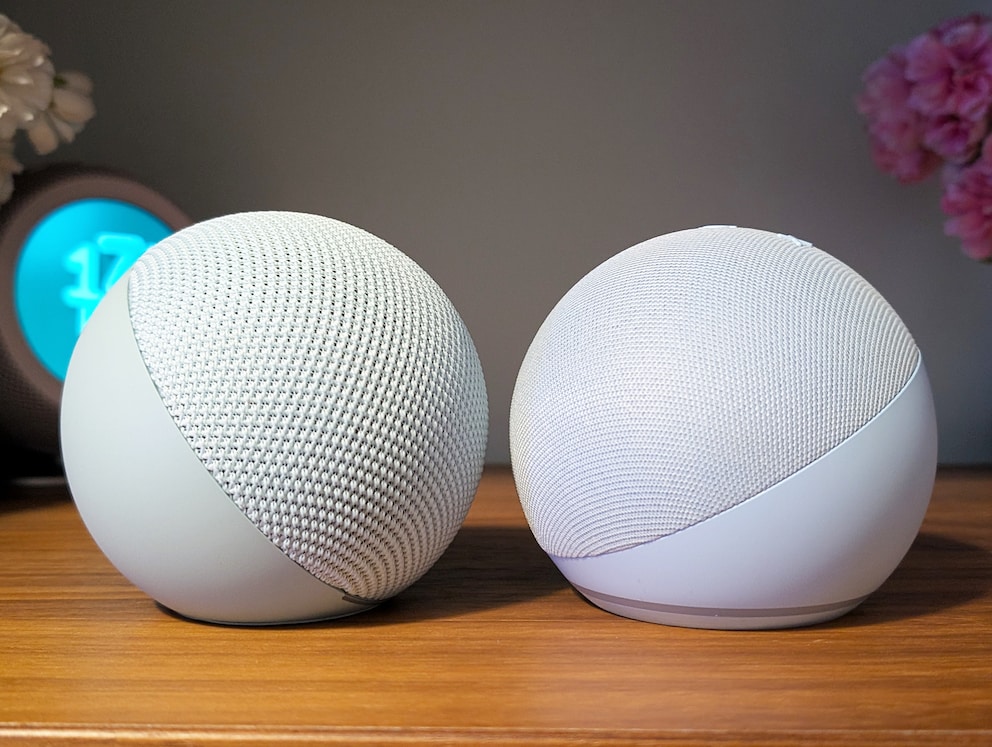
The change in the Alexa light is more noticeable. The previously base-circling light ring has shrunk. The current model only has a small, arc-shaped light strip at the front. This looks more subtle but makes the device’s status a bit harder to discern from some angles.
The power supply still seems a bit outdated. A USB-C port is missing. Instead, the Echo Dot 2026 continues to use its own power adapter, with a fixed cable that is not particularly long at 1.5 meters. There is also no analog audio output. However, the power cable is compatible with the fifth generation. If it’s installed behind a cabinet, you only need to swap the Dot instead of the entire cable.
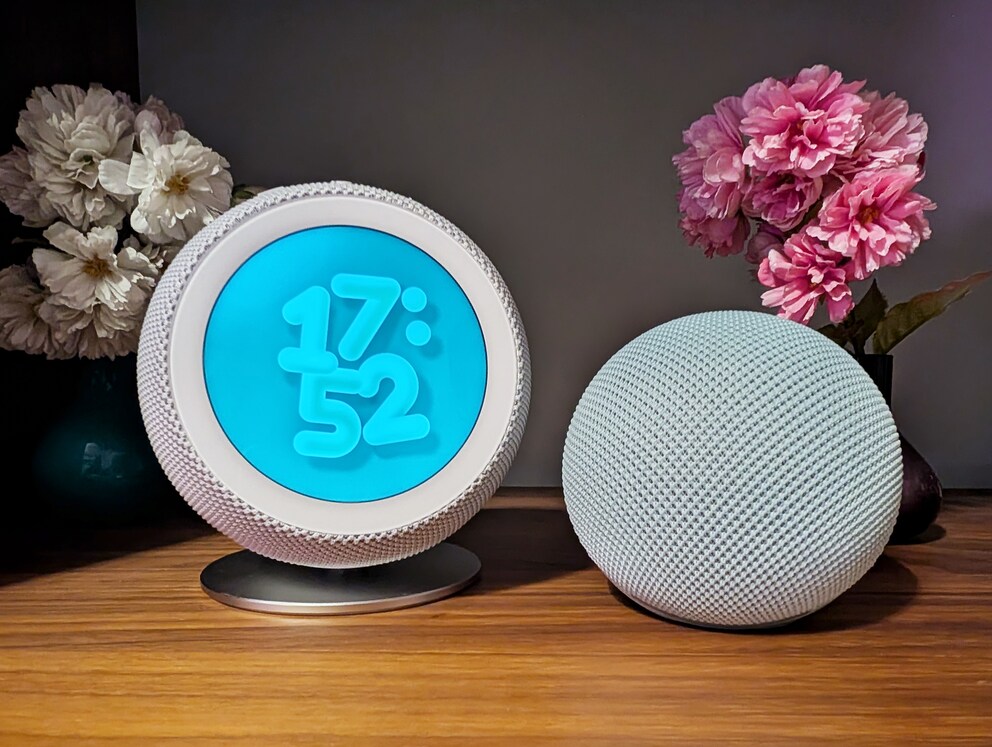
Also interesting: Amazon Echo Time in the test! How smart does an alarm clock need to be?
Echo Dot 2026 Buttons Are Hidden
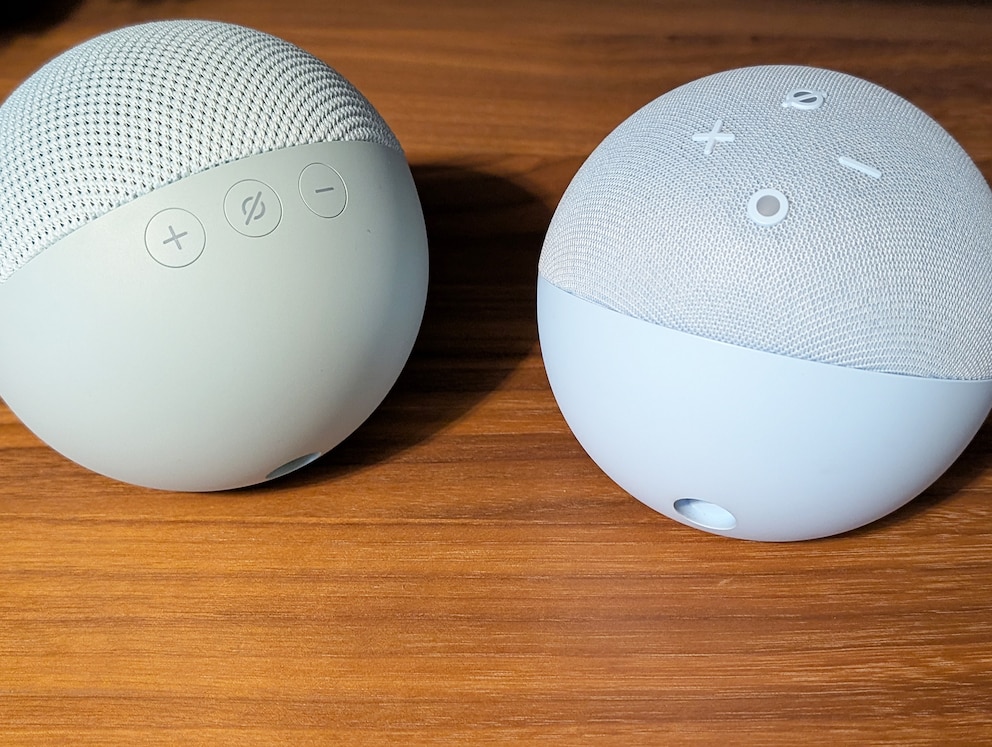
The biggest change in operation becomes apparent only when directly compared to the predecessor. On the fifth-generation Echo Dot, the four rubber buttons for action, microphone, and volume were clearly visible on top of the fabric surface of the sphere. They were easy to find.
In the new model, the controls are located further back. The volume and microphone buttons are just behind the highest point of the casing and are therefore harder to see from the front.
Visually, this creates a somewhat tidier front, but ergonomically, the change is more of a step backward. Those who want to quickly adjust the volume or mute the microphones must reach more deliberately behind or on top of the speaker. With some practice, the buttons can be felt, but the more prominent position on the predecessor was more practical in everyday use.
This makes voice control all the more important. The current model features four microphones instead of the previous three, which are supposed to reliably capture voice commands even from a greater distance or with background noise.
Alexa Handles Most of the Setup
The setup is straightforward. After connecting, the Echo Dot is added via the Alexa app and connected to Wi-Fi. Then, room, music services, and smart home devices can be set up. Data from an existing Echo Dot can also be transferred.
Those who already own other Echo devices will quickly find their way around. However, the Alexa app itself is now filled with numerous device types, services, routines, and settings. Especially when setting up more extensive automations, it may take some time to find the desired option.
The real value of the new generation becomes apparent only after the basic installation. The Dot can take on significantly more smart home tasks than its predecessor.
Does the New Echo Dot Actually Sound Better?
Amazon promises 50 percent more bass than the fifth-generation Echo Dot. In direct comparison, the sound is indeed fuller and more substantial. Voices are reproduced cleanly, kick drums have more weight, and the speaker achieves decent volume for its size.
However, the small casing does not perform miracles. On one hand, the Echo Dot 2026 can play surprisingly loud for its size. On the other hand, deep bass, dynamics, and the fine detail of the highs remain limited. For podcasts, radio, news, and background music, it’s perfectly adequate. In the kitchen, bedroom, or office, the Echo Dot serves its purpose. However, those who want to listen to music consciously and in high quality should opt for a larger speaker. The improvements in this generation do not change that.
Two Echo devices can also be combined into a stereo pair. This significantly improves spatial playback, but the individual speakers’ sound limitations do not disappear.
Also interesting: For better sound – group multiple Amazon Echo devices
Most Important Innovation Has Nothing to Do with Music
The most interesting improvement of the new Echo Dot is hidden in the smart home. For the first time, the regular Dot has a comprehensive hub with support for Zigbee, Matter, and Thread. Additionally, it can function as a Thread border router. Lamps, sockets, sensors, thermostats, and other compatible devices can be integrated directly via Alexa.
This significantly changes the role of the small speaker. Until now, the Dot was primarily an affordable way to bring Alexa into more rooms. The new generation can itself become an important node in the smart home.
Omnisense is also included. The Echo Dot can detect room temperature and presence, allowing routines to be created. For example, when someone enters a room, the light can automatically turn on. If the temperature falls below a defined value, a smart home automation based on that can start. For users building an Alexa-based smart home, this is much more interesting than the speaker’s improvement.
What Does the New AZ3 Chip Offer?
Amazon has also upgraded the interior. The new Dot uses the AZ3 chip with acceleration for local AI tasks. Additionally, there are four microphones instead of the predecessor’s three.
This benefits voice recognition, especially in more challenging situations. Commands are reliably understood even from a greater distance. However, no one should expect a dramatic difference in perceived response speed compared to earlier Echo devices. The new hardware is primarily interesting as a basis for upcoming and more complex Alexa functions. The Echo Dot 2026 already supports Alexa+.
Also interesting: Alexa+ in Germany! How the new Amazon AI performs

Amazon Echo Studio (2025) Review–New Look, Better Sound

Amazon Echo Time Review: How Smart Does an Alarm Clock Need to Be?
Echo Dot 2026 vs. Echo Dot 5
On paper, the generational change is significant:
- AZ3 instead of AZ2
- four instead of three microphones
- more bass
- temperature and presence detection via Omnisense
- Zigbee support
- Matter
- Thread
- Thread border router
In terms of design, the differences are considerably smaller. Even with classic tasks like music, weather, timers, or general Alexa queries, the user experience does not fundamentally change. This makes the upgrade question relatively simple:
For those who own a fifth-generation Echo Dot and primarily use it as a voice assistant and small speaker, the new generation offers too little additional benefit for a mandatory switch. However, those who want to integrate Zigbee or Thread devices or use the new sensors for automations will find a significantly larger range of functions.
Then there’s the price: In Germany, the MSRP of the new generation is 104.99 euros. The predecessor originally started much cheaper, initially costing 64.99 euros before the price later rose to 79.99 euros. The Echo Dot is no longer automatically the extremely affordable entry into the Alexa world that earlier generations were known for.
Conclusion on the Echo Dot
The first impression of the new Echo Dot is misleading. Externally, little has changed, but technically, it represents a remarkably large development step. The additional bass is almost incidental. More crucial are Zigbee, Matter, and Thread, as well as temperature and presence sensors. This transforms the small Alexa speaker into a compact smart home hub that enables numerous automations.
Not every change is an improvement, though. The buttons moved further back look more subtle but are less visible than on the predecessor. The smaller light arc is more elegant but shows the Alexa status less prominently.
And then there’s the price. The Echo Dot has evolved functionally but simultaneously moves away from its original role as a particularly affordable Alexa entry point. For newcomers and those building an Alexa smart home, the Echo Dot 2026 is clearly more interesting than its predecessor. Owners of an Echo Dot 5, however, can remain relaxed: If you don’t need Zigbee, Thread, and the new sensors, there’s little reason for an upgrade.
Advantages of the Echo Dot
- compact design
- reliable voice recognition with four microphones
- improved sound compared to the predecessor
- integrated Zigbee, Matter, and Thread
- functions as a Thread border router
- temperature and presence detection
- versatile foundation for Alexa routines
Disadvantages of the Echo Dot
- significantly higher price than previous generations
- physical buttons less visible and accessible from the front
- deep bass and dynamics remain limited despite improvements
- only mono playback
- no USB-C
- no analog audio output
- limited added value for Echo Dot 5 owners without smart home ambitions