


March 9, 2026, 12:05 pm | Read time: 3 minutes
Last week, Apple unveiled new devices such as the iPhone 17e, new MacBooks, and an iPad Air. However, with the generational shift, 15 existing products are simultaneously disappearing from the official store. These include not only older models but also hardware from 2025.
In early March, Apple comprehensively updated its hardware portfolio. In addition to the iPhone 17e, the company also introduced new MacBook models with the M5 chip, a new iPad Air, a revamped Studio Display XDR, and the affordable MacBook Neo with an iPhone chip. We even had the opportunity to take a closer look at some of the new models.
As always, after such new introductions, Apple subsequently cleans up its store and parts ways with older devices. The company has removed a total of 15 products, some of which are merely different size options.
New Generation Arrives, Old Inventory Departs
According to information from “MacRumors,” the list of discontinued products includes devices from various categories and years. Notably, several models from 2025 have already been removed from the lineup.
The following are no longer available:
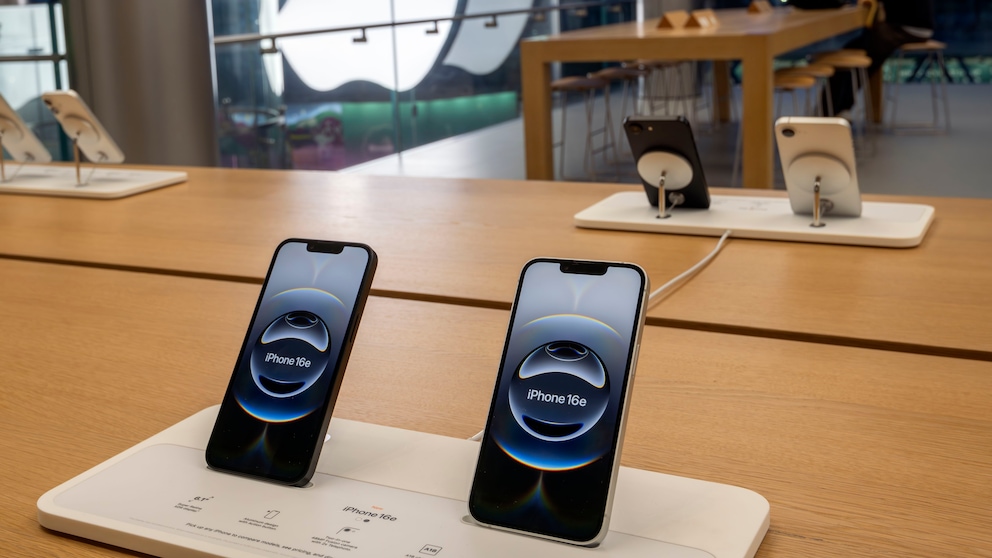
- iPhone 16e with A18 chip (2025)
- iPad Air 11-inch and 13-inch with M3 chip (2025)
- MacBook Air 13-inch and 15-inch with M4 chip (2025)
- MacBook Pro 13-inch with M4 and 512 GB storage (2025)
- MacBook Pro 14-inch and 16-inch with M4 Pro and M4 Max chips (2024)
- Mac Studio with M3 Ultra and 512 GB RAM (2025)
- Studio Display with A13 Bionic (2022)
- Pro Display XDR (2019)
- Pro Stand for Pro Display XDR (2019)
- VESA Mount Adapter for Pro Display XDR (2019)
Already last September, Apple also discontinued the iPhone 16 Pro and iPhone 16 Pro Max.
This marks the end of the official run for the Pro Display XDR, which has been offered since 2019. After seven years, the high-end monitor is being removed from the lineup. The accessories are also disappearing. The Pro Stand, which sparked discussions with its introduction price of $999 or 1,099 euros in Germany, is now no longer listed, along with the magnetic VESA adapter.
However, these older devices are contrasted by newer models, primarily various MacBooks, the iPad Air, and the iPhone 16e from the previous year. While Apple’s decision to cut these may seem premature, it is not an isolated case when looking back at previous years.
Apple’s Product Strategy
Apple follows a clear line with its approach. The company views its offerings as a deliberately curated portfolio. Too many models available simultaneously would make the selection confusing for customers. By discontinuing older devices, the lineup remains streamlined, allowing Apple to focus on new technologies and features.
Price structure also plays a role. The company operates with clearly defined price points. When a new generation is introduced, the direct predecessor typically moves down. Devices that are two or more generations old often no longer fit into this structure. Remaining in the store could create larger price gaps within a product line or reduce profit margins. Removing them thus protects price stability and profitability.
Production aspects are also crucial. Components are not manufactured indefinitely, supply chains are adjusted, and production lines are retooled. Manufacturing older models in smaller quantities is considered economically unattractive. Instead, Apple focuses on current generations with higher demand and more efficient processes.
Lastly, it’s a matter of brand image. Apple positions itself as a leader in innovation. A store with numerous older devices would contradict this claim. However, the products do not completely disappear from the market. Many remain available through retailers, mobile carriers, or Apple’s own refurbished store.