


July 27, 2026, 6:04 am | Read time: 4 minutes
Instead of taking thousands of digital shots per game, sports photographer Fareed Kotb chose a completely different path at the 2026 FIFA World Cup. He documented matches of the tournament with a nearly 100-year-old camera, deliberately opting for a method that is rarely used today.
Old Technology Draws Attention
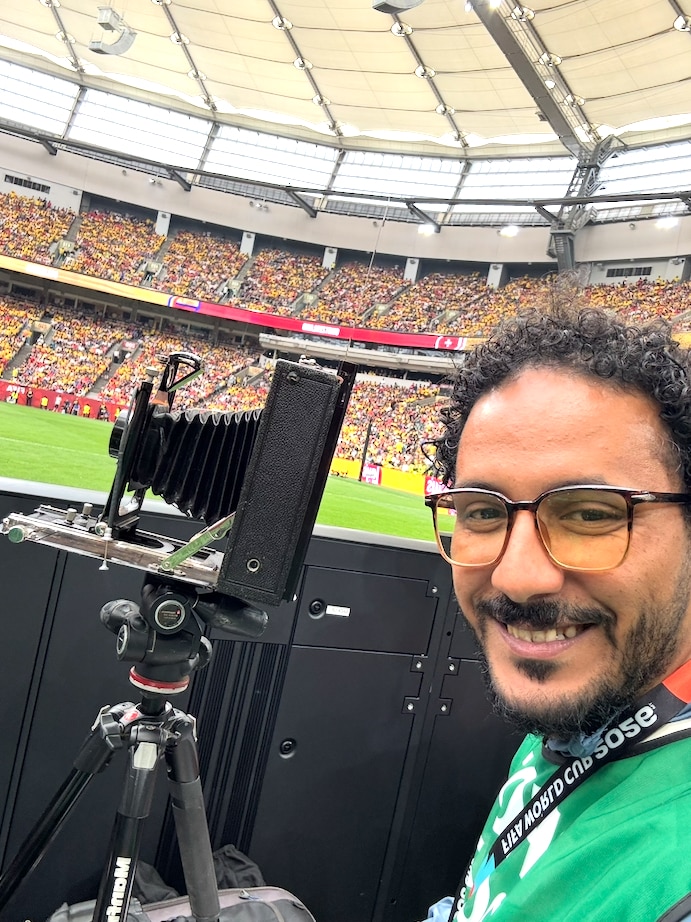
During the round of 16 match between Switzerland and Colombia in Vancouver, many spectators noticed an unusual photographer on the sidelines. While most others used modern digital cameras, Fareed Kotb worked with a large folding camera. Images of the unique equipment quickly spread online. The Cairo-based photographer, with over 16 years of professional experience, wanted to document his third World Cup in a special way. He chose a camera from the same year as the first World Cup: 1930.
For his project, Kotb used a Zeiss Ikon Ideal (PDF document) 250/11 in the 9 × 12 centimeter format. The camera was made in Germany and is constructed of metal. Its appearance is characterized by black lacquer, nickel-plated parts, and a leather cover. Typical for the model are the extendable bellows between the lens and the body. These accordion-like folds allow for sharp images of both close and distant subjects. For Kotb, the camera was meant to bridge the beginnings of the World Cup and the present.
A Piece of Sports History
According to the photographer, the camera itself has an extraordinary past. His research revealed that the device was already used to photograph the Egyptian national team at the 1934 World Cup. At that time, Egypt was the first African team to participate in a World Cup.
Additionally, the same camera was reportedly used at the 1936 Olympic Games in Berlin. In an interview with the online magazine “CBC,” Kotb explained that many people were surprised to see a camera from 1930 at one of the world’s largest sporting events.
How the Photos Are Taken
For sports photographers, speed is usually crucial. Modern digital cameras allow for burst shots with many images per second. With his historical equipment, Kotb had to work much slower. Each photo took about a minute to capture, requiring careful preparation for every shot. Spontaneous series of images were not possible with this technique.
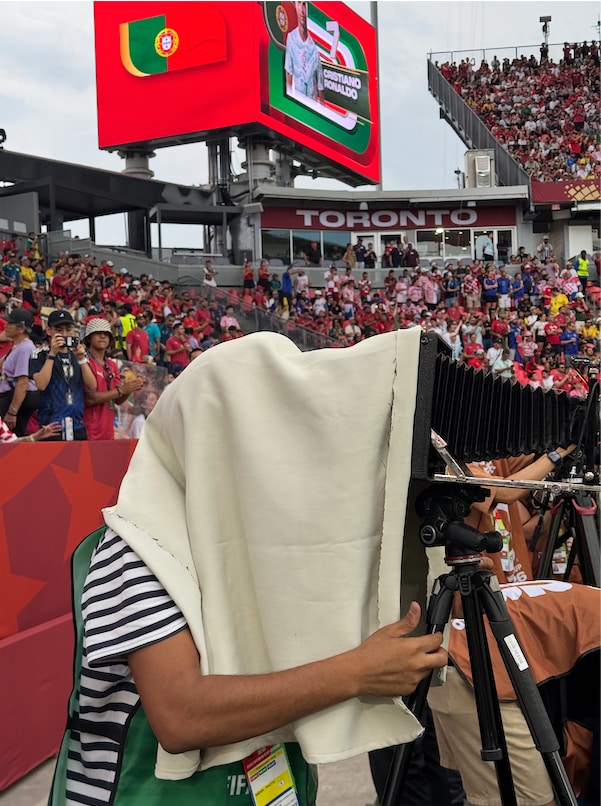
First, Kotb opens the camera and views the subject on a ground glass. The image appears upside down. He then sets the frame and pulls a black cloth over his head to better see the projection. Afterward, he inserts the film, switches the camera to capture mode, and takes the shot. This process is markedly different from modern sports photography. According to Kotb, the slow pace also changed his approach to soccer games.

The 5 Best Digital Cameras Compared

What Dead Celebrities Might Look Like Today
Few Images Instead of Thousands
During the match between Portugal and Croatia in Toronto, Kotb reportedly took only ten photos. At the Switzerland vs. Colombia game in Vancouver, around 40 shots were captured.
Also interesting: Telekom secures the 2030 World Cup entirely
Each shot had to be planned. He could only see the results after developing the film. Despite these limitations, he was drawn to the deliberate and slow method. He told CBC, “Digital photography is faster. Film is slower, but it has special feelings.”
Photos Become Part of a Documentary Project
The World Cup photos are intended not just as a memory of the tournament. According to Kotb, they will be part of his documentary project “Project 1930.”
With this endeavor, he pursues a different approach than many other photographers at the World Cup. While thousands of images are often taken per game, he focused on a few carefully planned shots. This concept is central to his project.