

March 9, 2024, 3:46 pm | Read time: 5 minutes
It’s often said that success comes from being in the right place at the right time. However, that’s not always enough to remain successful, as the case of Data Becker shows.
The success story of Data Becker from Düsseldorf begins with the rise of the C64 and the emerging home computer boom. This connection simultaneously signals its end in 2014. The rapid development in the PC market, the Internet boom, and social media seem to have completely bypassed Data Becker’s management. One thing is certain: In the 1980s, Data Becker offered the best deal for many computer newcomers. Why the once most important computer publishing house eventually failed is what we aim to recount in this article.
Business-Savvy Brothers from Düsseldorf
The founders of Data Becker, brothers Achim and Harald Becker, come from a traditional entrepreneurial family. Their father began selling used cars shortly after World War II. Over the next few decades, this developed into “Auto Becker”–a byword for quality and affordable used cars.
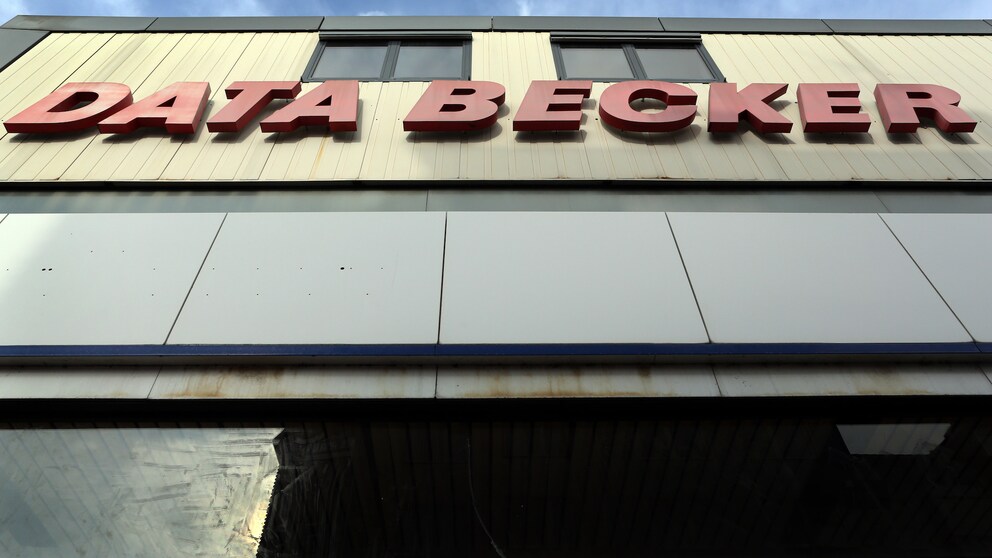
However, Achim and Harald Becker were not interested in cars; they preferred to focus on computers. In 1981, the two brothers opened a store for computers and computer accessories on Merowinger Street in Düsseldorf–on the premises of “Auto Becker.”
Data Becker Caters to Computer Beginners
A year later, the C64 took the world by storm. Suddenly, people in Germany were buying computers for the first time. With the burgeoning home computer boom, the number of people who were complete novices in computing also grew.
Achim and Harald Becker immediately recognized this thirst for information. They brought in experts who understood the new devices and could convey their knowledge clearly in writing.
Within just two years, Data Becker flooded the market with affordable computer books. The title “C64 Intern” became a classic in the early 1980s. Computer newcomers wanted to learn, and Data Becker provided the right reading material.
There’s a Solution for Everything
In the early days, all Data Becker books appeared in the typical red-and-white design. Almost every new title sold like hotcakes. In 1984, with a turnover of 39 million Deutsche Marks, Data Becker was one of the most influential computer publishers in West Germany.
The countless pirated copies of popular programs in circulation further fueled book sales. Illegally obtained software came without manuals. Data Becker’s numerous technical books filled these knowledge gaps. Publications from the Düsseldorf publisher cost between 30 and 50 Deutsche Marks–a small investment. At the time, computer fans had to pay several hundred Deutsche Marks or more for original software.
From the mid-1980s, Data Becker expanded, publishing computer magazines and distributing smaller, self-programmed software. True C64 fans often spent days typing Basic listings to use a free program or game on their home computer. For this target group, Data Becker offered small, affordable application programs–without the need to type out lengthy listings.
Like the books, Data Becker’s magazine titles also catered to a customer base that was not yet familiar with computers. With its countless publications, the Düsseldorf publisher helped people in West Germany get to know and love the new devices better.
Missed the Leap to a Higher Level
As a result, more and more people knew more about computers. Data Becker then tried to tap into new target groups. This initially worked with book publications for Atari or Amiga fans.
With the start of the 1990s, the first mass-market PCs appeared, abruptly ending the home computer boom. People also learned what the Internet was and what being online meant. Data Becker initially rode this new wave with its books. However, statements from the Becker brothers at the time suggested that neither understood the development that was unfolding.
Above all, the publisher failed to make the leap to a higher technical level. By then, most people knew how a computer worked. PC manufacturers also contributed by standardizing many components and interfaces. Operating a computer was no longer a mystery. The result: Beginner books gathered dust on store shelves.
How Bildschirmtext BTX Brought the Internet to Germany
This East German Computer Was Meant to Beat the C64–and Failed Spectacularly
Peak in the Mid-1990s
Data Becker tried to please PC fans with small service programs in the “Golden Series.” These service-oriented applications–what we would call apps today–had titles like “Business Card Printer,” “3D House Planner,” “My Memory Trainer,” or “The Genealogist.”
Since 1994, Data Becker published a successful computer magazine called “PC Praxis.” The monthly magazine temporarily reached a circulation of nearly 260,000.
Many books were also published internationally, translated into 28 languages. At its business peak in 1996, Data Becker’s revenue exceeded 100 million Deutsche Marks.
Interest in Data Becker Publications Declines
Afterward, a slow decline began. The management’s helplessness in responding to upheavals in the IT sector is exemplified by an incident in 1999. The Internet boom was just gaining momentum. Data Becker attempted to organize the Internet by publishing a sort of address book for the World Wide Web.
Unfortunately, later new releases increasingly failed to capture the interest of readers. Data Becker books turned into shelf warmers. The publisher continued doing what it had always done, but in the age of the Internet and social media, it no longer worked. The Becker brothers kept releasing new titles.
However, as sales plummeted, Data Becker decided to close the publishing house in 2013. On March 31, 2014, the once-largest computer publishing house in West Germany ceased operations. The company building on Merowinger Street no longer stands, falling to the wrecking ball in 2015.
Incidentally, “Auto Becker,” the business of Achim and Harald Becker’s father, went bankrupt in 2002. In the end, nothing remains of the Becker dynasty.
Not quite true: The significance of Data Becker remains forever beyond its end. Without the Düsseldorf publisher, many computer newcomers in the early 1980s would have been quite clueless in front of their devices. In this way, Data Becker laid the foundation for the later PC and Internet boom in Germany.