

May 5, 2026, 6:05 am | Read time: 4 minutes
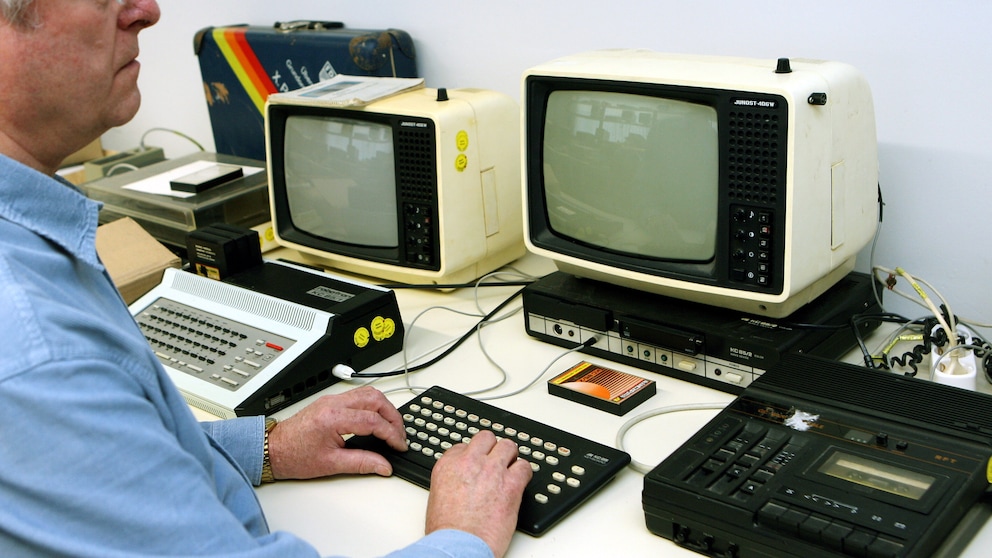
Without the C64, computers might never have spread so quickly around the world. Until the early 1980s, computers were considered complicated machines that only tech enthusiasts dealt with. High-ranking politicians in East Germany also followed developments in West Germany. Why the KC 85 was a kind of home computer that the rest of the world hardly noticed is reported by TECHBOOK in this article.
The history of computers in East Germany was shaped by the state-owned enterprise (VEB) Robotron in Dresden. Here, engineers worked on developing their own computers. Due to the rapid development set in motion worldwide by the C64, VEB Robotron intensified its efforts in the early 1980s to develop its own home computer. Like its counterpart in the West, the East German home computer was originally intended to be suitable for computer games and for educational purposes in schools or universities.
From Z 9001 to KC 85
At the spring fair in Leipzig in 1984, Robotron presented the Z 9001, as the East German home computer was initially officially called. But less than a year later, it was renamed KC 85. KC stands for small computer, and 85 for the year, 1985.
“The East German leadership was aware that a home computer would be a device people could actually use at home. But production-wise and financially, that was out of the question,” says Michael Mikolajczak, curator at the Heinz Nixdorf MuseumsForum (HNF) in Paderborn.
That’s exactly how it was. Only about 50 units from the first series made it to the open market. The retail price was about 4,600 East German marks. For comparison: A Trabant, the East German car model, cost just under 8,000 East German marks in basic configuration for a long time. For most people in East Germany, both were unaffordable. And even if someone had saved some money, neither cars nor computers were available in sufficient quantities in East Germany, as production often stalled due to a lack of parts.
Thus, the renaming to small computer was to distract from the low distribution among the population. A technical comparison with common Western computer models is difficult because, immediately after the end of East Germany, no one was interested in the Robotron computers anymore.
Also interesting: What Happened to the PC Wholesaler Vobis?
Comparisons with Western Computers Fall Short
“Some articles suggest that the KC-Compact, the last model produced in East Germany from October 1989, was comparable to the Schneider CPC,” explains Michael Mikolajczak from the HNF in Paderborn. “Some East German office computers were said to compete with IBM PCs in the West,” adds the computer expert, but he doesn’t think much of such retrospective comparisons.
The East German leadership found a new, scaled-down purpose for the KC 85. The model was only to be used for learning in schools, so no gaming in the living room, but rather studying in the classroom.
For Michael Mikolajczak, the comparison with the C64 is far-fetched anyway. “Both computers were developed and brought to market in the 1980s, and both were 8-bit computers. Those are the only similarities. Technically, the KC-85 models did not measure up to the C64.”
What Actually Happened to the Computer Manufacturer Commodore?

What ever happened to Data Becker?
KC Series the Most Successful Computer Series in East Germany
Nevertheless, the entire KC series from Robotron is among the most successful computer series in East Germany and has a rightful place in computer history for that reason alone. “For the East German state leadership, it was important to show: We can keep up with the technical development in the rest of the world,” emphasizes Mikolajczak.
The computer was never designed as a mass product. Exact numbers no longer exist. Some sources report a total of about 100,000 computers produced as part of the KC series from 1985 until reunification in East Germany.
After reunification, the rapid decline of the East German computer industry began. The last small computer, the mentioned Compact model, appeared in the early 1990s at bargain prices at flea markets, reports Michael Mikolajczak from the HNF in conversation with TECHBOOK.
End of East Germany Means the End for Robotron
It’s actually a shame and unwarranted. After all, these computers were produced under difficult conditions and therefore deserved more appreciation. At least in collector circles, the still available computers of the KC series are a coveted item.

The East German computer manufacturer VEB Robotron was quickly wound up after reunification. This is how it is later described in many historical reports about this time. A euphemistic description, because nearly 10,000 people were “wound up” at once, meaning unemployed. Fortunately, many later found a new home in the IT industry of the Federal Republic or in other countries. However, not all did.