

August 13, 2026, 12:12 pm | Read time: 2 minutes
The debate over smart glasses with built-in cameras is intensifying. The organization HateAid has filed a criminal complaint against Meta, several manufacturers, and major optical chains. At the center is the question: Can devices be sold that might allow people to be filmed without their knowledge?
Criminal Complaint Against Meta and Major Retailers
The nonprofit organization HateAid is taking legal action against Facebook’s parent company Meta and several companies that distribute smart glasses in Germany. According to the organization, the criminal complaint is directed, among others, against the officials of Meta Platforms Technologies Ireland, Ray-Ban, and Oakley. Retail chains Fielmann, Apollo-Optik, Mister Spex, and MediaMarkt are also mentioned.
The Frankfurt am Main General Prosecutor’s Office confirmed receipt of the complaint. HateAid aims for a fundamental decision to clarify whether certain smart glasses can be sold in Germany at all. The focus is on glasses models with integrated cameras that are hardly distinguishable from ordinary eyeglasses or sunglasses.
Also of interest: Apple is working on its own smart glasses

Why Some Theaters Are Now Banning These Glasses
Meta’s New AI Glasses Come Without a Camera
Dispute Over Secret Video Recordings
According to HateAid, the devices could violate German data protection and telecommunications law. The organization points to regulations that prohibit the sale of products disguised as everyday items that can be used to secretly record or eavesdrop on people.
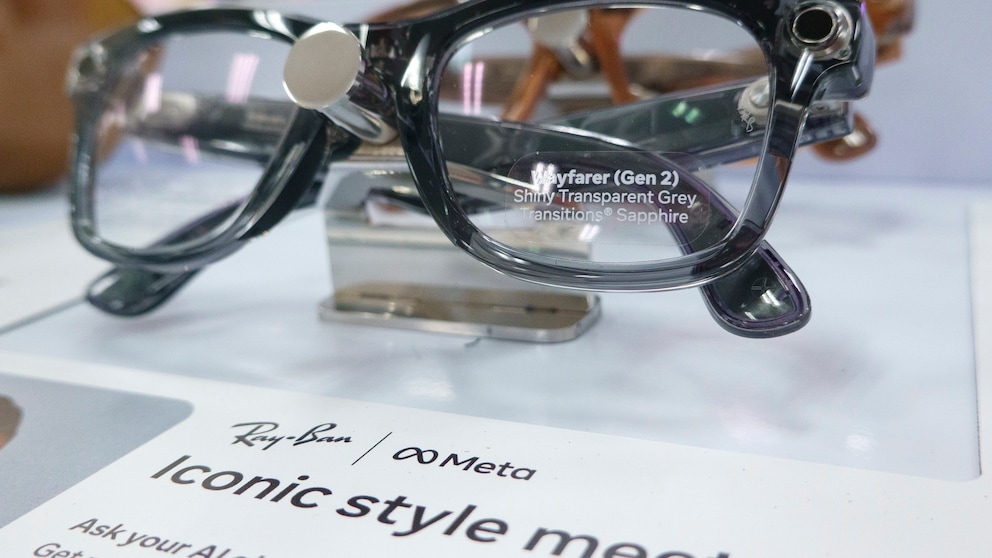
HateAid is particularly critical of the smart glasses developed by Meta in collaboration with Ray-Ban. The glasses feature camera technology but largely resemble conventional models. This inconspicuousness is problematic because others may not immediately recognize whether photos or videos are being taken. Critics argue that this creates the risk of unknowingly becoming part of recordings that could later end up on the internet.
Federal Network Agency Warned Two Years Ago
The discussion is not entirely new. Two years ago, the Federal Network Agency pointed out that smart devices with cameras could be illegal in Germany if they create unnoticed audio or video recordings and transmit them to other devices. At that time, the agency explicitly mentioned smart glasses as a potential issue.
It is crucial that it is clearly recognizable to those affected when a recording is taking place. Therefore, the agency demands visible or audible signals indicating photography or filming. Whether the allegations made by HateAid are criminally relevant must now be examined by the investigative authorities. The proceedings could be groundbreaking for Meta and the still young market for smart glasses in Germany.