

June 24, 2026, 7:15 am | Read time: 4 minutes
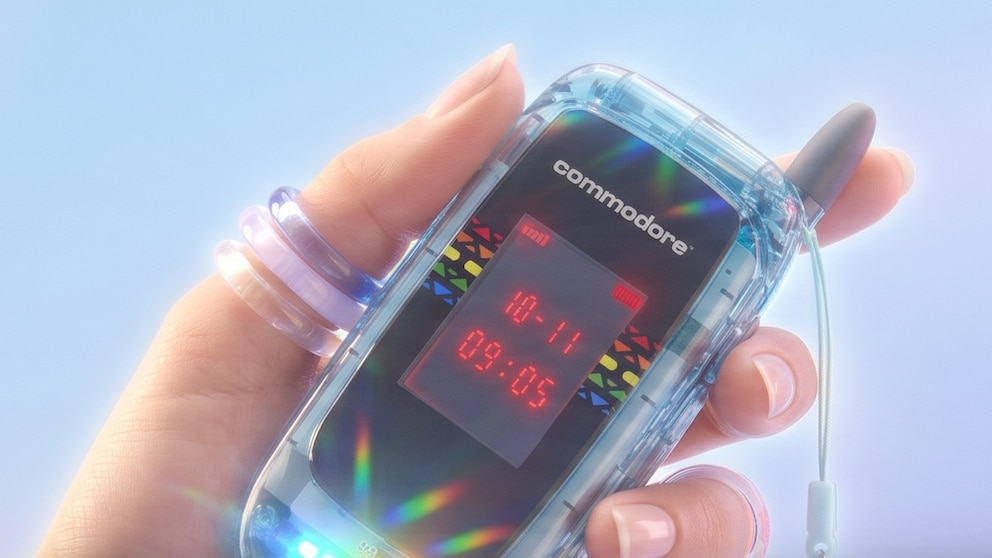
Smartphones now accompany many people around the clock. However, news, social networks, and countless apps often also lead to distractions. This is where the new Commodore Callback 8020 comes in. The flip phone combines a retro design with modern technology and follows an unusual concept: It aims to offer essential smartphone functions while consistently excluding typical time-wasters.
With its flip mechanism, physical buttons, and compact format, the device is reminiscent of phones from the late 1990s and early 2000s. However, modern technology works inside. Commodore positions the Callback 8020 as an alternative for users who want to stay reachable without constantly being distracted by apps and notifications.
Browsers and Social Networks Are Left Out
The most distinctive feature of the Callback 8020 is the software. Instead of Android, Sailfish OS is used. The Linux-based operating system from the Finnish company Jolla already supports numerous Android apps. However, Commodore takes an unusual approach. Applications for social networks, traditional web browsers, and various productivity programs are to be blocked by default. According to the manufacturer, these restrictions cannot be easily bypassed.
However, users do not have to completely forgo modern functions. Messengers like WhatsApp, Signal, and Telegram are supported. Navigation services, music streaming, and other everyday applications are also part of the feature set.
In line with the retro concept, the manufacturer also provides classic ringtones and pre-installed games from the Commodore universe. The device is deliberately designed to offer less distraction and focus on communication. Commodore consciously relies on 4G for mobile communications, likely for cost reasons.

The 13 best smartphones under 150 euros at a glance

The 7 Best Smartphones Under 100 Euros
What’s Inside the Callback 8020
Despite its retro look, the flip phone offers features that are significantly more modern than many other feature phones. Inside, a MediaTek Helio G81 operates. The processor is typically used in affordable Android smartphones like the Xiaomi Redmi 14C. It provides sufficient performance for everyday tasks but falls significantly behind current mid-range smartphones. The processor is supported by 4 GB of RAM and 64 GB of internal storage.
Also interesting: Embarrassing Blunder! Samsung Accidentally Reveals New Galaxy Smartphone
The main display measures 3.25 inches and has a resolution of 640 x 480 pixels. For comparison, even affordable smartphones like the Samsung Galaxy A16 or the Xiaomi Redmi 14C offer resolutions of around 1600 x 720 pixels. Additionally, there is a 1.77-inch secondary display on the outside. This shows the time, battery status, and notifications without the need to open the phone. A 48-megapixel camera is responsible for photos. The Callback 8020 also features a removable battery with a capacity of 1550 mAh. While many modern smartphones have built-in batteries, users can replace the power source here if needed.
The device is charged via USB-C. Additionally, there is a classic 3.5-millimeter headphone jack. The features also include an integrated FM radio and an LED notification system for incoming calls and messages.
Price and Market Launch
The Commodore Callback 8020 can be pre-ordered starting June 30, 2026, with a starting price of $499. According to the manufacturer, those who register in advance will receive a $50 discount. An additional $50 discount is available for pre-orders on June 30. Deliveries to the EU are possible, but additional shipping and import costs will only be displayed during the payment process.
The phone comes in five colors: “ProtoPET White,” “SX Silver,” “BASIC Beige,” “Starlight Edition,” and a “Founders Edition.” The latter is a limited version aimed primarily at collectors and long-time Commodore fans.
The Callback 8020 is also special because it is the first new mobile device from the storied Commodore brand in many years. The company shaped a whole generation of tech enthusiasts in the 1980s with home computers like the Commodore 64 but later largely disappeared from the market. Whether the concept can succeed in the market remains to be seen.