


May 26, 2023, 3:31 pm | Read time: 10 minutes
Samsung has officially unveiled the Galaxy S23 series. This year’s models feature a slightly adjusted design and, for the first time, come with a Qualcomm chip in all regions. But which of the three new smartphones is actually worth it for whom?
The 2023 lineup from Samsung includes the Galaxy S23, Galaxy S23+, and Galaxy S23 Ultra. While the S23 is particularly compact, the Ultra boasts the best features–most notably the new 200-megapixel camera. However, it is also the largest and most expensive of the three new devices, making it unsuitable for all users. So, which one should you choose? TECHBOOK reveals the answer in a comprehensive comparison.
Overview
- Samsung Galaxy S23 Ultra Hands-on
- Samsung Unifies S Series Design
- Samsung Galaxy S23, S23+, or Ultra? Also a Matter of Size
- Technical Specifications Compared
- Improved Front and Main Camera
- S Pen as Remote Shutter
- Finally, Long-lasting Batteries?
- Samsung Galaxy S23 Is Significantly More Expensive
- Samsung Galaxy S23, S23, and Ultra: All Data Compared
- Conclusion–Which Model Is Suitable for Whom?
Samsung Galaxy S23 Ultra Hands-on
TECHBOOK has tested the S23 Ultra and reveals which features make this high-end smartphone stand out–and who it is suitable for. Watch the hands-on video here:
Samsung Unifies S Series Design
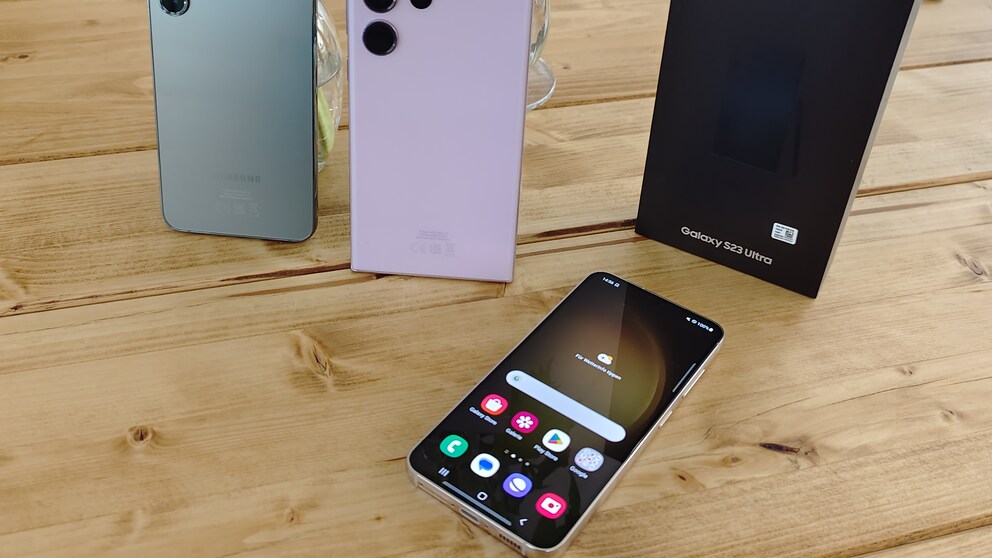
After several years of slightly different designs, Samsung is returning to a unified line this year. The camera band, familiar since the Galaxy S21, is gone. Instead, the Samsung Galaxy S23 and Galaxy S23+ now follow the Ultra’s design language. The camera lenses are frameless and individually arranged on the back.
Otherwise, the appearance of the new smartphones has changed little compared to the predecessor. Only the Galaxy S23 Ultra has a slightly flattened display, responding to user feedback. Some users had criticized that the strong curvature of the screen around the sides made stylus use difficult. The displays of the Galaxy S23 and Galaxy S23+ remain completely flat, and the case edges are more rounded compared to the Ultra.
https://oembed/techbook/affiliate/3c8ec565d91c853bb3b9a6ce3ccfc28c9689509e6c1ee19f1539792ec15536b1/b6e44ea0-940f-43c7-93ea-971f6546c765/embed
Samsung offers its new smartphones in various colors again. However, the entire color palette is now available for all devices in the series. No more specific colors for certain models. Available colors include Cream, Lavender, Green, and Phantom Black, found in all electronics stores and with providers. Exclusively in Samsung’s online shop, the Galaxy S23 series is also available in Graphite, Red, Lime, and Sky Blue.
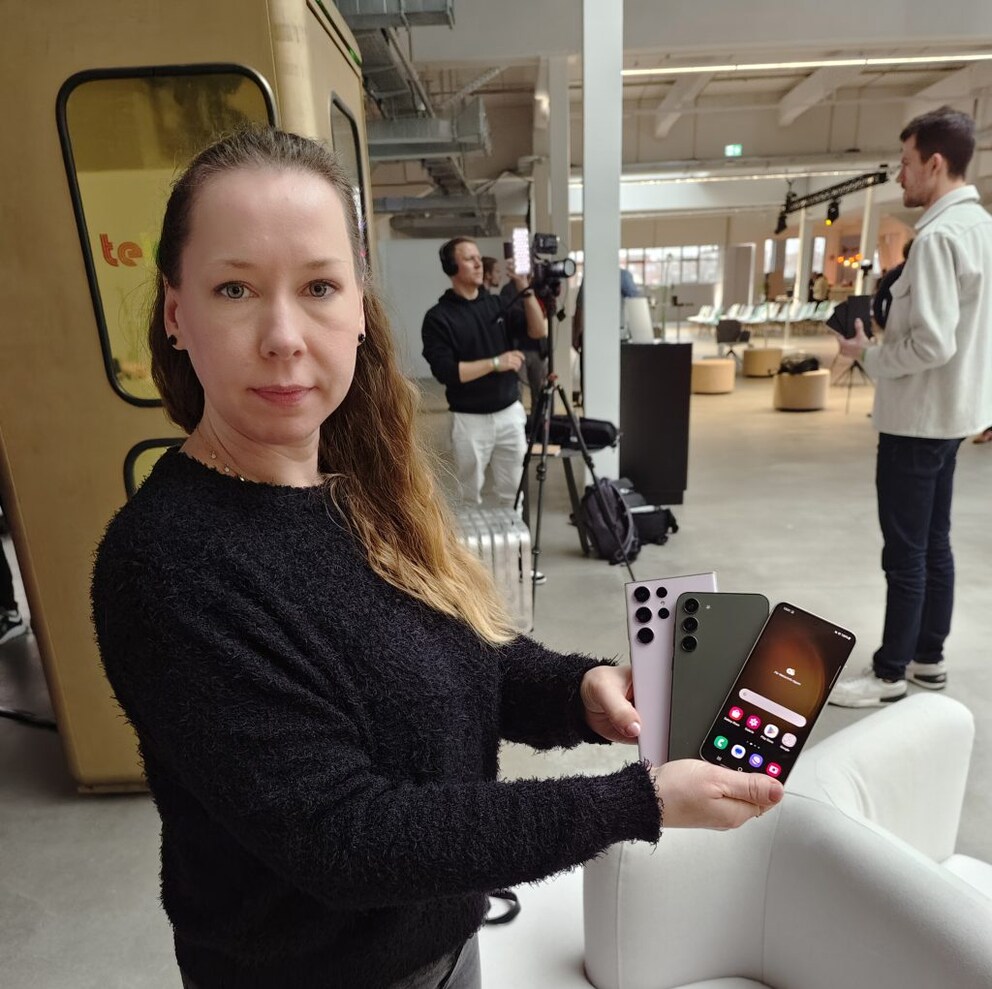
Samsung uses recycled materials in all models. According to the company, the models consist of about 20 percent recycled ocean plastic, 80 percent recycled PET, and 22 percent recycled glass. The packaging is now made from recycled paper, as is the display’s protective cover. Samsung has eliminated the previously used film.
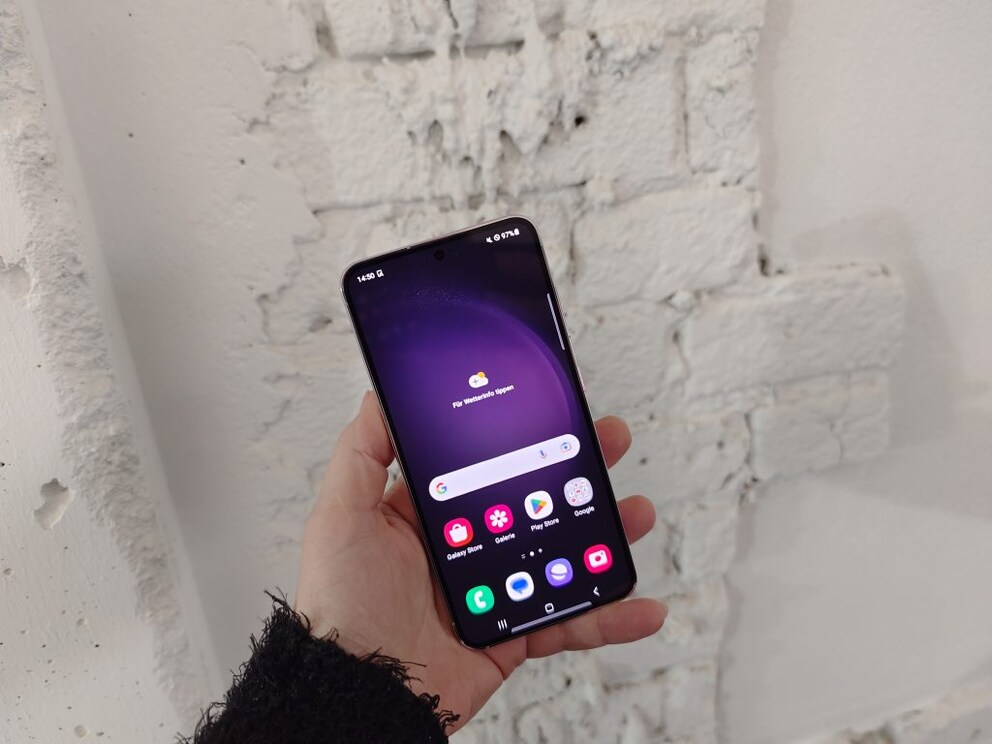
We found the new matte surface of the devices to be a true delight to hold. It feels very velvety and less slippery. At the same time, it has the advantage that fingerprints are hardly visible, especially on the lighter models.
Samsung Galaxy S23, S23+, or Ultra? Also a Matter of Size
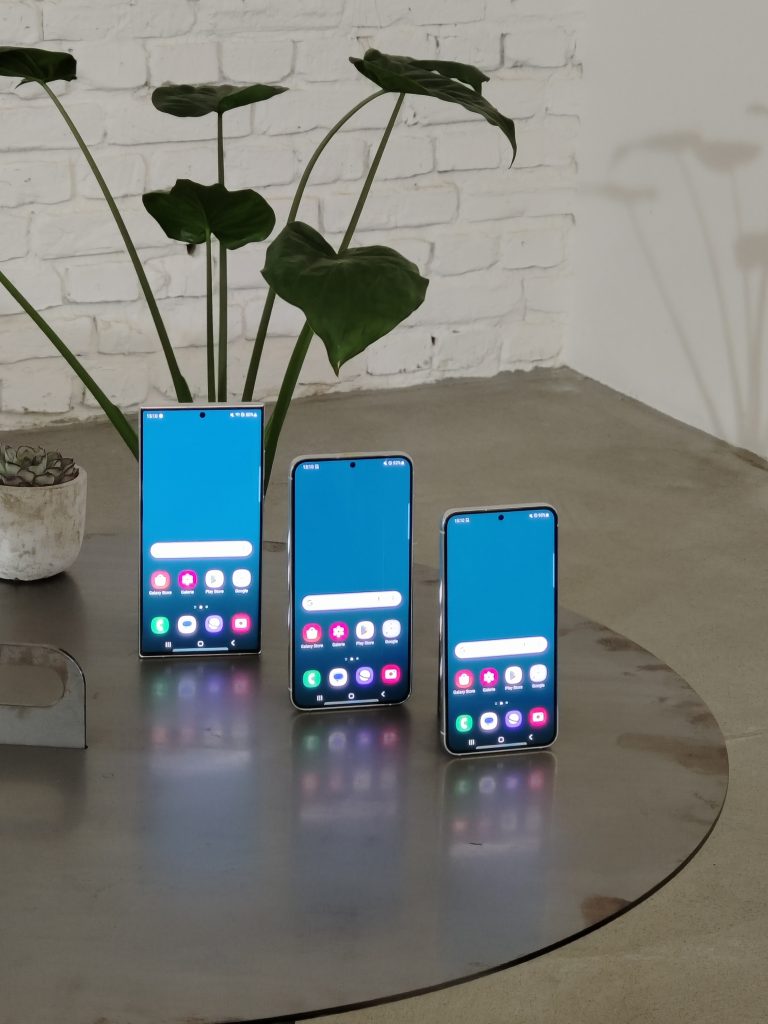
The display sizes of the new smartphones have not changed compared to last year’s models. The Galaxy S23, like the Galaxy S22, has a 6.1-inch Dynamic AMOLED display, the S23+ remains at 6.6 inches, and the Samsung Galaxy S23 Ultra leads the series with a whopping 6.8 inches. The difference is enormous when held in hand–for people with small hands, the Ultra seems almost gigantic. However, it is the only model with the advantage of stylus operation.
While the first two models have a resolution of 2340 x 1080 pixels, the Ultra also offers 3088 x 1440 pixels, providing a QHD+ instead of Full-HD+ resolution. All three smartphones also offer a refresh rate of up to 120 Hz.
Technical Specifications Compared
The technical innovations in the Samsung Galaxy S23, S23+, and Ultra are limited in number but have significant impacts on usage. Samsung now offers the smartphones worldwide with only one chip. Models with the in-house Exynos are no longer available. Instead, the Snapdragon 8 Gen2 for Galaxy is now uniformly used. This chip is a specially adapted model for Samsung with slightly higher clock speeds. All other features of the Snapdragon 8 Gen2 remain unchanged.
More on this: Samsung sells Galaxy smartphones in Europe with less performance
Qualcomm had already confirmed closer collaboration with Samsung in advance. In the future, they plan to work together globally, said Qualcomm CEO Christiano Amon in July 2022. The Snapdragon 8 Gen2 for Galaxy is manufactured using a 4-nanometer process, making it very energy-efficient. The Ultra offers either 8 or 12 GB RAM and up to 1 terabyte of storage. The Samsung Galaxy S23 and 23+ both come with 8 GB RAM, with buyers of the S23+ having the choice between 256 GB and 512 GB of storage. Only the Samsung Galaxy S23 still offers a version with 128 GB of storage–in addition to the 256 GB variant.
Wi-Fi 6E is part of the equipment for all three smartphones, as are 5G and Bluetooth 5.3. Additionally, Android 13 is the installed system version, with stereo speakers featuring Dolby Atmos, a waterproof case according to IP68, and a fingerprint sensor under the display.
https://oembed/techbook/affiliate/b80b02bd615e28cfd96f9865f3a76ce88f22e411498361bbd893e26cbaacebf1/b6e44ea0-940f-43c7-93ea-971f6546c765/embed
Improved Front and Main Camera
The transition from the Galaxy S21 to the S22 left the front camera untouched. It is identical in both models. However, this changes with the new generation. The Samsung Galaxy S23, S23+, and Ultra now feature a 12-megapixel front camera. This may not seem like a big leap–for the Ultra, it’s even a step back from the former 40-megapixel sensor–but Samsung has managed to optimize photo results with new software and AI support. In a conversation with TECHBOOK, the manufacturer stated that they responded to the high social affinity of many users. Selfies and the recording of reels are extremely important for many. Therefore, the first “Samsung Galaxy Super HDR Selfie Camera” was integrated into the devices, switching from up to 30 frames per second (fps) to up to 60 fps, aiming to improve photos and videos.
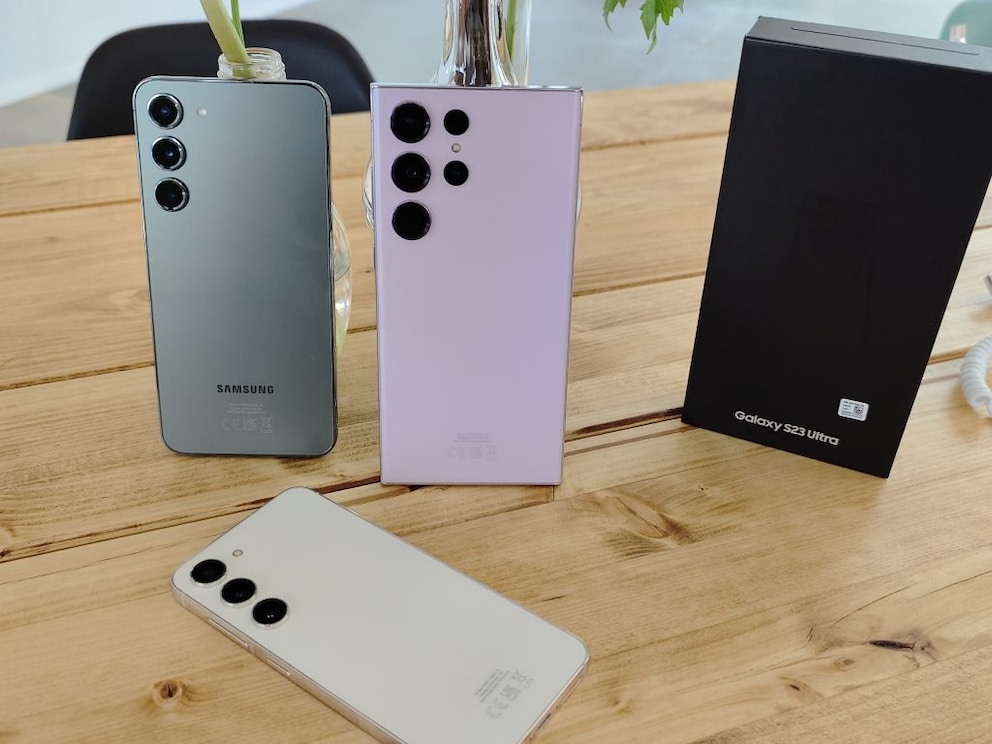
There’s also a long-awaited leap in the main camera. The Galaxy S23 Ultra’s resolution has been increased from 108 megapixels to 200 megapixels. Samsung has already introduced two 200-megapixel sensors with the Isocell HP1 and HP3. However, the new Ultra now uses the HP2, which Samsung claims is the best sensor to date. It is supported by a bright f/1.7 aperture, optical image stabilization (OIS), and improved AI, which is intended to enhance photography in low-light conditions.
The other three sensors of the Galaxy S23 Ultra include a 12-megapixel ultra-wide-angle and two telephoto lenses, each with 10 megapixels, allowing up to 10x optical zoom. In comparison, the Galaxy S23 and S23+ have a 50-megapixel wide-angle with f/1.8 aperture, a 12-megapixel ultra-wide-angle, and a 10-megapixel telephoto lens. OIS is also available here.
Read also: Smartphones with the best cameras
S Pen as Remote Shutter
The Galaxy S23 Ultra is the only new Samsung smartphone that comes with an S Pen. It is conveniently located at the bottom of the case and can be removed with a light press. The S Pen can be used not only for writing and drawing on the Ultra but also serves as a remote shutter for the camera. Users can switch between the front and main cameras with a swipe gesture, allowing them to include themselves in the picture. The camera can also be triggered by pressing a button, enabling group photos from a distance from the smartphone.
https://oembed/techbook/affiliate/06ef6eee3b23064aaefcb3019e7447192843e8381711f3d274fda6e4f0ee4f1f/b6e44ea0-940f-43c7-93ea-971f6546c765/embed
Finally, Long-lasting Batteries?
A common issue with previous Galaxy models was their battery performance. With the Galaxy S22, Samsung even installed smaller batteries compared to the S21. Consequently, many users hoped for a rethink and long-lasting batteries in the Samsung Galaxy S23. And indeed, Samsung does not disappoint. Instead of 3,700 mAh and 4,500 mAh, the new models have a capacity of 3,900 mAh and 4,700 mAh–200 mAh more than their predecessors. The Galaxy S23 Ultra remains at 5,000 mAh.
Along with the more energy-efficient chip, power-saving storage units, and other energy-optimizing adjustments, the new models are expected to last about 20 percent longer on a single charge than their predecessors, according to Samsung in a statement to TECHBOOK.
Charging can be done both wired with a maximum of 25 watts and wirelessly with up to 15 watts for the Galaxy S23 and S23+. The Ultra allows up to 45 watts via cable. The devices also support Wireless PowerShare, meaning they can act as a charging pad, for example, for the Galaxy Buds headphones.
Samsung Galaxy S23 Is Significantly More Expensive
The new devices are quite pricey. Like Apple with the iPhone 14, Samsung raises the starting price of the Galaxy S23 by a hefty 100 euros. Prices now start at 949 euros instead of the previous 849 euros. Buyers of the 1-TB version of the Galaxy S23 Ultra will have to pay 150 euros more, totaling a whopping 1,819 euros. Additionally, Samsung has eliminated the smaller 128 GB storage option for the Galaxy S23+ and Ultra, making the entry-level price for these models generally higher than last year. Samsung justifies the price increase with higher manufacturing costs and component prices.

Samsung Galaxy S26, Plus and Ultra–Which Is Right for You?

Samsung Galaxy Z Fold 7 Hands-On – New Hinge, Better Smartphone?
Samsung Galaxy S23, S23, and Ultra: All Data Compared
Conclusion–Which Model Is Suitable for Whom?
To answer the question, we look solely at the technical components, not the price. Whether you want to afford the new smartphones is a decision everyone must make for themselves.
All three models have the advantage over the Galaxy S22 of being equipped with a Snapdragon processor, which offers overall better performance. Apart from that, switching from the Galaxy S22 to the S23 generation is only worthwhile for those who want to use all the new features. Since Samsung now guarantees four generations of Android updates and five years of security updates, last year’s models can still be used without major drawbacks.
Within the Galaxy S23 series, the answer is somewhat more nuanced. The Galaxy S23 is the entry-level model that offers many advantages of the Galaxy S23+ while being more compact and affordable. The camera is identical in both smartphones, and they do not differ in terms of features. However, the Plus model offers more display space due to its larger size.
The Samsung Galaxy S23 Ultra is in a league of its own. Here, buyers get all the refinements–most notably the new 200-megapixel camera and the S Pen. Photo enthusiasts and those who don’t want to miss out on stylus operation can’t avoid the Ultra.