

August 21, 2025, 11:13 am | Read time: 6 minutes
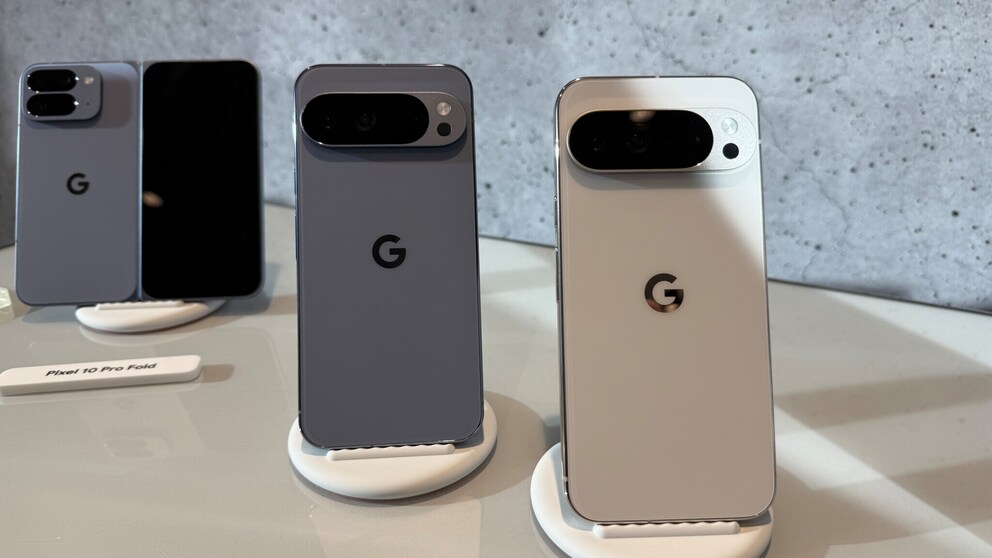
As previously announced, Google unveiled four new Pixel 10 models on the evening of August 20, 2025, including the Pixel 10 with a telephoto camera and the new Tensor G5 processor. Overall, the series offers more speed and new charging options, but also some setbacks, as the first hands-on reveals.
The current lineup includes four smartphones: the Google Pixel 10, Pixel 10 Pro, 10 Pro XL, and the foldable Pixel 10 Pro Fold. At its launch event, Google also unveiled the Pixel Watch 4 and the Galaxy Buds 2a in-ear headphones. The new devices are available for pre-order now.
The new Pixel 10 models mainly differ in their display size and camera technology. The base model Pixel 10 surprises with some innovations.
Base Model Pixel 10 Surprises in Hands-On
The Pixel 10 comes for the first time with three camera lenses on the back, including a telephoto lens with five times optical zoom. Previously, this feature was reserved for the Pro models. However, the image sensors used are smaller than those of its predecessor. The main camera now offers 48 megapixels with a smaller sensor format (1/2 inch), instead of the 50 MP with 1/1.3 inch in the Pixel 8. The ultra-wide-angle camera has also been reduced to 13 MP. Nevertheless, the Pixel 10’s zoom results impress in hands-on tests from factor 5 with more details.
Visually, the Pixel 10 is hardly distinguishable from the Pixel 10 Pro. Both have a 6.3-inch OLED display with up to 120 Hertz refresh rate, but only the Pro achieves energy-saving 1 Hertz. The battery of the standard model offers slightly more capacity at 4,835 mAh, but lacks the new temperature sensor.
Downgrade in Wi-Fi, but New Tensor Chip
A surprising setback concerns the Wi-Fi equipment: While the Pixel 9 was equipped with Wi-Fi 7, the Pixel 10 only supports Wi-Fi 6E. Features like “Multi Link Operation” are thus reserved for the Pixel 10 Pro, XL, and Fold. Nevertheless, users with compatible routers can still benefit from high speeds.
All models use the new Tensor G5 processor, manufactured using the 3-nanometer process. Google promises noticeable improvements such as 60 percent more AI performance (TPU), 34 percent more CPU performance, and improved image processing. The chip is supported by the Titan M2 security module and 12 to 16 GB of RAM, depending on the model.
Also new is the integration of the Qi2 inductive charging standard, including Apple’s MagSafe. Google calls this “Pixelsnap,” as the charger and other accessories attach magnetically. With the appropriate equipment, wireless charging up to 25 watts is possible, but only with the Pixel 10 Pro XL. Wired charging is possible up to 45 watts.
Read also: The Difference Between WLAN and Wi-Fi
Pixel 10 Pro (XL) with Familiar Cameras and New Zoom AI
The Pro models continue to rely on three high-resolution sensors: 50 MP for the main camera and 48 MP each for ultra-wide-angle and telephoto lenses. However, the biggest improvement is not in the hardware but in image processing. Thanks to the new image processor and improved AI algorithms–especially the so-called “ProRes Zoom”–the devices deliver significantly sharper images at high magnification.
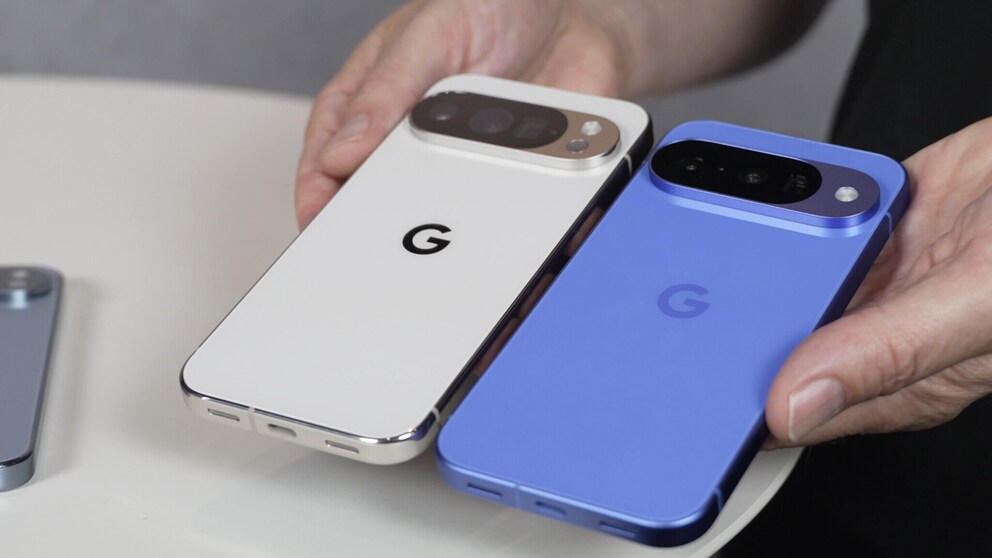
In hands-on tests, it was shown: Even at 100x zoom, the Pixel 10 Pro XL reproduced readable details–such as distant street signs or facade structures. This is made possible by a combination of optical zoom, high-resolution sensors, generative AI, and the so-called Pixel Shift. Multiple individual shots are combined into a sharper overall image. Google marks these AI-optimized photos with a C2PA standard notice to maintain transparency about the image source.
Macro shots also benefit from AI-based detail enhancement, especially in challenging lighting conditions. The front camera of the Pixel 10 Pro and Pro XL offers an exceptionally high resolution of 42 megapixels and also supports portrait and night modes.

Prices for All New Pixel 10 Models Revealed

Pixel 10 Overview: Google’s Planned Innovations for Its Smartphone
Pixel 10 Pro Fold with World Premiere
The Pixel 10 Pro Fold marks a significant step in the development of foldable smartphones–and features a technical world first. As the first foldable, it is IP68 certified and thus officially dust and waterproof. This closes a gap that has remained open in competing models.
When closed, the device can be used like a classic smartphone with a 6.4-inch OLED front display. When opened, it reveals an 8-inch inner display with 373 ppi, which can be opened seamlessly and impresses with a very smoothly running, silent hinge. In everyday use, the Fold proves to be a robust, versatile device with flexible operation over both displays despite its thickness.
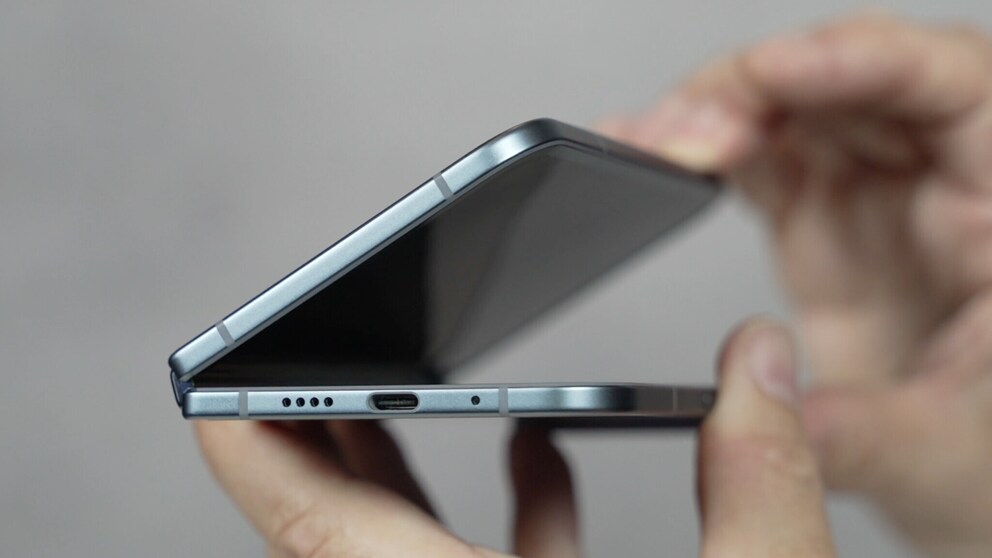
Technically, the Fold is more similar to the standard model Pixel 10 than the Pro variants. The camera equipment consists of a 48 MP main sensor, 10.5 MP ultra-wide-angle, and 10.8 MP telephoto lens with five times optical zoom–identical to the regular Pixel 10. Additionally, there is a dual front camera with 10 MP on both sides for selfies in indoor and outdoor use.
Inside, the new Tensor G5 works as in all models. The battery is solid at 4,919 mAh, charging is possible up to 30 watts via cable or 15 watts wirelessly (Qi1). Thanks to the flexible design, numerous photo functions can be used with both screens–such as live preview for portraits or selfies with the main camera. Despite its higher weight of 258 grams, the Fold impresses with versatility and innovation, even if the case seems a bit bulky compared to the competition.
Prices and Release
Pre-orders for the new smartphones began on August 20, 2025. According to Google, delivery will take place in two waves: Pixel 10, Pixel 10 Pro, and Pixel 10 Pro XL will be available on August 28, 2025, while Pixel 10 Pro Fold and Pixel Watch 4 will be available on October 9, 2025.
The pricing structure corresponds to the previous models:
- Pixel 10: from 899 euros
- Pixel 10 Pro: from 1,099 euros
- Pixel 10 Pro XL: from 1,299 euros
- Pixel 10 Pro Fold: from 1,899 euros