


July 23, 2025, 3:03 pm | Read time: 4 minutes
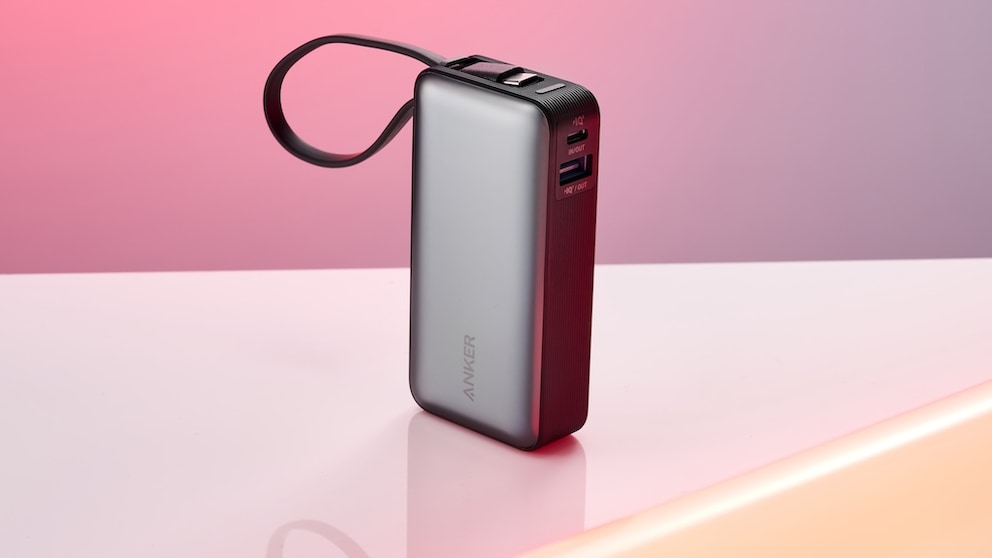
Anker’s products are generally considered popular and reliable everyday companions. However, the manufacturer recently had to admit that not everything is always perfect. In fact, Anker has recalled several of its power banks due to fire hazards. The exact causes of the problem were previously unknown; Anker itself had only provided vague hints. But now, the experts at Lumafield have literally examined a specific power bank model and discovered a possible explanation.
Anker Power Bank Fire Hazard Not Due to Battery?
In June of this year, news spread that Anker had to recall a power bank due to fire hazards–TECHBOOK reported. At the time, it was said that the issue was a problem with the lithium-ion battery. More than a million units of the “Powercore 10000” power bank in the U.S. alone were affected. Shortly thereafter, Anker according to its own statements also initiated a recall for five other models.
In the latter announcement, the company suggested that the cause of potential problems lay in common battery cells from a single supplier. However, Lumafield specifically examined the “Powercore 10000” using X-rays and found that the battery cells could not be the cause of any potential hazards.
Anker Power Bank Design Possibly a Fire Hazard Reason
The experts then examined how the individual components were assembled. They identified an aspect that could cause a fire hazard in the Anker power bank. While some units use insulated wires to connect positive and negative poles, others only have flat wires. There are also general differences in how these are installed.
As Lumafield further explains, the distance between the positive and negative busbars within the individual “Powercore 10000” power banks seems to vary. It is believed that the close proximity “in some scenarios” could cause the negative busbar to create a short circuit.
Specific Problem Likely More Complex
Whether this actually causes fire hazards in Anker power banks, or has already triggered them in individual cases, cannot be definitively assessed. The investigation at least suggests a very likely reason.
At Lumafield, only five units of the “Powercore 10000” were examined, and differences in design and battery cells were already found. More devices would likely reveal even more variations. This also means that more samples might indeed reveal issues with the battery cells, which would support Anker’s explanation.
Also interesting: Things to definitely watch out for when using a power bank!

Anker Recalls Powercore 10000 Power Bank Due to Fire Risk

Power Bank Recall Due to Fire Risk! This Model Is Affected
Supplier Changes Also a Possible Reason
How and why the different designs occur is also unknown. It is suspected that this is the result of a complex supply chain in which various other manufacturers contribute components. Ensuring the quality of all parties involved is not easy.
As the “Global Times” reports, citing the Chinese newspaper “The Paper,” there have also been recalls of power banks in China. Besides Anker, Romoss was also affected. According to “Global Times,” Anker stated that a supplier allegedly made changes to the raw materials used, which could have led to insulation wear. On “Weibo,” a user added that Xiaomi, Ugreen, Baseus, and Aukey also use battery cells from the affected supplier. The Chinese market regulatory authority has already responded by revoking the certification of several battery manufacturers.
Customers in Germany Should Be Cautious
Although the recalls were primarily conducted in other markets, the manufacturers also sold their devices in Germany. Therefore, consumers should check whether they are affected and, if necessary, initiate a return or exchange.
How Anker views the Lumafield investigation is unknown. TECHBOOK has made an inquiry to the manufacturer. In a response, the company did not explicitly comment on it but emphasized that it had discovered and addressed errors itself. Additionally, the company recently outlined in a new blog post how it plans to improve battery safety in the future. Alongside better battery tests and independent assembly evaluations, they also aim to keep a closer eye on the supply chain.