

August 23, 2023, 1:08 pm | Read time: 5 minutes
Participating in loyalty programs from supermarkets, drugstores, and the like is supposed to pay off for shoppers—in the form of discounts and similar benefits. But retailers also gain something. They collect information on customers’ shopping habits. Are loyalty cards still worth it? TECHBOOK provides an overview.
“Do you have a loyalty card?” This question is asked at almost every checkout, and it divides opinions. While some reject loyalty programs out of concern for their data, others hope for benefits. To summarize: Most loyalty cards don’t seem to be worth it; however, some are at least better than others. TECHBOOK takes a closer look.
Overview
Loyalty programs primarily serve customer retention
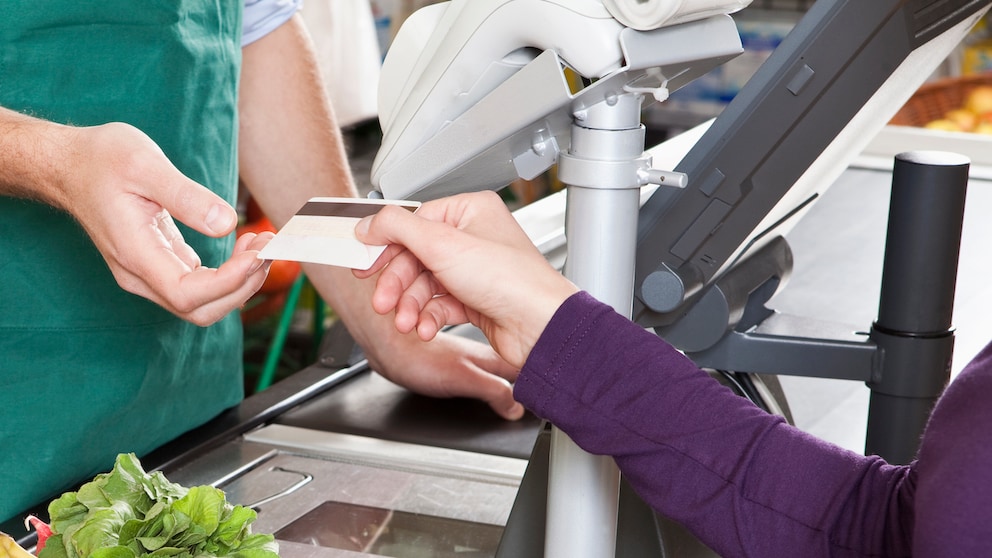
There are various types of loyalty programs. Typically, the loyalty card is presented or the corresponding app is used during checkout. Customers then receive either direct discounts, such as through pre-clicked coupons, or loyalty points. The number of points depends on the amount spent. These points can be redeemed in different ways. A common method is exchanging points for rewards based on a conversion rate (usually 1 cent per point). Additionally, there is sometimes the option to receive a voucher or convert points into reward miles.
Also interesting: DHL brings back a popular feature to the app
The catch for consumers with loyalty cards
The advantages of loyalty programs for supermarkets, drugstores, and the like are obvious. After all, when customers need something, they are more likely to choose a store whose loyalty card they use. And as mentioned, the more they spend in a store, the more points they accumulate. This can mean that consumers buy more than they actually need, just to reach a certain amount.
Besides money, customers give away something else: their data. While registration usually only requires an email address, each purchase adds information about the user’s consumption behavior. Those who find this unsettling generally avoid participating in loyalty programs. However, TECHBOOK has looked into whether there are programs that might be worthwhile despite the drawbacks.
The most popular loyalty cards: Payback and Deutschlandcard
Most Germans use a loyalty card or the app for the Payback program. This is shown by a survey from the market research company Kantar (as of 2021), which can be viewed on the statistics platform Statista. Payback has numerous partners, including supermarkets—from Edeka and Penny to Rewe—as well as organic food retailers and drugstores, plus gas stations, clothing stores, children’s goods, and many more. This makes collecting points easy. Points can be redeemed with the Payback card directly at the checkout at places like Dm, Linda Apotheken, Tee Gschwendter, Thalia, Fressnapf, Burger King, and others. With the Payback app, it works at places like Penny, Alnatura, Rewe, and Nahkauf.
Also interesting: How to collect a lot of points with the Payback app
According to Kantar, the second most used loyalty program in Germany is the Deutschlandcard. Points can be collected in more than 400 online shops and around 10,000 physical stores. Among the many partners of the loyalty program are Edeka, Marktkauf, Trinkgut, and Netto, as well as the specialty store Hammer and children’s stores.
Many retailers, even if they collaborate with the mentioned giants, also have their own loyalty cards, sometimes only as physical cards and/or as an app.

Kaufland Launches New Payment Method in Germany–Here Are the Pros and Cons

Collect Bonus Points with Your Sparkassen Card! What the Change Means for Customers
Stiftung Warentest critically evaluates most loyalty cards
Just a few months ago, Stiftung Warentest examined the 13 most-used loyalty programs. The conclusion was that loyalty cards from Payback or the Deutschlandcard, for example, only allow for “minimal” savings. The consumer organization also advises against the popular loyalty card from Galeria Kaufhof. There, the amount of any discounts and shopping vouchers depends on the total annual spending; from 5,000 euros, it’s about 5 percent.
According to the test report, customers must generally disclose a lot of personal data to participate in loyalty programs. At least no security gaps were found in the programs reviewed. Nevertheless, participation is usually not worthwhile. The potential discount averages between half a percent and one percent, and even for that, according to the consumer organization, one must either collect points over a long period or spend a lot of money. Only during special promotions are larger discounts offered.
Only one bonus program is worth it according to Test.de: Rossmann’s
One loyalty program, however, received a favorable review from Stiftung Warentest: the one from the drugstore chain Rossmann. With it, you can save significantly on up to four purchases every two months—each time 10 percent. This aligns with the experiences of the TECHBOOK editorial team.
Another survey shows a sobering result
Also in 2023, the company Smhaggle, a “community app,” evaluated common bonus programs. This analysis (of a total of 500,000 real receipts) also showed a “sobering result.” “In many cases, the savings are not even one percent,” it says in the publication. According to this, the popular Deutschlandcard performed the worst. Customers who only use this benefits program can never save more than 0.14 percent.
The best Smhaggle rating went to the Lidl Plus loyalty program. Participants can save up to about 1.6 percent off the purchase price per transaction.