

April 30, 2026, 6:06 am | Read time: 5 minutes
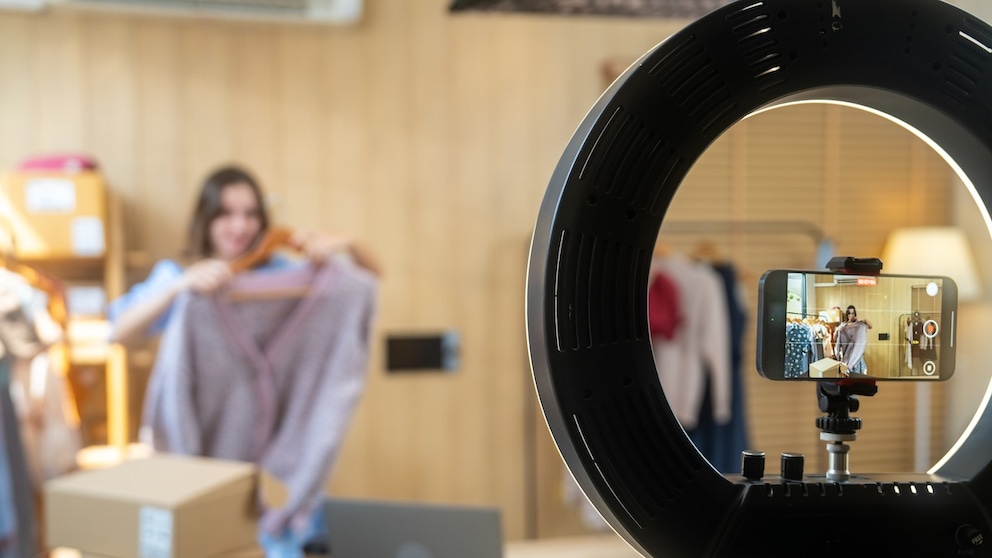
Influencers create content where they showcase products, sometimes recommending them or labeling them as ads. Such posts are a central part of many social media platforms. But now Instagram and TikTok are testing AI tools that take some control away from content creators and cause further conflicts. Even private users could be affected by this combination of AI and e-commerce.
Overview
Social Media Platforms Take Control of Advertising
Less than a year ago, Mark Zuckerberg “declared war” on the advertising industry. That’s how the tech portal “The Verge” headlined in May 2025. The background is the Meta CEO’s plans to largely hand over advertising on his platforms to AI. Advertisers will only need to set the target and budget—the creation, distribution, and optimization of ads will be automated by the platform.
It is quite clear that Meta wants to take more control over advertising and marketing. And now, the first major steps in this direction have been taken.
Instagram and TikTok Test AI Advertising
It seems that the lines between social networks and online shops are increasingly blurring. As “Media Post” reports, citing a “Bloomberg” article, Meta has been using AI-powered shopping features for months. This includes the “Show Products” feature, which can automatically convert individual ad posts into catalog ads.
Currently, Instagram is testing an AI tool that automatically creates shoppable content from regular posts. According to “Media Post,” competitor TikTok is experimenting with a similar feature that allows users to click directly in Reels ads and purchase products immediately through the platform. In both cases, the software can recognize products in images or videos and automatically provide purchase recommendations. Essentially, doing what content creators typically curate and manage themselves.
The Principle of “Shop the Look” and “Find Similar”
Instagram’s AI tool is called “Shop the Look.” A similar function is known from online shops, making it easier for customers to purchase product bundles. The analog predecessor was probably the classic layout pages in fashion magazines, where editors once manually assembled and presented outfits to inspire readers with complete looks. A task that AI can take over in seconds and on a much larger scale.
On TikTok, the similarly functioning tool is called “Find Similar.” According to “Media Post,” it has so far been observed mainly in posts from users with relatively few followers. The portal suspects that, in the long run, all users will be turned into product promoters.
Problem with the Tool: Influencers Lose Control
For users, this may initially seem like a convenient extension. But AI advertising is increasingly facing criticism—especially from content creators, whose automated advertising disrupts their plans. Shopping links suddenly appear in their posts that they did not set themselves—sometimes even for products they did not want to recommend. And while influencers are the ones who want to earn from affiliate links, the platforms now directly benefit from monetization.
Moreover, if influencers lose control over their content, advertisers also have little influence over where and how their products appear.
Products Are Often Not the Originals
The products automatically linked by the AI tools are often not originals but cheap imitations (“dupes”) or entirely different items. Additionally, they usually do not come from the content creators but are selected by the platform.
This naturally undermines trust in influencers. Followers often assume that their creators personally recommend the linked products, but this is often not the case. It’s even worse when inferior imitations are displayed instead of genuinely tested and curated originals.

Is TikTok a Danger to Children?

Court Establishes New Advertising Rules for Instagram
Private Users Also Become Unwitting Advertisers
It’s not just major creators affected: Private users can also become part of this system, meaning their photos and videos posted on Instagram or TikTok can serve as the basis for product recommendations.
On Reddit, this scenario has already caused a stir. A user started a discussion there, reporting that a “mysterious ‘Shop the Look’ button” suddenly appeared in one of his posts. The feature linked products he hadn’t promoted—including a sweater very similar to the Patagonia fleece he wore in his video. He complained: “This is not my shop. I don’t sell sweaters and don’t want people to think I’m promoting them through an affiliate link.” Other private users also shared similar experiences in the discussion.
Also interesting: Radical Change at Instagram! What Users Need to Know
AI Advertising on Instagram Is “Just a Test,” Says Meta
In response to the criticism, a Meta spokesperson stated that these are initially just tests. The idea is for users to discover products that match their interests while viewing posts or Reels. At the same time, the company is examining how to implement the feature with clearer labeling.
It remains to be seen whether and how these AI shopping tools will be used in the long term. Their use also raises legal questions. Who is liable if products are automatically linked that the creator does not recommend or that do not meet user expectations? How can transparency obligations be fulfilled?
In addition to control and trust, regulations and laws for influencers, platforms, and advertisers are becoming increasingly important. The way content is monetized on social media is fundamentally changing, bringing entirely new challenges.