

November 2, 2023, 10:21 am | Read time: 3 minutes
Should you charge your smartphone battery the traditional way with a cable or inductively? We explain the pros and cons of each method.
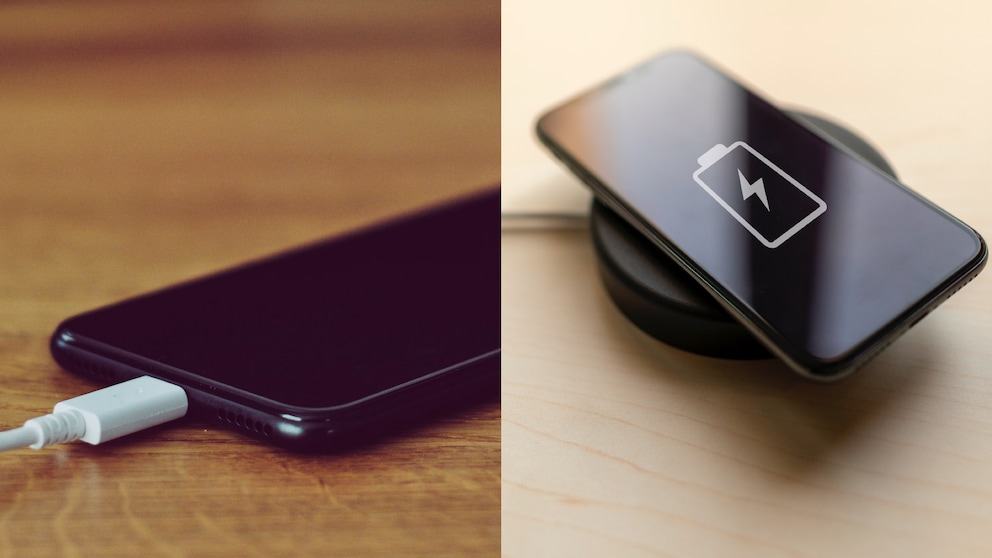
Modern smartphones, as well as other electronic devices such as smartwatches or Bluetooth headphones, can be charged traditionally via a direct power supply with a cable—or wirelessly (or “wireless”) through induction. But which is actually faster and better for the battery? And what should you consider when charging? TECHBOOK provides an overview.
Overview
How does wireless charging actually work?
When the smartphone battery is empty, you simply plug it into the power. Nowadays, devices are fully charged in no time thanks to high speed. You can opt for charging via cable—usually with a USB-C connection—or the completely wireless “wireless” charging process with a charging station.
This first became possible with the so-called Qi standard on a Nokia phone in 2012. After that, wireless charging first caught on in the high-end smartphone market and then became widespread.
Wireless “inductive” charging works through a magnetic field. This is created by the charging station and generates electricity through alternating current, which is then transferred with a coil inside the smartphone. As a result, smartphones on an inductive charging station heat up faster than with traditional cable charging.
Also interesting: Tips for properly charging your smartphone battery

iPhones May Soon Charge Faster Wirelessly

Apple Warns Against Charging iPhone in Bed
Pros and cons of wired charging
Charging via cable is more widespread and, in case of doubt, uncomplicated. If you already have such a cable on hand, you can also use it for data transfer, such as transferring photos from your phone to a laptop. Additionally, it is often the faster option, with less heat development.
However, constantly plugging and unplugging cables leads to wear and tear over time. If you’re not careful, you might damage the phone’s port. The cable itself is also prone to wear. Moreover, you often need the right adapter on hand because major manufacturers now offer cables and adapters separately. If you want to charge on the go, you need to have both or a power bank instead of the adapter.
Pros and cons of wireless charging
On the other hand, those who opt for wireless save a few cables. It is often also convenient to simply place your smartphone on the charging station. Depending on the size of the station, you can charge multiple devices at once, and the ports of the devices being charged are preserved.
At the same time, this limits you somewhat. Due to the short range of the charging stations, the device must lie directly on it. This makes, for example, phone calls only possible with the speaker. As of now, inductive charging is also often slower than wired charging.
Additionally, charging stations cost more than a regular charging cable plus adapter, and the technology is comparatively more harmful to the battery. This is partly due to the higher temperatures from the magnetic coil. Moreover, the lack of a direct connection to the power source during charging means the battery’s storage cells are alternately charged and discharged, leading to greater wear.