

January 1, 2026, 8:29 am | Read time: 5 minutes
Do you always let the battery of a new smartphone fully discharge before plugging it into the power outlet? Probably not anymore. But surely, among the following tech myths, there’s one or another legend you still believe in, even though it’s long outdated. TECHBOOK provides clarity.
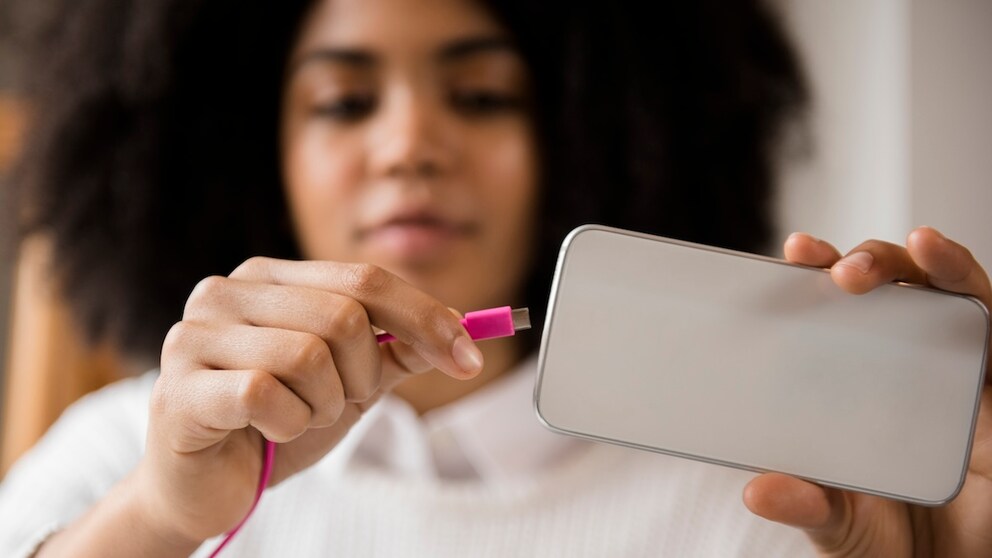
It used to be said that a new phone battery needed to be “conditioned”—this was the rationale for the once-common practice of fully discharging it to supposedly increase capacity. However, modern lithium-ion and lithium-polymer batteries don’t favor deep discharges. For them, regular small charges are not only unproblematic but ultimately less stressful than extreme charge states.
But this might be more widely known now than some other tech myths that many people still believe today. TECHBOOK takes a closer look at the most persistent ones. And while we’re on the topic of charging…
Plug-in Chargers Are Real Power Hogs
It’s often said that unplugged chargers still draw power. Admittedly, this myth can’t be completely debunked. However, it must be significantly downplayed—you aren’t dealing with serious “power hogs.” Modern chargers consume only very small amounts of power when idle. In total, the consumption costs less than a dollar per year. The effect is measurable but can largely be ignored in everyday life.
Talking While Charging Damages the Battery
Another battery-related myth claims that you shouldn’t use your smartphone while it’s charging because it could damage the battery. Today, we know it’s fine to make calls, check emails, or send messages during charging. However, you should avoid particularly intensive use, such as gaming or downloading videos. Doing so would simultaneously charge and actively discharge the battery, which could disrupt the current charging process, overheat the smartphone, and potentially damage the battery.
Tech Devices Must Be Turned Off at Night
To prevent unnecessary operation and “preserve” devices, it’s said that tech devices like routers, smartphones, and smart TVs should be turned off overnight. However, this myth overlooks technological advancements. New technology is generally designed for continuous operation. And don’t forget: Updates, backups, or synchronizations often run at night. Constantly disconnecting devices from power prevents these processes from being carried out.
A quick note on routers: If your landline phone operates through the router, unplugging it significantly limits your accessibility and could lead to higher costs. Devices like smartphones or tablets would then need to access the internet via the mobile network. It’s also known that smart home products rely on a constant internet connection.
Also of interest: These devices should never be unplugged!
Faster Wi-Fi Means Faster Internet
Having internet problems at home? Then faster Wi-Fi is needed—or so the common suggestion goes. However, Wi-Fi speed only indicates how quickly data is transferred between the router and connected devices. For truly fast internet, the internet connection itself is always crucial. Internet providers like Vodafone explain that the actual download and upload speeds are limited by the subscribed plan. No matter how fast the Wi-Fi, it can’t exceed this limit, but it does ensure a more stable connection within the home.
Open Wi-Fi Is Inherently Dangerous
Data interception, fake hotspots—when it comes to open Wi-Fi, many people’s alarm bells go off. And not without reason. It’s true that hackers can easily exploit app vulnerabilities in public networks. However, serious risks only arise when sensitive data is transmitted unencrypted. Modern websites typically use HTTPS by default, and VPNs can further minimize risk. In summary, it’s not the open Wi-Fi itself that’s dangerous, but careless behavior. TECHBOOK delves deeper into the topic here.
Smartphones Are Always Secretly Listening
Have you ever talked about a particular brand and suddenly saw ads for it? Clearly, the smartphone is always listening. Or is it? In this article, TECHBOOK examines the legal situation and current status in more detail. Here’s the short version: Overall, you can rest assured. Constant eavesdropping is very unlikely, as it would require enormous amounts of data and significantly drain the battery. What many perceive as “eavesdropping” can usually be explained by analyzing location data, search behavior, and app usage.
More Pixels Mean Better Image Quality
A smartphone camera with many megapixels automatically delivers the best pictures? Think again. More megapixels might mean more details, but the image quality primarily depends on the size of the sensor that captures the light. Larger sensors capture more light, reducing image noise and making photos appear sharper and more vibrant overall. If the number of pixels is significantly increased without enlarging the sensor, the individual pixels are smaller, capture less light, and the image quality may remain the same or even worsen despite high resolution.

Almost Everyone Makes This Mistake When Charging Their Phone

Devices You Should Never Unplug!
Using a Phone at the Gas Station Poses Explosion Risk
Do you put your smartphone away when you drive into a gas station? The prohibition signs there still suggest it. The myth claims that talking on the phone at gas stations can trigger an explosion. In reality, the signs are meant to prevent a damaged battery from catching fire in the worst-case scenario, such as if a phone is dropped. With modern smartphones, this risk is minimal, as their batteries are known to be securely built-in.
Batteries Stored in the Fridge Last Longer
This myth dates back to older battery types, such as nickel-cadmium or early alkaline cells. For these, a cooler environment could slow down self-discharge. However, modern batteries—alkaline, lithium, and lithium-ion cells—benefit little to none from cold. In the worst case, the opposite is true: The moisture in the fridge can damage the batteries or promote corrosion. The optimal storage for today’s batteries is dry, dark, and at room temperature.