

October 7, 2026, 6:02 am | Read time: 4 minutes
A little time travel: When digital television launched in Germany in July 1996, access cost nearly 900 Deutsche Marks. This was because a so-called set-top box was needed for reception. Today, the same basic technology is built into every smart TV, provided free of charge and completely invisible. TECHBOOK tells why the start of digital television was rocky in this article.
More channels, better sound, and a more stable picture were the promises at the start of digital television in Germany in 1996. With DF1, there was also the first digital pay-TV offering in Germany. However, the major breakthrough initially failed to materialize.
Behind DF1 was media entrepreneur Leo Kirch. The new digital program platform was initially only receivable via satellite. It was only later that it was fed into the regional cable network.
A Technology Ahead of Its Time
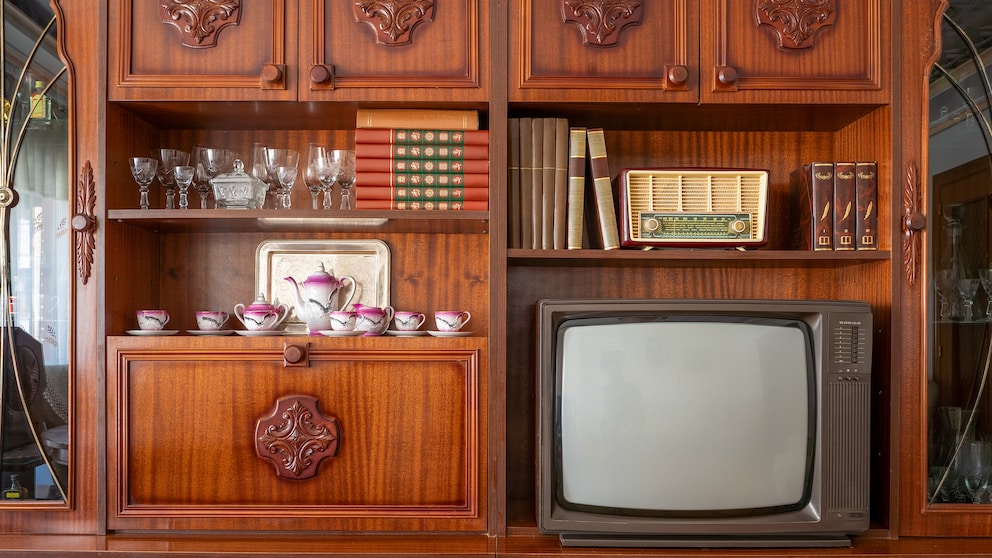
To view the digital images on the TV, a special set-top box was necessary. The new technology actually encountered outdated devices. In the mid-1990s, most living rooms had heavy, bulky tube TVs designed for analog reception.
Therefore, a receiver was needed to convert the digital signals for analog TVs. DF1 relied on the d-box from Nokia. This cost just under 900 Deutsche Marks. “That was simply too expensive for many households,” the ARD press office told TECHBOOK. “Other receivers were also in the premium segment at the beginning. That’s why the digitization of television in Germany initially didn’t really get off the ground.” The advantages of digital reception, such as picture quality or sound, were simply not visible or audible on the smaller screens common at the time.
Among other technical shortcomings, DF1 failed. The first digital pay-TV offering in Germany fell far short of initial expectations and only incurred losses. In 1999, the platform merged with Premiere to form the new provider Premiere World. This later became Sky.
What You Should Know About Waipu.tv

Never Search for Channels Again? This New TV Standard Could Change Everything
Digitization on Two Levels
The ARD and other TV broadcasters faced similar problems to DF1 at the start of digital television. “The effort for the digitization of television was enormous and affected two levels,” explains the ARD digital press office. “The first level concerned the broadcasters. The entire production and transmission chain had to become digital-capable. The second concerned the audience. People first had to be convinced of the new technology.”
Convincing the audience took time. It wasn’t until larger and cheaper flat screens hit the market that the situation changed. On these devices, the higher picture quality compared to analog reception was actually noticeable. Additionally, the price for entering digital television reception decreased with the spread of flat-screen TVs.
The new technology not only brought advantages for viewers. Digital picture and sound signals are transmitted as data. They can be compressed. This allows multiple programs to be broadcast over a single transmission capacity.
This meant that suddenly several TV programs could be transmitted on one broadcast frequency. Only then was it possible for ARD and other TV broadcasters to expand their program offerings. The way of watching TV changed fundamentally. The ARD press office refers to this as having “historical significance” for technology and program diversity.
Linear Television and Streaming Are Converging
Today, hardly anyone uses the term “digital television.” The technology is now the standard. Digital television comes into the living room via satellite, cable, and antenna. Smart TVs are equipped with the necessary tuners and are constantly connected to the internet. Functions that seem commonplace today, such as electronic program guides and subtitling of broadcasts, only spread through digitization.
The next stage of development is called DVB-I. The abbreviation stands for “Digital Video Broadcasting – Internet.” ARD is promoting the introduction of the standard together with other partners. Participants include ZDF, RTL Deutschland, ProSiebenSat.1, the Federal Network Agency, and industry associations VAUNET and ZVEI. “DVB-I is intended to bring traditional linear television and streaming closer together. For viewers, it should become less important through which technical means a program reaches the screen,” explains the ARD press spokeswoman.
Also interesting: Do LG Smart TVs listen to conversations? Researchers raise serious allegations
Thus, traditional broadcasters are increasingly transforming into streaming providers. Linear television according to a fixed program schedule will initially continue to exist. However, the offerings through the broadcasters’ own media libraries are increasingly coming to the forefront.
In doing so, ARD is aligning with the wishes of viewers. “The trend towards a time-sovereign, self-determined program selection has been unbroken for years,” emphasizes the ARD press spokeswoman, adding: “At the same time, linear television is not disappearing. Streaming platforms are also increasingly relying on offerings that resemble traditional linear television in their structure. Future TV enjoyment is thus moving in both directions. It is becoming more individual and at the same time more curated.”