


August 15, 2026, 9:55 am | Read time: 5 minutes
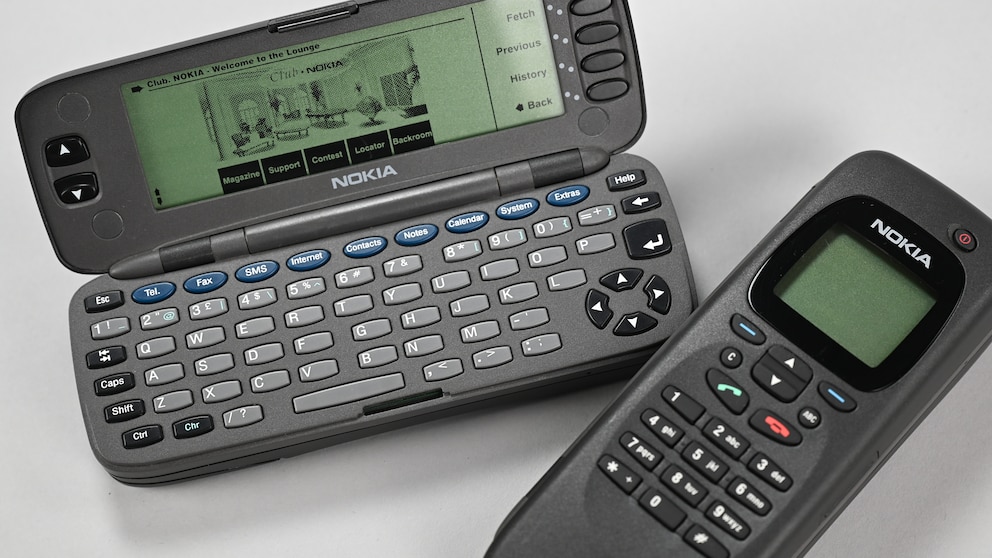
On August 15, 2026, a milestone in mobile communication history celebrates its 30th birthday: the Nokia 9000 Communicator. When the device hit the market in 1996, it was ahead of its time. It combined a mobile phone, email terminal, internet access, and office computer into a single mobile device, creating a concept that seems commonplace today. Long before the Apple iPhone or Google Android conquered the mass market, Nokia was already demonstrating what mobile work could look like.
When Nokia introduced the 9000 Communicator, the mobile world was entirely different. Mobile phones were primarily used for making calls and sending short text messages. The Communicator, however, was designed to do much more. Once opened, it revealed a full QWERTZ keyboard and a large display. Users could write emails, send faxes, manage contacts, organize appointments, and even surf the internet. By today’s standards, these functions seem unremarkable. However, in the mid-1990s, they were revolutionary.
Overview
The Vision of an Office in Your Pocket
Many office workplaces back then didn’t even have regular internet access. Smartphones, as we know them today, were unimaginable. Yet, with the 9000 Communicator, Nokia brought central computer functions to a mobile device for the first time. However, it was neither light nor compact: The device weighed almost half a kilogram and was nearly four centimeters thick.
Moreover, the technology came at a price. The device cost 2,700 Deutsche Marks at launch. For the same amount, one could buy a used compact car or a powerful home PC with a monitor in the mid-1990s. Adjusted for inflation, the price today would be around 2,500 euros. It’s hardly surprising that the Communicator was especially popular among managers and business travelers. For many owners, it was not just a work tool but also a status symbol.
A Smartphone Before the Term Existed
Today, the Nokia Communicator is considered one of the most important precursors of the modern smartphone. Although the term “smartphone” was hardly used at the time, the fundamental idea was already there: a mobile phone that could do much more than make calls.
The devices featured calendar functions, address management, email access, web browsers, and later the ability to install additional applications. They also supported early forms of multitasking. This allowed them to take on tasks that typically required a laptop or desktop PC at the time.
The distinctive clamshell design made the Communicator series unmistakable. Closed, the device looked like a mobile phone; opened, it resembled a small laptop. This combination of phone and computer became the hallmark of the series.
Also interesting: What Ever Happened to the Cell Phone Manufacturer Nokia?
The Evolution of a Device Family
Nokia consistently developed the concept over the following years. The Nokia 9110, released in 1999, was significantly lighter and more compact than its predecessor. At the same time, battery life increased, and for the first time, the memory could be expanded.
With the Nokia 9210 in 2001, a new era began. The device introduced a color display and switched to the Symbian operating system. This step laid the foundation for more powerful applications and made the platform future-proof.
The models 9500 and 9300 continued the concept. MMS and EDGE data transmission turned the devices into mobile workstations. Particularly the 9500, with Wi-Fi and an integrated camera, was considered one of the most technically advanced mobile phones of the early 2000s.
The family reached its peak in 2007 with the Nokia E90. The device combined the traditional Communicator concept with modern mobile standards like UMTS and HSDPA, offering Wi-Fi, GPS, and a powerful camera. At the same time, it marked the end of an era: Nokia integrated the Communicator idea into its business series Eseries and gradually phased out the traditional name.
Why the Communicator Was So Significant
The Nokia Communicator was never a mass product. Its significance lies in the direction it set for the industry’s future development. It showed as early as the 1990s that mobile communication and productive work on a single device were possible.
Many functions that seem commonplace today were first brought together here: email on the go, digital scheduling, internet access, and mobile office applications. The dream of an “office in your pocket” became tangible with the Communicator.
The tech world took notice. Even Microsoft showed great interest in the unusual device. The Communicator thus became a symbol for the future of mobile work.
Nokia Phones’ Fate Seems Sealed
5 Major Tech Companies That No Longer Exist Today
From Pioneer to Obsolete Model
Despite its innovative power, Nokia failed to maintain its leading position. The devices remained relatively expensive and were geared toward business customers. Meanwhile, competitors like BlackBerry established themselves with simpler and more connected solutions.
The real turning point came in 2007 with the iPhone. Apple relied on a universal operating concept with a large touchscreen, appealing to much broader target groups. Nokia initially stuck to its strategy and reacted too late to the fundamental market shift. Within a few years, the once-dominant company lost its leadership role.
Also interesting: 7 Old Cell Phones That Are Now Really Valuable
The Legacy
Three decades after its introduction, the first Nokia Communicator seems like a relic from another time. Yet behind the bulky casing was an idea that continues to shape the mobile world today. The Communicator was more than just a phone. It was an attempt to bring the computer into the user’s pocket. This made it one of the most important pioneers of modern smartphones.