

February 3, 2023, 9:39 am | Read time: 4 minutes
What would Samsung, Sony, or Apple be without German inventiveness? Nonexistent. German engineers made significant pioneering contributions in the early days of communication and broadcasting technology at the start of the 20th century. The PAL system, and thus color television, is primarily associated with one name: Telefunken. However, by the time color television was launched in Germany on August 25, 1967, by Chancellor Willy Brandt, Telefunken no longer existed as an independent brand. What happened?
The rise of Telefunken coincides with the era of the German Empire. These were turbulent times, with countries surrounding Germany in opposition. By the end of the 19th century, Europe resembled a powder keg. A new, fast technology promised the rapid transmission of messages in the event of war. This was made possible by so-called spark telegraphy. The age of radio had just begun after Heinrich Hertz discovered electromagnetic radiation in 1886, the basis for radio waves. However, there were no devices yet.
At this time, two major electrical companies in Germany were advancing research in radio technology. One group, led by Adolf Slaby and Georg Graf von Arco, worked for the Allgemeine Elektricitäts-Gesellschaft, or AEG. Another group, under the leadership of Karl Ferdinand Braun, conducted research at Siemens & Halske. AEG focused on radio equipment for the Imperial Navy, while Siemens was a pioneer in radio technology for the German Army.
Overview
Telefunken Emerges at the Emperor’s Request
Emperor Wilhelm II was not pleased with the situation of having two large electrical companies. Allegedly at the emperor’s request, both companies joined forces. Thus, on May 27, 1903, the Gesellschaft für drahtlose Telegraphie m.b.H., System Telefunken, was established in Berlin. The newly founded company chose the short telegram address “Telefunken” as its trademark.
The importance of radio technology increased in the following years. The sinking of the Titanic in 1912 boosted the business in maritime radio technology, where Telefunken was already a leading company. Unfortunately, Telefunken’s technology in communication also played a significant role in World War I.
How Germany Became the Cradle of TV Sets–and Nearly Lost It All
What Ever Happened to the Tape Recorder?
Telefunken Develops First Radio and TV Devices
After the end of World War I and the fall of the German Empire, radio technology gained momentum. With the start of radio broadcasting in 1923, the company changed its name to Telefunken, Gesellschaft für drahtlose Telegraphie. The focus was now on developing radio devices. By the end of 1923, Telefunken began regularly broadcasting radio programs. At the same time, Telefunken was researching the first television devices. At the 1928 Radio Exhibition in Berlin, Telefunken presented its first model.
In 1930, a Telefunken engineer developed a method to deliver flicker-free TV images to the few television sets available. The Nazis later recognized the potential of television. In the so-called German Standard Television Receiver E 1, technology from Telefunken was included in 1939.
Interestingly, in 1932, the company founded a subsidiary named Telefunken-Platte G.m.b.H., making it one of the largest German companies in the record industry at the time. It continued under the name Teldec from 1950 and was sold to the American media company Time Warner in 1987.
Between these events lies the dark chapter of World War II. During this time, Telefunken was one of the most important companies in radio technology for the German military–on land, at sea, and in the air.
Read also: Whatever happened to the TV manufacturer Loewe?
PAL Color TV System Made by Telefunken
After the war, Telefunken focused on producing radios and televisions. The company established new locations in Ulm and Backnang.
By the early 1950s, Telefunken aimed to do more than just produce televisions. The company thought on a larger scale: developing its own color television system. To achieve this, the company established a television research laboratory, led by Walter Bruch. In 1962, Telefunken’s electrical engineers achieved a breakthrough. The PAL system was born, paving the way for color television in Germany.
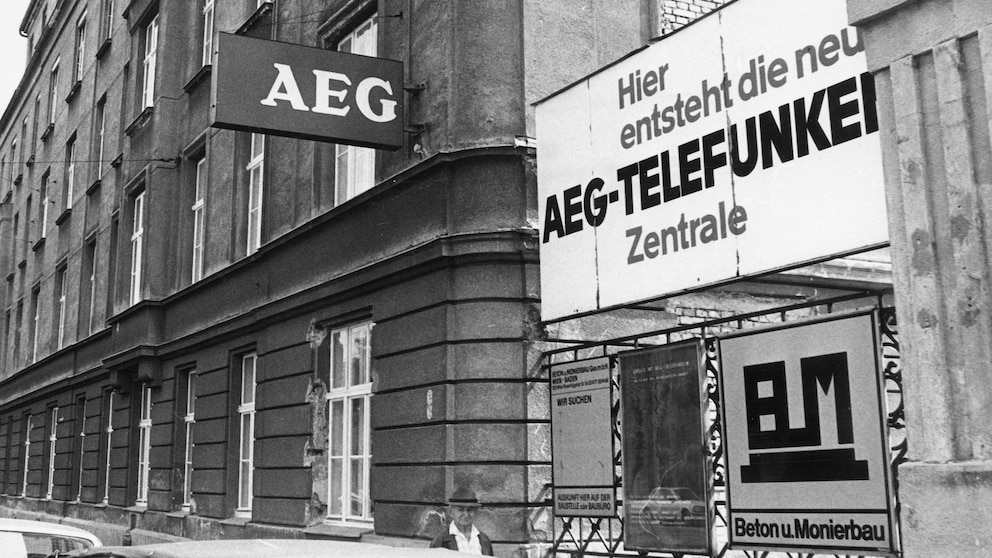
It took another five years before colorful images appeared on German TV sets. Meanwhile, the inventor of German color television almost vanished from the scene. AEG took over Telefunken’s rights in 1967, ending the story unceremoniously. However, due to the brand’s strong reputation, Telefunken reappeared in the 2010s. The Turkish electronics company Vestel used the name for a while to sell televisions and household appliances.
Today, Asian countries play a leading role in the field of electrical engineering. However, it was German engineers and companies like Telefunken that made significant pioneering contributions in radio and broadcasting technology.