

June 9, 2025, 6:53 am | Read time: 9 minutes
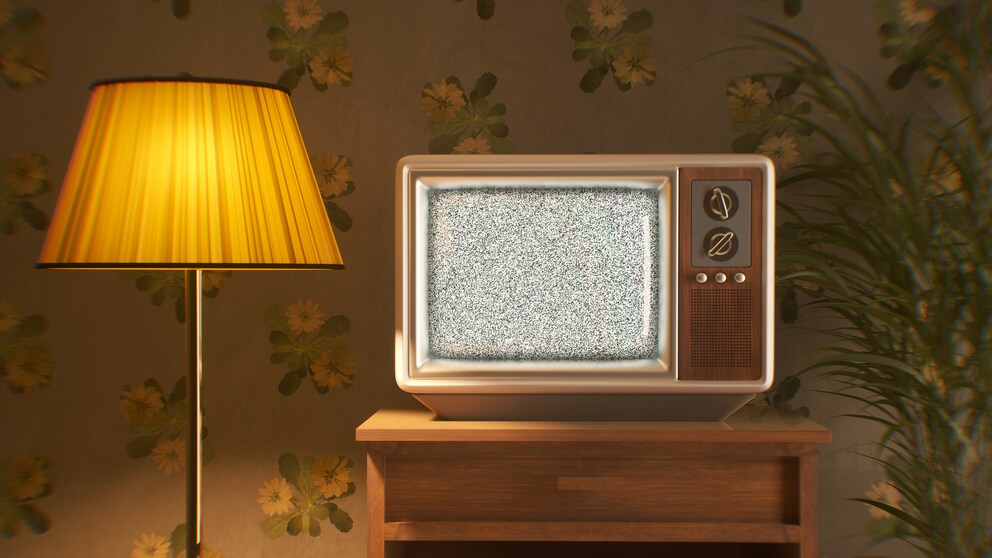
The history of the television set is inextricably linked to that of television itself. Yet it took about 70 years for moving images to reach a level of serial production that made television the mass medium of the 20th century. In Germany, in particular, the production of TV sets boomed. A boom from which around 80 independent brand companies benefited in the 1970s to 1990s. Germany became the cradle of television set production. But today, nothing remains of that.
Spring 1972: The first and to date only German Summer Olympics after World War II was approaching. “Munich ’72,” with stars or those who would become stars during the games, such as high jumper Ulrike Meyfarth, long jumper Heide Rosendahl, or javelin thrower Klaus Wolfermann. A mega-event and reason enough, after some hesitation, to finally purchase a television, as the author’s father decided. And this device was, of course, a model from Saba. “Of course,” because Saba devices, on par with those of competitor Grundig, were considered the gold standard. Although Saba TVs, radios, and cassette recorders were manufactured in the supposed province, in the idyllic Black Forest town of Villingen, they nonetheless enjoyed an undisputed reputation for offering premium quality.
Olympics and World Cup Only in Black and White–That Cost Saba a Lot of Money
Thus, the first television in the author’s life was a hefty box made of white wood veneer with a massive metal carrying handle that could also be used for self-defense. The screen diagonal of 27 inches (about 70 cm)–today, screens twice or even three times as large are more the norm than the exception–was more or less the status quo back then.
What was no longer in line with the status quo, however, was that the Saba TV broadcast only in black and white. A shortcoming that would cost the manufacturer a lot of money, not only regarding the Olympics but especially because of the 1974 FIFA World Cup, also held in Germany. After all, color television had already been introduced in West Germany on August 25, 1967. In the U.S., some broadcasts had even been in color since 1951. However, the significantly higher purchase price compared to a black-and-white set made the color TV a luxury item not affordable for everyone at the time.
Number of TVs in German Households Grows Rapidly
But whether in color or still in black and white–by the early 1970s, the television set was already indispensable in German living rooms. In 1952, there were only about 300 private TV connections in Germany (for comparison: in the U.S., there were already 15 million households with TVs at that time), but this number grew to 100,000 connections by 1955.
Two more years later, in 1957, the million mark was surpassed, reaching seven million by 1964 and even 17.5 million by the early 1970s. This meant that about 70 percent of all West German households could now watch TV. After a maturation process of about 90 years, television and the TV set had arrived in the middle of society.
It all began in 1883 with the German inventor Paul Nipkow. Nipkow succeeded in developing an electric telescope that used a rotating disc with spirally arranged holes to break down images into light-dark signals and then reassemble them. And just a short time later, on January 6, 1884, Nipkow patented the device, which would go down in the history of electronics as the Nipkow disc.
Although 40 years earlier, the Scottish watchmaker and inventor Alexander Bain had already considered scanning images line by line and transmitting brightness values electrically, Nipkow is considered the inventor of television today because he was the one who put theory into practice. A practice that would become the standard for the first television broadcasts at the beginning of the 20th century.
Read also: What You Should Know About the New TV Standard DVB-I
The Cathode Ray Tube as a Groundbreaking Invention
As early as 1897, the German electrical engineer and later Nobel laureate Ferdinand Braun and his compatriot Jonathan Zenneck developed the cathode ray tube, also known as the “Braun tube.” This is an electrical component with electrodes located in a gas-filled bulb made of glass, steel, or ceramic.
When the electron beam is deflected or altered by magnetic or electric fields, a visible image is created as soon as the beam hits a phosphorescent layer applied to the inside of the bulb. This invention would soon prove to be groundbreaking. With constant development, it provided the basis for displaying television images for more than a century, until the late 1990s. It was only much later that the flat-screen TV, which relies on technologies like LCD, LED, or plasma, would replace the tube TV, which, with its boxy shape, took up significantly more space.
A milestone in image transmission was set on January 26, 1926, in London by the Scotsman John Logie Baird. Baird had further developed Nipkow’s disc and thus invented the first mechanical television. This allowed him to hold the world’s first television demonstration on that day. A year later, Baird sent a television signal from Glasgow to London. On February 8, 1928, he even succeeded in the first transatlantic transmission.
In the following years, the inventions of pioneers Nipkow and Baird were continuously developed by tinkerers like the Japanese Kenjiro Takayanagi or the Hungarian Kalman Tihanyi. On May 11, 1928, it was Tihanyi’s compatriot Denes von Mihaly who realized the first German TV broadcast with a receiving device he developed.
While all these transmission devices still operated on a mechanical basis, the German Manfred von Ardenne presented the first fully electronic television set with a cathode ray tube at the Radio Exhibition in Berlin in 1931. And even though the mechanical television had not yet become obsolete, this world premiere marked the beginning of the triumph of fully electronic television.
First Live Broadcast Showed the Queen’s Coronation
In the following years, countries such as England, Germany, the Netherlands, and France began their first regular test broadcasts. However, a TV program as we know it today was not yet conceivable due to World War II.
It was not until the early 1950s that the development of television as a mass medium began. Especially in the U.S., viewer numbers exploded. In 1951, there were ten million viewers, and this number rose to fifteen million just a year later (see above). In contrast, the numbers in Europe were still modest. In the UK, there were at least 600,000 households with TVs, while France had only 4,000 and Germany just 300 TV connections (see above).
However, the triumph of television could no longer be stopped. On June 2, 1953, alone in the UK, 27 million viewers watched the world’s first live broadcast, which covered the coronation of Elizabeth II as Queen of England. Live reporting was now also taking place in France and Germany. And in 1961, after the previously introduced ARD, another broadcaster, ZDF, was launched.
German TV Industry Boomed
By then, a veritable TV industry had developed in Germany. Nearly 100,000 people were now employed in television production. There were about 80 German TV manufacturers during this heyday, when around 1959, 5,000 devices were sold daily. Brands like Saba, Grundig, Metz, Loewe, and Nordmende, to name a few, were now among the best in the world.
However, the market leader in Germany in the late 1950s was Telefunken. The brand stood for reliability and successful design. Additionally, the devices were characterized by, at least for the time, large screen diagonals, typically around 20 inches. However, this came at a price: depending on the model and design, such a Telefunken TV cost between 1,000 and 2,500 marks. Anyone who wanted to afford such a device during the economic miracle years had to shell out several months’ salaries.
Read also: What Happened to the Manufacturer Metz?
First Came the Japanese, Then the South Koreans
From the late 1960s, however, Japanese manufacturers began entering the German market. Sony, Sharp, Toshiba, and Panasonic now challenged the German competition with technical innovations. The first TV with a remote control as standard came from Japan. Previously, remote controls were at best available separately.
And another fifteen years later, the competition density would increase even further. With LG and Samsung, it was now South Korean manufacturers who impressed with innovative technology and high picture quality. They were already offering flat-screen TVs when some German manufacturers were still relying on tube devices.
Today, LG and especially Samsung are long-established as the crème de la crème of TV manufacturers and are indispensable in the German market. Samsung recently announced that in 2024, it had maintained its position as the world’s leading TV provider for the 19th consecutive year. According to market research firm Omdia, Samsung achieved a market share of 28.3 percent in the global TV market.
What Ever Happened to the TV and Radio Manufacturer SABA?

What Really Lies Behind the TV Brand TCL
Hisense and TCL Have Caught Up with the Competition in Record Time
Whether this dominance will last much longer is questionable. Because now, with China, another Asian player is joining the battle for market share. Brands like Hisense and TCL seem to be catching up almost monthly and have pushed the previous second, LG, to fourth place in 2024.
It’s no wonder. The quality of Hisense and TCL TVs is on par with competitors from Japan and South Korea, while significantly undercutting their prices. TCL devices with a massive 98-inch screen are already available for just over 2,000 euros. A price-performance ratio that makes TCL the undisputed market leader in the segment of TVs with a 98-inch screen diagonal.
Hardly Any German TV Manufacturer Survives
But what happened to the German manufacturers who, albeit many years ago, dominated the market? In fact, hardly any of the once-renowned manufacturers survived. At best, only the brand name remained, from which foreign manufacturers hoped for a “Made in Germany” purchase effect.
Today, there are only three German manufacturers that still produce in Germany. Technisat, originally a company focused on satellite technology from the Eifel region, manufactures near Magdeburg. Metz could only survive with outside help and is now part of the Chinese Skyworth Group, but still produces in Germany. Loewe, finally, defied bankruptcy and has been producing high-end devices again since 2020. With French soccer superstar Kylian Mbappé, they secured a prominent brand ambassador who has now taken a stake in Loewe.
And Saba, the childhood memory in black and white? The Black Forest manufacturer changed hands several times and initially belonged to the French Thomson Group from 1980. In 2004, Thomson and TCL formed a joint venture called TTE, which temporarily became the third-largest TV manufacturer worldwide. However, by November 2006, the German subsidiary, TTE Germany GmbH (formerly Saba), was insolvent. Bankruptcy proceedings were opened in February 2007. Saba was thus finally history, even though it took until 2016 for the once-successful brand to be officially removed from the commercial register.