

January 5, 2026, 6:31 am | Read time: 8 minutes
The first and, to date, only German Summer Olympics after World War II was approaching. Munich 1972, with stars or those who would become stars during the games, such as high jumper Ulrike Meyfarth, long jumper Heide Rosendahl, or javelin thrower Klaus Wolfermann. The author’s father found this reason enough to finally buy a television. And this first TV set was, of course, a SABA. A white-painted, heavy box with a carrying handle and a then-standard screen diagonal of perhaps 27 inches, and naturally still with a black-and-white picture.
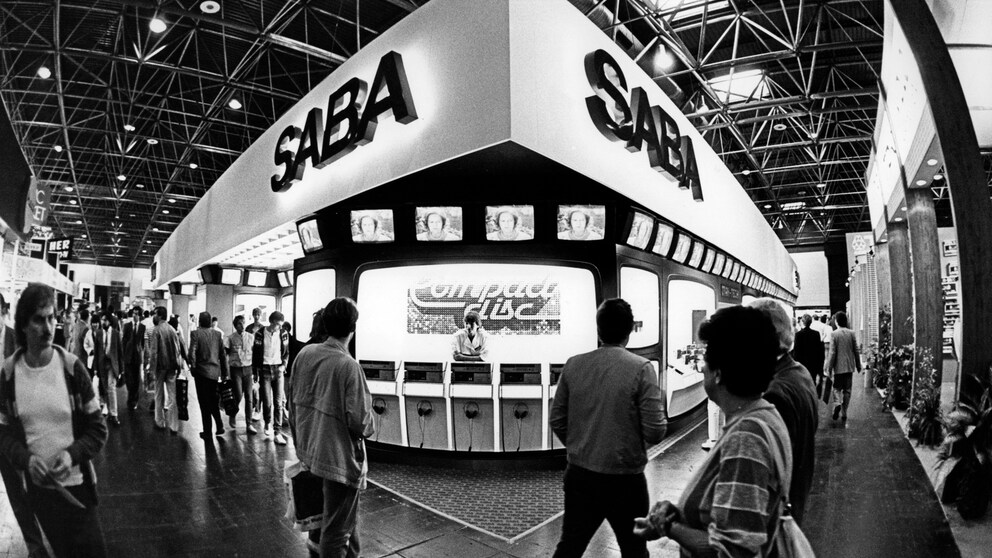
Why choose a SABA device? Simply because SABA enjoyed a worldwide reputation at the time. In the idyllic Black Forest, in Villingen, TV sets were manufactured back then, as well as radios and cassette recorders, for example. And they could certainly compete with the products of other manufacturers, often surpassing the competition.
The company’s origins were not in Villingen but in Triberg (now Triberg in the Black Forest). Triberg is a small village about 30 kilometers southeast of Villingen. In 1835, Joseph Benedikt Schwer founded a clock factory there, which changed its focus with the entry of his son in 1865 and was then called August Schwer Söhne Metallwaren-Fabrik. The name SABA itself first appeared in 1923 when the company specialized in manufacturing components for radio devices. SABA was much easier to pronounce and more memorable than “Schwarzwälder Apparate-Bau-Anstalt.”
Overview
Refrigerator Misstep
By now, Hermann Schwer, the founder’s grandson, was leading the company. Starting in 1926, radio kits were offered, and just a year later, the production of finished radio sets began. That they pursued high goals even then is evidenced by a promotional brochure from that time. “In our company, from the first to the last, there is only one motto: SABA ahead in the world,” it states. A slogan that would prove true: By 1935, SABA was Germany’s second-largest producer of radio devices, behind Telefunken. However, it’s also a slogan that, from today’s perspective, might remind some of the rhetoric of the Nazis. The fact is that SABA, like many German companies during World War II, supported the armaments industry. They produced, among other things, radios for tanks, and SABA also used forced laborers.
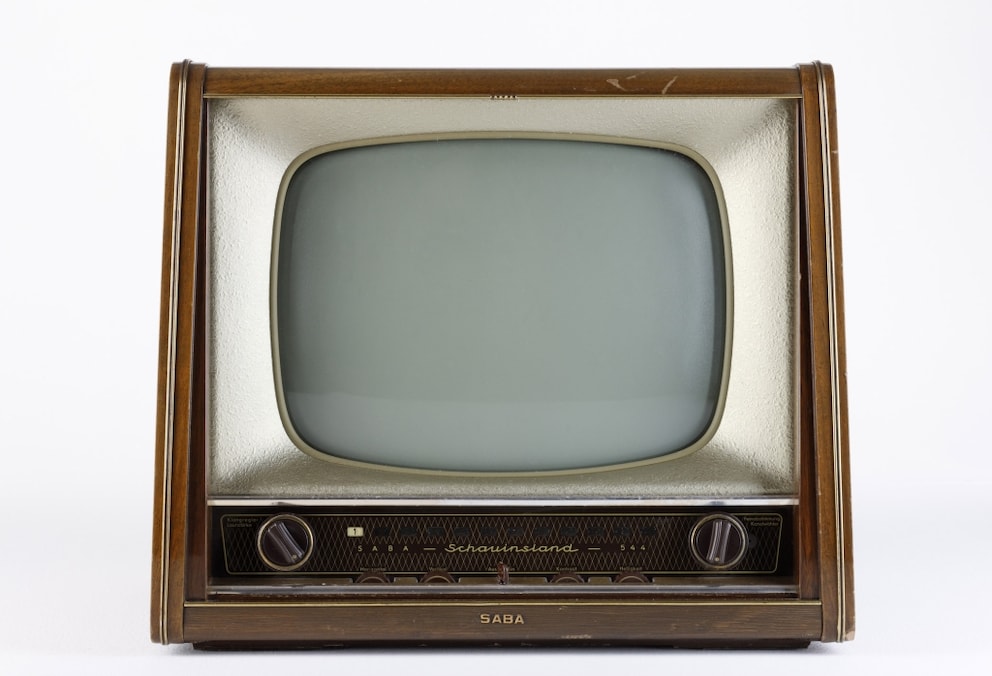
After the war, SABA initially produced telephones for the Deutsche Bundespost, and it wasn’t until 1947 that radio production resumed. Additionally, the company, a GmbH since 1949, ventured into refrigerator production. However, it soon became apparent that they could not succeed in this area. Thus, refrigerator production was abandoned in 1957. Although the “Schauinsland W II” model, the first mass-produced SABA television, was introduced in 1953, they almost missed the beginning of the television production boom. It was likely the cessation of refrigerator production that freed up the necessary capacities.
SABA Now Belongs to the Elite
But now the SABA machinery was running at full speed. A new plant for the production of tape recorders was inaugurated in Friedrichshafen, among other things. In 1964, the SABAmobil, a portable cassette recorder, followed. SABA products were considered elite. The so-called “music chest” with radio, record player, and speakers, such as the “Breisgau” model, became known as the “Queen of SABA,” in reference to the biblical figure of the same name. And from 1967, they also produced color televisions. Nothing seemed to be able to stop SABA in those years. Jobs at SABA were highly sought after not only for their good wages but also because the family business was seen as socially conscious. For example, a SABA recreation home was opened in Meersburg on Lake Constance, and the SABA-owned cafeteria was not a given at the time. In short, the self-proclaimed “Sabanese” were doing well.
Due to the first post-war economic crisis, SABA, like many German companies, slipped into the red and needed fresh capital. This led to a consequential, structure-changing decision. On January 26, 1968, 85 percent of SABA’s shares were sold to the American telecommunications company GTE International (General Telephone & Electronics Corporation), as author Annemarie Conradt-Mach reports in her article “SABA – From Family Business to Corporate Plaything.” This was followed by decades of increasing external control. During this time, SABA felt the full force of globalization, even before the term was coined.
“GTE Wants to Forget Us, Thomson Wants to Devour Us!”
Despite the unequal partnership, SABA again faced financial difficulties in the early 1970s. These were mainly due to a significant management error, with Hans Georg Brunner-Schwer now at the helm. SABA would never fully recover from these difficulties, as is well known today. A disastrous decision during the 1974 FIFA World Cup, from which the television industry expected a boom in color TV sales, was particularly damaging. Due to poor planning, SABA was under immense time pressure. This led to the production and sale of color TVs that had been inadequately tested.
Of course, what had to happen happened: Shortly after use, the picture tubes supplied by the subsidiary Sylvania failed for customers. The “excellent brand image” carefully built over five decades, as Herrmann Brunner-Schwer put it, suffered immense damage. High financial losses followed. While a surplus of 6.7 million marks was achieved in 1973, there was already a deficit of 25 million marks in 1974. Brunner-Schwer spoke of a “deep crisis” at the time.
The Self-Proclaimed French Job Killer
In 1980, the next sale followed, this time to the French Thomson-Brandt group. This company had already acquired another German TV manufacturer, Nordmende, in 1978 and was now the second-largest manufacturer of electrical appliances in France. At a SABA company meeting on March 27, 1980, which went down in company history, frustrated employees summed it up bluntly: “GTE wants to forget us, Thomson wants to devour us!” They hit the nail on the head, as Thomson-Brandt proceeded even more rigorously than GTE before. Job cuts, layoffs, and eventually the relocation of production abroad were the consequences of the sale.
Of the original 4,000 employees, only about 2,400 remained initially. Only the development department stayed in Villingen. Although the SABA brand would exist until 2016, the company itself was reduced to a series of acronyms: SEWEK, DEWEK, EWD, TTG, DTB, and TTE.
The 150th anniversary of the company in October 1985 was anything but a celebration, as Thomson-Brandt announced further restructuring. On December 20, 1985, as a kind of poisoned Christmas gift from the French, the “Südkurier” reported: “If insiders’ assessments are correct, this [the latest restructuring; ed.] is the beginning of a development that could end with the closure of the Villingen and St. Georgen sites.”
In the following months, Thomson-Brandt deliberately kept employees in the dark. The “Südkurier” commented again: “This salami tactic has been part of Thomson’s corporate strategies for many years, as have the house-style, soft explanations that are as convoluted as the corporate structures within the group. The fact that those responsible are playing a macabre and scandalous game at the same time seems to bother them little. But who is surprised by a corporate boss [Alain Gomez; ed.] who even publicly boasts: ‘The image of the job killer is part of my job.'”
How Germany Became the Cradle of TV Sets–and Nearly Lost It All

Hisense–From Local Radio Maker to the World’s Second Largest TV Manufacturer
Production Site Relocated
And Gomez lived up to this image. Despite a high degree of automation in Villingen, which still made it a profitable location, production was moved to Celle in Lower Saxony in 1988. In 1993, the remaining employees in Villingen were offered the chance to relocate their jobs from Villingen to Hanover.
However, very few accepted this offer. Even a subsidy from the state of Baden-Württemberg of about 14 million marks could not prevent the French plans. Baden-Württemberg’s Minister President Erwin Teufel had to acknowledge: “The economic situation in the Villingen-Schwenningen area is dramatic.” Unemployment was the highest in the state, and many companies had to cut staff or were already fighting for survival. Teufel even feared that Thomson would completely abandon the Villingen site, according to Conradt-Mach. Almost inevitably, in February 1993, the employment office reported that Villingen, once teeming with employees, “had the highest number of unemployed in the state.” And the city’s mayor, Dr. Gebauer, called it the “most difficult situation since 1945.”
The Chinese Drive SABA into Bankruptcy with Military Precision
But things would get much worse. In 2004, the Chinese TCL Group acquired two-thirds of the shares, becoming the world’s largest television manufacturer. The name of the new company: TCL Thomson Electronics (TTE). Conradt-Mach reports that the Chinese were only interested in the expertise of the Black Forest engineers. Moreover, the company itself was of no concern to them. While TTE still employed 125 highly qualified engineers and technicians in 2004, 38 of them were already laid off in 2005. In 2006, bankruptcy was filed at the Villingen district court, and salary payments for the remaining employees were stopped. The TCL executives had driven the company into bankruptcy with almost military precision.
Shortly before, the current research and development documents, along with the managing director, had disappeared to China. When they did respond to emails or letters, the replies were almost outrageously dismissive, a slap in the face to the former Sabanese. The situation was what it was, they said, and they should turn to the German welfare state, to which TCL had also contributed in the past. SABA, once perhaps Germany’s best television manufacturer, was now history.