

August 20, 2023, 2:06 pm | Read time: 11 minutes
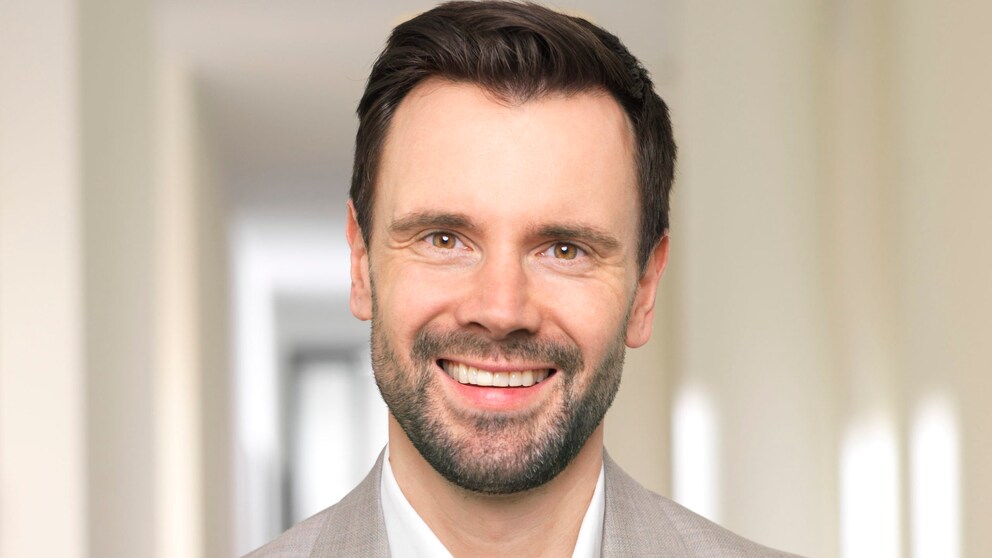
Gamescom is just around the corner, and not only is the TECHBOOK editorial team excited, but so is Felix Falk, head of the German Games Association. In an interview, we talked to him about his expectations for the event and the general state of the German gaming industry in international comparison.
In 2023, Gamescom will once again take place in Cologne. Due to the pandemic, the event had to be held digitally in 2020 and 2021; in 2022, it returned to the live event format. Starting August 22, the world’s largest gaming fair will be open to visitors, initially only for industry professionals and winners of the corresponding ticket lottery. All other attendees will have full access starting August 24. TECHBOOK will also be on-site to report on the highlights.
In advance, we spoke with Felix Falk, managing director of the German Games Association, about his expectations for Gamescom 2023. We also discussed how Germany’s gaming industry stands in international comparison, the level of political attention and support, and which games he personally enjoys playing.
Also interesting: The best indie games at Gamescom 2023! Here are our highlights
Felix Falk in Interview About Gamescom 2023
Before becoming managing director of the German Games Association, Felix Falk studied music and political science. Starting in 2004, he led the office of the chairman of the Committee for Culture and Media–“by chance,” as he himself says–and then became managing director of the USK (Entertainment Software Self-Regulation) before finally taking over as managing director of the “game–Association of the German Games Industry.”
TECHBOOK: Gamescom 2023 is coming up next week. What are your expectations for this year’s event? What might be different from last year?
Felix Falk: Well, we’re especially pleased that not everything is different, like during the pandemic when we held two purely digital Gamescom editions. At least something took place, but it also took a lot of effort at a time when others simply canceled their events. Last year was the restart year; now we’re moving full steam ahead.
And what’s truly great, and something I didn’t expect, is that we’re even managing to surpass some records from 2019. So I already know that Gamescom this year will be bigger and more international. There are more exhibitors, over 1,200 in total. It will be diverse again, and it’s going to be a blast; we’re all very excited about it.
Also interesting: How gamers can enhance their PC with “case modding”
Gamescom 2023 with Comprehensive Entertainment Concept
Your excitement is noticeable. This year, more than in previous years, names like Netflix and Disney are on the exhibitor list. These companies have their own gaming divisions but are primarily known for their streaming business. Do you have hopes for synergies in this regard? Is there a concept?
Gamescom is, of course, a gaming event, the largest gaming festival in the world. But we’ve always seen the event as a 360-degree festival. This refers to the community, which includes cosplayers and eSports enthusiasts, and that’s why all the areas that games now extend into are more strongly represented. If you look at Netflix or Disney, many of the series and films have originated from games or are themed around games, stories, or franchises, and so on. This should naturally be reflected at Gamescom.
Netflix, for example, is also active in this area, and I would say that especially the large digital companies like Google, Amazon, Microsoft, Netflix–some of the largest companies in the world–see games as a strategically essential area and invest heavily accordingly.
That’s true, Netflix has its own games, Disney too, and even Amazon was involved in games like “New World.” How would you classify Gamescom and the German gaming industry itself? Has there been good development in recent years? How does Germany stand in international comparison?
It’s like a coin–with two sides. One side is totally positive and strong. Not only is Gamescom world-class and the largest festival worldwide for games, but we in Germany are also number five in the world in terms of gaming industry revenue. This means only the U.S., China, Japan, and South Korea are ahead of us; we’re number one in Europe with almost 10 billion euros in revenue; that’s impressive.
However, if we flip the coin, we’re extremely good at consuming–six out of ten Germans play video games, across all age groups and regardless of gender. But we’re not as good at producing. Our development studios are mostly small to medium-sized. We’re missing the really big companies, and the overall number is expandable.
This is mainly because the location conditions were poor for quite a while. For example, politics didn’t support this, unlike comparable countries like England, France, or Canada. It’s only just starting for us, and that’s why we want and need to improve. But a lot still needs to happen in production for us to catch up with the world leaders.
Games Funding in Germany
Do you have a theory as to why this is, even though so much has been consumed in the video game sector in Germany for a long time?
We’re not only good at consuming. We’re also great at programming and producing video games. But there’s still room for improvement in the number and size of games. And there’s a reason for that.
Before 2020, before the federal government’s funding was introduced, game production was up to 30 percent more expensive than at other locations. So, of course, you’re hardly competitive internationally. The funding had to first offset this fundamental disadvantage. Only then do we have a chance to really reach the top of the world on our own.
You always have to factor in that a game might flop. Game production is a risky business. I can release two almost identical games simultaneously: one becomes really successful, the other doesn’t. So you have to factor in from the start that you need to have patience. Maybe the first game flops, the second too, and through the experiences gained, the third becomes a success. But to have this patience, you need the same conditions as the competition in other countries.
That this is now slowly being achieved is also evident. Since 2020, we’ve seen strong growth in the number of professionals, and above all, we’ve seen a 46 percent growth in company formations since 2020. That’s a really good and significant figure. It shows that people are now more daring. They’re not just going to Siemens or SAP to program there. Instead, they’re founding a studio and developing games, which is fantastic.
However, we also need to be persistent and keep at it. Two and a half years of funding aren’t enough to reach the top of the world. For that, the federal government must now also provide reliable framework conditions. That’s where things are a bit stuck right now.
Note: The German Games Association represents the interests of its members, including developers, publishers, eSports organizers, and many more. Additionally, the association is a shareholder of the USK (Entertainment Software Self-Regulation) and the Digital Games Culture Foundation. In this role, “game” officially presents ten demands that are central to the association’s political work. This includes better digital infrastructure and more funding to establish Germany as a gaming location.
Can you specify exactly what the issue is?
The Bundestag decided to increase the funds to 70 million euros last year, meaning 70 million were actually available. With growth, the funding volume must also increase. It’s about increasing production, implementing more projects. These 70 million were already used up by May, and there was a halt on applications. Anyone who actually planned to develop their game in Germany then had the same hardly competitive conditions as before 2020, meaning again 30 percent higher costs.
This affected some studios that had actually planned with the funding and then suddenly had to cancel partners abroad, couldn’t stick to their budget plan. Currently, the funding is with the Ministry of Economic Affairs under Robert Habeck. But, of course, the entire federal government is also involved. The government has now presented a budget draft that suddenly states that the funding will be reduced to 48.7 million euros.
This means fewer funds for the gaming industry and, above all, that everything is frozen for a year and a half, and no applications can be submitted. So we’re basically back to a non-competitive level. We now very much hope for the Bundestag and, in this context, for two things. First, that they increase the funding and second, that the funding model is further developed into tax incentives. Almost all other successful locations have this. Then there would be fair and comparable conditions.
The federal government has said in its counter-strategy that Germany should become a leading market for games. But then you also have to do something for it. That’s why we want to talk to politicians about exactly these topics at Gamescom. Do we want to become a leading market? Or just a little bit? Either all or nothing.

IDnow Executives in Interview: “Female Role Models in IT Are Important”

Tech Founder: “Many Terms from the Digital World Were a Shock for Me in Job Applications”
Gamescom as a Symbol
Robert Habeck is on-site to open Gamescom. Do you believe that a major event like Gamescom, with its symbolic impact, can actually change things politically?
Absolutely. We see that games are simply better understood at Gamescom. At the event, you also see all the cosplayers, the community, the communication, and all the aspects–from eSports to retro gaming to the family area. There are eSports tournaments, shows, concerts. It’s a whole universe. To get a feel for it, events like Gamescom and, of course, the people on-site are important. It also shows that we can be world-class in the gaming sector in Germany.
Also interesting: How to become an eSports player?
A few more questions about you. You actually studied political science and musicology. How did you end up in the video game industry?
Honestly, it was a coincidence. At some point–also by chance–I worked in the Bundestag as the office manager for the chairwoman for culture and media. That was exactly during the time when the big “killer game” debate was raging. So: are games evil, and do they turn people into rampage shooters, etc.
Back then, there was still a lot of misunderstanding about the medium, and we advocated from a cultural and media policy perspective to look at games without prejudice and objectively. You can always argue about the content, but not about the medium itself.
During this time, I was also involved in launching the German Computer Game Award and worked a lot with the gaming associations. This then led to my work as managing director of the USK, which deals with youth protection in computer games. That’s how it all came about, and I still enjoy it immensely.
Also interesting: eSports player Dilana in interview: “How often I’ve heard: ‘You’re really good for a woman'”
Video Games Are About Creativity
So you also have a personal connection to video games?
I’ve always played a lot, depending on the situation, sometimes more, sometimes less. But I’m still a gamer when time allows. Accordingly, I didn’t have to acquire anything because gaming has always been part of my normal media routine.
Do you have a favorite platform? You’re well-equipped here in the office.
Yes, and we certainly place a certain value on that. Here, for example, we also play together during lunch breaks, although I often lose (laughs). As for a specific platform, I’m, like most gamers, totally flexible. At home, I tend to use the console or play on the PC. On the go, the phone is more likely to be used, so it’s very situational, integrating into everyday life.
You were also active as a musician. Do you see similarities between the musical and gaming sectors?
For me, there are very clear connections, both culturally and creatively. Those who create music are not far from those who create games. With games, of course, the whole technological aspect is added. The economic viability of culture is also interesting in this context, which both areas have in common; there are similarities there too.
Personally, what appeals to me most in both is the creativity. Creative minds come up with stories, both in music and in video games, and it’s fun to work with them.
Do you have a favorite video game?
Not really. But you have a different connection to games from the past. For example, I picked up “Monkey Island” last summer, and it’s full of fond memories, but I wouldn’t necessarily play it now. Recently, I really enjoyed “It Takes Two” as a family game and can only recommend it. You could talk endlessly, and that’s the beauty of it: there’s a game for everyone, and there’s such a great variety available, you just have to look and let yourself be surprised.
Note: As a co-organizer of Gamescom, the game association is also represented at the fair in Hall 4.1.