

August 8, 2023, 3:49 pm | Read time: 11 minutes
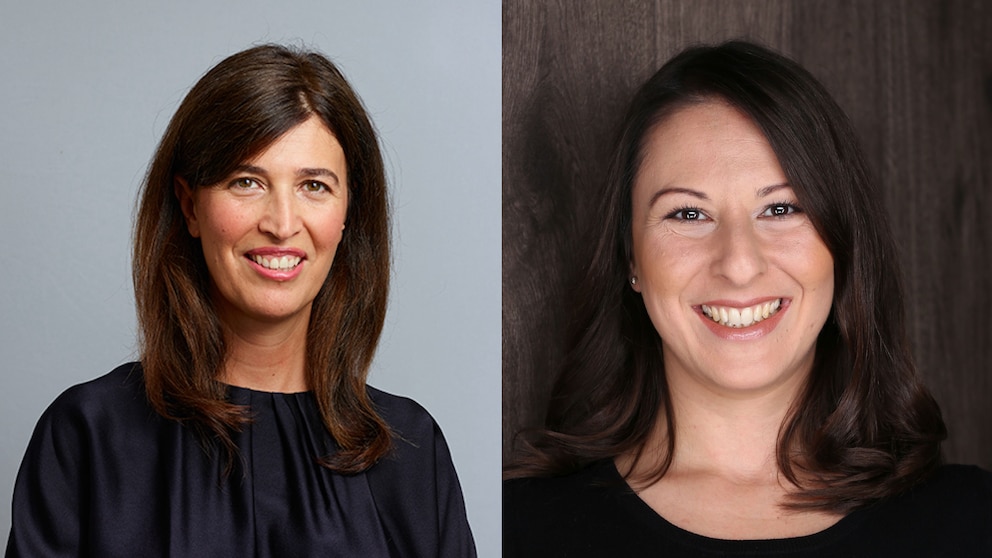
Women in the tech industry are still in the minority. There are complex reasons for this, which are being addressed on multiple levels. TECHBOOK spoke with Rayissa Armata and Arzu Celik-Seidelmann from IDnow about the challenges and opportunities.
Rayissa Armata works for IDnow as Senior Head of Regulatory Affairs and is therefore involved in various company processes related to cybersecurity and digitalization. She has also worked in international telecommunications at the United Nations, chairs the “Digital Identities” working group at Bitkom, and advocates for women in the technology sector. Arzu Celik-Seidelmann, on the other hand, is Head of Acquisition & Employer Branding at IDnow, responsible for finding young new—and also female—talents. She has previously worked for companies such as Sage and PayPal. Topics like diversity in general and women in tech, in particular, have been her focus for years.
TECHBOOK spoke with both about their personal careers, experiences, and industry developments. Where are the potentials and opportunities? What has already changed? And how might the industry need to change in the future?
Interview with Rayissa Armata and Arzu Celik-Seidelmann from IDnow
TECHBOOK: What is IDnow? What does the company stand for and where is its focus?
Rayissa Armata: IDnow is a software company. We provide various products for digital identity verification as a platform. Our products are subject to strict regulations and must meet technical standards; our clients include banks that use IDnow when someone wants to open a new account with them.
We align ourselves with anti-money laundering laws for various European countries where we offer our products. The processes are quite strictly regulated. There are many certifications and technical standards we must adhere to.
There is a lot happening in this area right now, and it’s happening faster, especially in the field of security. The current advances in AI make fraud schemes look even more real. What are the biggest challenges for a company like IDnow today?
That’s true, identity fraud takes many different forms. We are experts here and have a dedicated team that deals with such cases every day. This ranges from fake IDs to exploiting optical similarities to a variety of other schemes.
With the help of AI, these fraudsters are becoming more skilled. They are now dealing with deep fakes and various video injection attacks that can falsify entire videos. That’s why it’s important that our products offer the right level of security.
Do you also work with AI to detect such cases, or how does that work?
Yes, our processes also use AI to analyze the file of an identity document. AI helps us detect forgeries. Especially in recent months, there have been increasing reports about AI and how dangerous it can be. And of course, AI can also be used for bad purposes.
That’s why the EU is currently addressing this and has passed the AI Act, for example. The aim is to present the right applications for AI so that people and their data are well protected when using it. There are strict regulations.
Also interesting: Influential Women in the Tech Industry
What is it like today as a woman in the tech industry?
Let’s move on to more pleasant topics than fraud and regulation, namely your personal careers. How did you end up where you are today?
Arzu Celik-Seidelmann: I work in talent acquisition, have been doing it for over 15 years, and switched to the IT industry ten years ago. It just happened that way. I really wanted to work in an international environment. And the IT industry is still the most represented in that regard.
I was very attracted to working with different nationalities and recruiting in different countries. I have these opportunities in the IT industry. It was very exciting to move from a rather female-dominated environment in recruiting to a very male-dominated environment in IT. Before the switch, I didn’t notice it as much because I belonged to the dominant majority.
When I was in the minority, I thought, “Aha, okay—why is that actually the case?” And that’s when this journey started for me. Why are there so few women in the IT industry? Are they really not there, or do we not have the right methods to find and attract them?
Have you found answers to these questions?
Arzu: I don’t think there’s a specific answer; it’s a puzzle of different elements. I do believe that there are many women in IT professions; they just haven’t always been visible. Furthermore, the work environment needs to be examined and evaluated for how attractive it is to this target group.
It is also proven that you can address different target groups with specific language. So depending on how a job description is set up, it can appeal to a woman or not. That’s a lever you can easily adjust to get more female candidates into the application process.
Another option is, of course, to specifically include diverse candidates in the pipelines and shortlists. There is an acute shortage of personnel in the IT sector, which can be specifically countered in this way. This applies not only to women but also to people of other nationalities. It is important to address people from different cultures and nationalities right from the start.
Rayissa, how did you find your way into the industry?
In my studies, I was primarily interested in political science and particularly in government relations. Through a special program, I was able to specialize in this topic in both the scientific and technological fields; there are strong connections. As part of this program, I also ended up directly at the United Nations (UN) in Geneva.
Initially, I worked there in the telecommunications sector with a focus on satellite communications. From there, I deliberately developed further, also out of personal interest. It was always important to me to work for an international company that is broadly positioned.
The tech sector offers many advantages
You both mentioned the topic of internationality and its importance for the tech world. Are there other aspects you particularly like about the tech sector?
Arzu: What attracts me most to the tech or IT industry is innovation. The sector has always played a pioneering role, also in the way we work and discover new things. I find that you can learn more about work methods here than in any other sector and develop personally.
Rayissa: I definitely agree with that. And I would also say that it’s really great to carry these internal innovations outward. In our case, we work with various international organizations, which in turn work with governments to develop technical standards to show what technology can actually do. And I find that incredibly interesting.
What would you have become if you weren’t working in this field? Is there anything else that would have interested you?
Rayissa: Field service, so very related. (laughs)
Arzu: I really like my job, although I ended up here rather unplanned, unlike Rayissa. If I could start over, I could also imagine becoming a pilot. That was always my dream.
Is the tech industry still a male domain?
You’ve both mentioned it several times: The tech world is still a male domain, especially in public perception. Do you actually experience it that way in your everyday life?
Arzu: Partly yes, but it has also gotten better. Especially at IDnow, we are actually doing quite well in that regard. With 35 percent, we have a large proportion of women, which is also above the average for the IT industry in Germany.
But it’s 35 percent and not 50 percent. So there is definitely still potential. But it’s getting better, especially in recent years, a lot has happened. There are, for example, many more women’s networks in the IT industry that you can orient yourself to. There are many more female role models for the younger generation. And because the current generation is growing up with the digital world, the awareness is naturally quite different. A natural interest is sparked from the outset. That’s why I’m overall very positive about the topic.
Rayissa: Yes, I can only agree with that. It’s improving because we live in a digital world. The topic is no longer as foreign to most as it was 15 or 30 years ago. I now have many women in my field, and I personally have been fortunate to have female role models early on who inspired me—just like men.
One building block is also that topics like science and technology are now being integrated into elementary school and made user-friendly and familiar. This is very important for young girls who have an interest or are simply good at math or technical subjects.

Yoona Founder: “It’s Still Not Normal for Women to Start a Business”

Tech Founder: “Many Terms from the Digital World Were a Shock for Me in Job Applications”
Female role models fulfill an important function
Who were your role models, for example, and what else has personally helped you?
Rayissa: When I worked in Washington D.C., I had a boss who clearly showed how she worked in a male-dominated world and what she accomplished. She was an expert in her field of satellite communications and was respected and stood out—not because she was a woman.
Arzu: For me, it wasn’t so much a specific person. Due to my profession, I come into contact with many people and had the luck in the IT company where I started to be able to establish a regulars’ table, through which very exciting synergies emerged, including how to get more women into the industry.
That personally helped me and helped me make better decisions, for example, by challenging the hiring managers I work with.
With these people, I was also able to break new ground and specifically attend events to address female graduates. We also fought to not only fill senior positions with experienced people but also to give career starters a chance and accompany them in a mentoring program. Those were very decisive motivators for me.
These networking and organizational programs are recommended by Arzu Celik-Seidelmann:
Are there differences between the German market and international competition in this regard?
Arzu: I would say it’s not significantly different—except for the Nordic countries, which are really a step ahead in their development. But that doesn’t just have to do with the companies here; it also has sociopolitical reasons.
In these countries, for example, there are better childcare options for families, both for fathers and mothers, which allows both parents to return to work better or differently. I believe that in Germany, we still have a lot of catching up to do in this regard, and we are missing out on some talents.
Especially in the IT sector, skilled workers are desperately sought. Isn’t there also a large untapped potential that we could tap into if we brought more women into this area?
Arzu: Absolutely. What I take away from many conversations with female candidates is that many choose the freelancer area. The key point here is flexibility. These women don’t want to be available five days a week from eight to six. I personally believe that companies can gain a lot with skilled workers if they offer time flexibility.
Also interesting: eSports player Dilana: “How often I’ve heard: ‘You’re really good for a woman'”
Tips for entering the tech industry
Do you have any final tips for women who want to gain a foothold in the tech world? How should one present oneself in job interviews, and how do you deal with a team that is mostly male?
Rayissa: You should always stay true to yourself and focus on what you know and can do, your own expertise. For me personally, it was always good and important to build a network and communicate. As Arzu already said, there are now many organizations through which women can engage in social networking. This way, you also come into contact with people from various fields. This is important to understand the processes in your own company and beyond. Additionally, it’s always positive to get involved; you can only gain from it in the end.
Arzu: I can only agree with that. But what I would like to add is this: Women often read a job ad very carefully and then say, based on a few points, that the job isn’t suitable or they don’t meet the requirements.
In my experience, you should still apply if you’re interested in the job. In case of doubt, you can learn a lot from a conversation. You should also go into an interview with this mindset. You should rather ask yourself if the job and employer fit you, not if you really meet all the listed requirements.
Ideally, I would also recommend finding a mentor. There are different programs for this, some of which are free. This also helps you work on your mindset and become more confident.
Note: This interview was published as part of TECHBOOK’s Women-in-Tech series.