

March 6, 2023, 5:06 pm | Read time: 9 minutes
For a long time, gaming was considered a male domain. The reasons for this are varied, but changes in the industry are increasingly noticeable. TECHBOOK spoke with the first professional “Brawl Stars” player.
Current statistics suggest that the percentage of female video game users is not only continuously growing. It is now even slightly larger than the male percentage. This is partly due to “new” gaming media such as smartphones, which are more accessible. Additionally, the stigmatization of the entire field as a male domain and gaming as a niche product is increasingly dissolving. Nevertheless, women in eSports are still a rarity. But why is that?
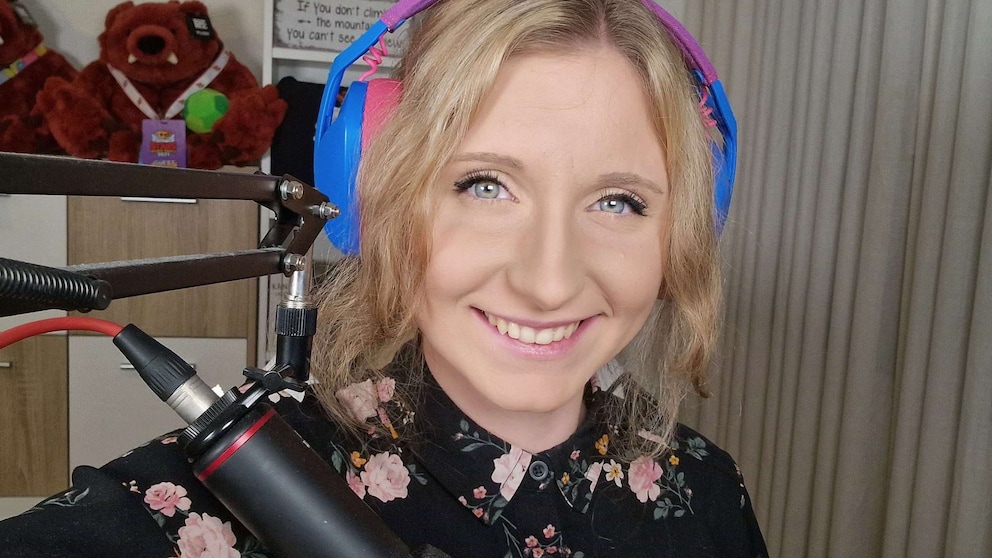
“Sunny,” whose real name is Dilana, is the first woman to play the popular mobile game “Brawl Stars” at a professional level. She now coaches the league’s first all-female team. She shared her experiences as a player, but especially as a coach, with TECHBOOK and discussed what she believes is important in eSports and how gaming can have a positive impact.
Overview
“Brawl Stars” as a Lockdown Byproduct
The story of the young Swiss woman reads like an adventure. The 24-year-old originally comes from athletics, enjoys climbing, and is generally up for any outdoor activity. Although her family had some contact with video games, she never thought she would play so much and even professionally. “I actually started gaming because of COVID. Before that, I was very active in sports, mainly outdoors. When I tell people from the past, who haven’t seen me in a while, that I’m into eSports, their jaws drop. I had nothing to do with gaming before,” says “Sunny.”
Indeed, the COVID-19 pandemic gave the entire gaming industry a significant boost. Many experienced a similar situation to Dilana during the lockdowns; video games, especially mobile games, have since gained even more popularity. The decision to play “Brawl Stars” was not a conscious one for Dilana. She simply downloaded the first mobile game from the app store that looked interesting. The Swiss woman, who is also currently studying medicine, quickly discovered her passion and a certain talent.
The Path to Becoming a Professional eSports Player
Her impressive in-game statistics caught the attention of an organization looking for players for a tournament. After more than 20 tryouts, the young woman finally made it. “The first phone call I had with them (the inquiring organization) was quite funny. It was like, ‘Huh, what, you’re a woman?'” Dilana still encounters these or similar reactions today, although not as extreme as in her early days. This is partly due to her own fame and the general change in the industry.
Especially at the beginning, her gender combined with her role as an eSports player was always the central topic.
For the first two weeks of playing “Brawl Stars,” I always said, “Hello, I’m Dilana, I’m a woman.” But then I had my first negative experiences like, “Okay, goodbye. You’re a woman, so you’re bad anyway.” I even got requests from 14-year-olds asking if I wanted to be their virtual girlfriend. Eventually, I started saying I was a 16-year-old guy. That stayed that way for a while until it came to eSports. Of course, my teammates knew I was a woman; we were on calls every day. But at the very first competition I participated in, player pictures were published. This led to quite funny reactions, even from the audience: “Huh, is that a guy with long hair? Or is it actually a woman?” And until today, until Telekom founded the Equal eSports Initiative, I was the only woman in the world competing professionally in Brawl Stars tournaments. I didn’t know that for a long time, but now I find it quite shocking.
Dilana “Sunny” to TECHBOOK
Despite these successes, it was not easy for her to find a team in the long run. Specific hurdles due to her gender mainly arose when she wanted to join a top-tier team, Dilana tells TECHBOOK in an interview. Both players and coaches didn’t want her because of the supposedly disrupted team chemistry. And even supposedly well-intentioned comments were not uncommon: “How often I’ve heard, ‘You’re amazing for a woman.'”
Also interesting: How does one actually become an eSports player?
First Experiences as an eSports Coach
In general, the former player and now active coach “Sunny” sees no differences between genders in gaming. Only in communication was it a bit challenging at first with her four-member female team. Unnecessarily many words and mutual consideration are not necessarily beneficial in a real-time game. Clear instructions are needed on who goes where and what to do. In terms of role distribution, it was important, especially at the beginning, to push her team out of their comfort zone and introduce them to Brawler types that might not appeal to them at first glance, such as a more robust tank that seeks direct confrontation with the opponent. However, this changed significantly within a few weeks, says Dilana.
She had also coached for two years in athletics before her gaming time. And even before she took over the women’s team of SK Averosa, whose members are between 18 and 20 years old, she was already active as a coach in “Brawl Stars”–but only for men. The decisive difference in coaching the different teams was not necessarily gender, but rather experience. “The two male teams I coached before were very different (…). It was different in the sense that the six players I trained had been in eSports for a long time. I believe that the longer gaming experience was much more decisive than the fact that they were men. They had been around longer and already knew how to communicate, short and concise, to reach the goal faster.”
Women and Mixed Teams in eSports
What no one expected was the reaction to the all-female team that came about as part of the Equal eSports Initiative. The initiative is the result of a collaboration between Deutsche Telekom and the well-known German eSports organizations SK Gaming and the eSports Player Foundation. From the beginning, there was quite a lot of attention for the project and the participants. The reactions were consistently positive, says Dilana. However, many were more interested in us because of the girls’ appearance and less because of their gaming skills (…). This was also a topic for us because no one expected that coaching in this direction would become important. We then had a two-hour call with everyone, discussing how to handle attention from so many guys. We also gave tips on what the players should not engage with.”
In the long term, there should also be mixed teams in the tournaments. That would also be Dilana’s goal. Especially in gaming, it is possible to implement something like this, as physical differences between genders hardly matter. In her opinion, it is much more about strategy, teamwork, and communication.
Gaming Skills Are Universally Applicable
These are all skills that can be important outside of video games, in professional and personal life. The skills she learned have been very beneficial to her, especially in interpersonal relationships–but also on a very practical level. “I once had a conversation with a surgeon who used to game a lot. He realized that he was much better at laparoscopic procedures (…), where you don’t see directly but only through a camera, from the start than someone who hadn’t gamed.”
This was also demonstrated in a 2013 experiment, which showed that surgeons could train and improve their hand-eye coordination by regularly playing with a Nintendo Wii. There are indeed various other studies proving that other factors are positively influenced by video games. For example, players had a significantly reduced general reaction time to external stimuli. Reaction in this case means both reflexes and precision as well as the ability to make quick decisions. In terms of multitasking, cognitive endurance, and even creativity, gamers often have an advantage.
In 2022, researchers at the University of Tübingen even proved that regular and frequent video gaming trains the so-called number sense. This involves quickly estimating the number of objects. The researchers therefore assume that it is easier for gamers to focus their attention than for non-gamers. Dilana also reports from her personal experience and the ability to be aware of the team around her and her own role in it–something that is very useful for her in her hospital routine.
“I Have Seen Myself Less as a Role Model”
How exactly things will continue for her and the team, she does not yet know. As of the interview in mid-January, it is not yet clear whether there will be a mixed team. Dilana’s big goal is to place at least one of her protégés in such a team. For her own part, she does not consider a further career as a player, both for time and personal reasons, but rather as a coach. However, she has already had to decline a good offer due to her studies.
She is aware that she is a role model for others with her career. Her team reflects this back to her. “My goal and also my motivation to do eSports at all is the role model function. However, I have seen myself less as a role model and much more like a colleague. I only really realized that I could be a role model for others as a coach. Before the start of the SK Team Avarosa, we had numerous tryouts, and many of these girls said to me, ‘Hey, I only started because of you.’ Or ‘I only applied here because I heard you were the coach.'”
Since equality and representation of women in the tech field are particularly important to us, we are addressing the area of women in tech professions in a dedicated series. We aim to educate and create new opportunities.
Sources
- Current Biology (accessed March 3, 2023)
- PloS One (accessed March 3, 2023)
- Hertie Institute (accessed March 3, 2023)
- game – Association of the German Games Industry (accessed March 6, 2023)
- Equal eSports Initiative
- SK Avarosa
- eSports Player Foundation