

January 26, 2026, 2:13 pm | Read time: 5 minutes
From seamless steel pipes to wireless telephony, only a small step for the former traditional company Mannesmann. But a huge step forward for the development of mobile telephony in Germany.
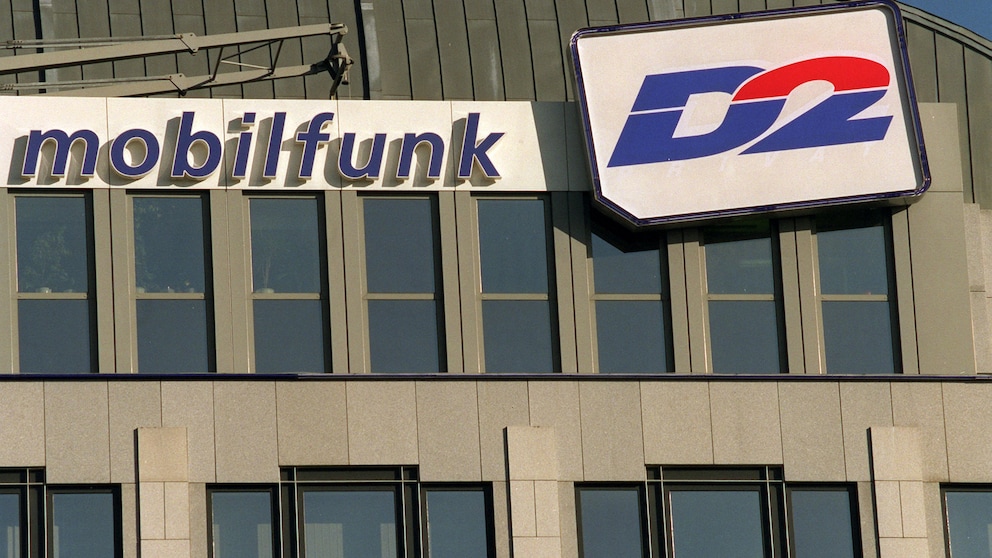
When Mannesmann’s subsidiary MMO launched the D2 network on June 30, 1992, the parent company already had over 100 years of history behind it. In 1890, the Remscheid brothers Max and Reinhard Mannesmann founded the future mobile communications pioneer.
From “Mannesmannrohr” to a Major Corporation
Initially, Mannesmann manufactured a wide variety of pipes and tubes. The Mannesmann brothers developed a method of producing steel pipes without seams using the so-called cross-rolling process. The term ‘Mannesmann pipe’ quickly became synonymous with this innovative pipe production method. As a result, the name Mannesmann soon spread from Düsseldorf to the whole world for many decades.
In the post-war period, the company slowly began to restructure. In the early 1980s, the steel and mechanical engineering group began to place its business on a broader footing. Mannesmann tried its hand as an automotive supplier and, at the same time, entered the electrical engineering sector. In 1988, Mannesmann AG was one of the founding members of the German share index (DAX).
Mannesmann: The First Private Mobile Network Provider
It was during this period that the then German Post Minister Christian Schwarz-Schilling decided to award the licenses for the D-Netz, the first transnational digital mobile communications system. The special thing about the award: for the first time, not only the state-owned Bundespost was to receive a license, but also a private provider.
A brief digression: D-Netz is not an abbreviation for Deutschlandnetz or digital network, but is the German name for the uniform European mobile communications standard Global System for Mobile Communication—GSM for short. Previously, there were the analog networks A-, B-, and C-network. The name D-network is derived from this pattern.
Ten private companies, including a consortium led by the Mannesmann Group, bid for this D-network. On December 7, 1989, Mannesmann won the bid for the private D-Netz license. Subsequently, the Bundespost subsidiary DeTeMobil and Mannesmann attempted to make the D-network marketable.
Read also: The Beginnings of Mobile Telephony – How the World of Cell Phones Came About
No Cell Phones and High Costs
Mannesmann won the race by one day and launched its D2 network on June 30, 1992. DeTeMobil’s D1 network followed a day later. However, the head start was only of symbolic value. At that time, Mannesmann did not even have any cell phones to market its tariff.
Initially, the scarcity of cell phones and the high costs posed the greatest challenges in establishing the D-network in Germany. At the time, a mobile phone weighed as much as half a liter of milk and cost a hefty 3,000 Deutschmarks. One minute of calling cost 2 D-Mark, with a monthly basic charge of 70 D-Mark.
At that time, Georg Schmitt, Mannesmann’s head of technology, is said to have renamed the abbreviation GSM to “God send mobiles.” The first D2 customer, Günther Brand from Bochum, was not bothered by any of this. He later said that, as a management consultant, he was on the road a lot and therefore simply needed a car phone, cost or not.
SMS: The Catalyst for the Mobile Phone Boom
After all, a few hundred thousand more D-network customers were added in 1993. The final breakthrough came a year later. This is when the SMS fever began in Germany. Mannesmann and DeTeMobil released the short message function for cell phones.
SMS was particularly popular with young people because a 160-character message costs significantly less than a phone call. In the meantime, there were also mass-compatible devices in sufficient numbers and at affordable prices.
By the end of the 1990s, Mannesmann had become a leading mobile phone provider. The company also introduced prepaid plans known as ‘CallYa’. In 1999, there were almost 50 million mobile phone customers in Germany. The vision of ‘a cell phone for everyone,’ which Mannesmann had pursued when seeking the D-network license ten years prior, was close to being realized.
Read also: Mobile Phone Manufacturer Sagem – From Former Market Leader to Decline

The Beginnings of Mobile Communications – How the World of Cell Phones Came About
How Do I Know if My Smartphone Is Operating on a 5G Network?
Mannesmann at Its Peak
In November 1999, Mannesmann took over the British mobile phone provider Orange. The German mobile communications pioneer was at its business peak. At the beginning of the new millennium, sales amounted to over 23 billion euros, and more than 130,000 people were now working for Mannesmann worldwide.
But another British company was up to something. Vodafone wanted to take over Mannesmann. An initial offer amounted to 100 billion euros. The then Mannesmann boss Klaus Esser rejected it with the words: “Completely inappropriate.”
An unpleasant takeover battle ensued, in which Mannesmann gave in on February 3, 2000. The company’s D2 mobile division is transferred to Vodafone for an incredible 190 billion euros, the most expensive merger of all time to date.
Vodafone Takeover Leads to Legal Dispute
This leads to years of litigation. Several former members of the Mannesmann Supervisory Board are targeted by the public prosecutor’s office, primarily Klaus Esser. For transitioning from Mannesmann to Vodafone, the former Group CEO received a severance payment of almost 30 million euros. Above all, the so-called “value enhancement bonus” of 16 million euros included in this amount becomes the central subject of the legal dispute.
It was not until October 2006 that the proceedings were discontinued in return for a monetary payment. Klaus Esser paid 1.5 million euros to the state and various charitable organizations.
By then, the Mannesmann name had largely become a part of history. The “Mannesmann pipes” are still built by Salzgitter AG today. The original business of the former DAX company lives on.