


February 13, 2026, 7:03 am | Read time: 4 minutes
When Alexander Graham Bell registered his telephone 150 years ago, no one anticipated how fundamentally this technology would change the world. Today, the industry is once again on the brink of a transformation, as traditional telephony loses significance.
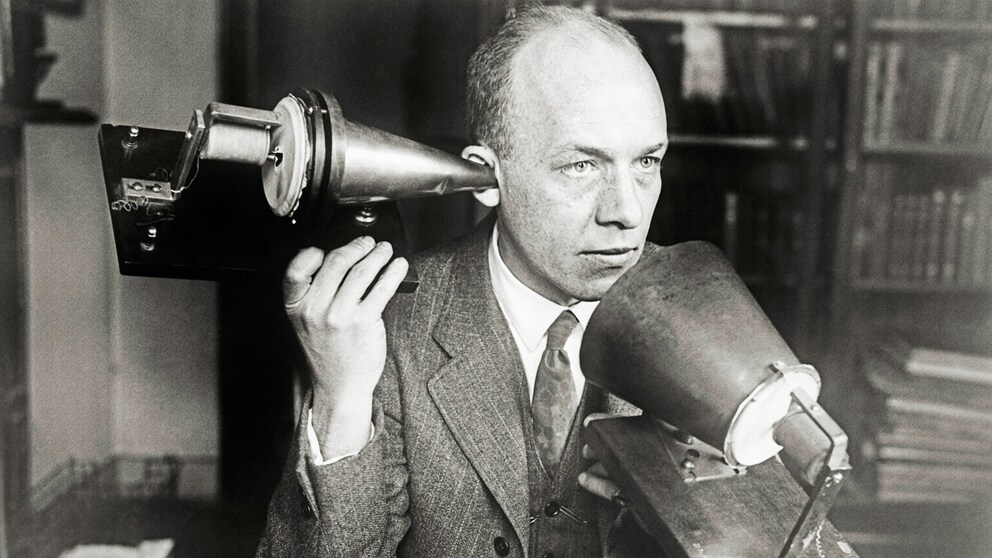
On February 14, 1876, Scotsman Alexander Graham Bell filed the patent for his telephone, and it was granted on March 7. A few days later, the first understandable voice transmission to his assistant Thomas Watson was successful. The device converted sound waves into electrical impulses using electromagnetic principles, which were transmitted over wires and converted back into sounds at the destination.
Bell is considered the father of the telephone
Shortly thereafter, in 1877, Bell founded the Bell Telephone Company, which later became the telecommunications giant AT&T. In 1915, the first transcontinental telephone call between New York and San Francisco took place. When Bell died in 1922, all telephone traffic in the United States paused for one minute.
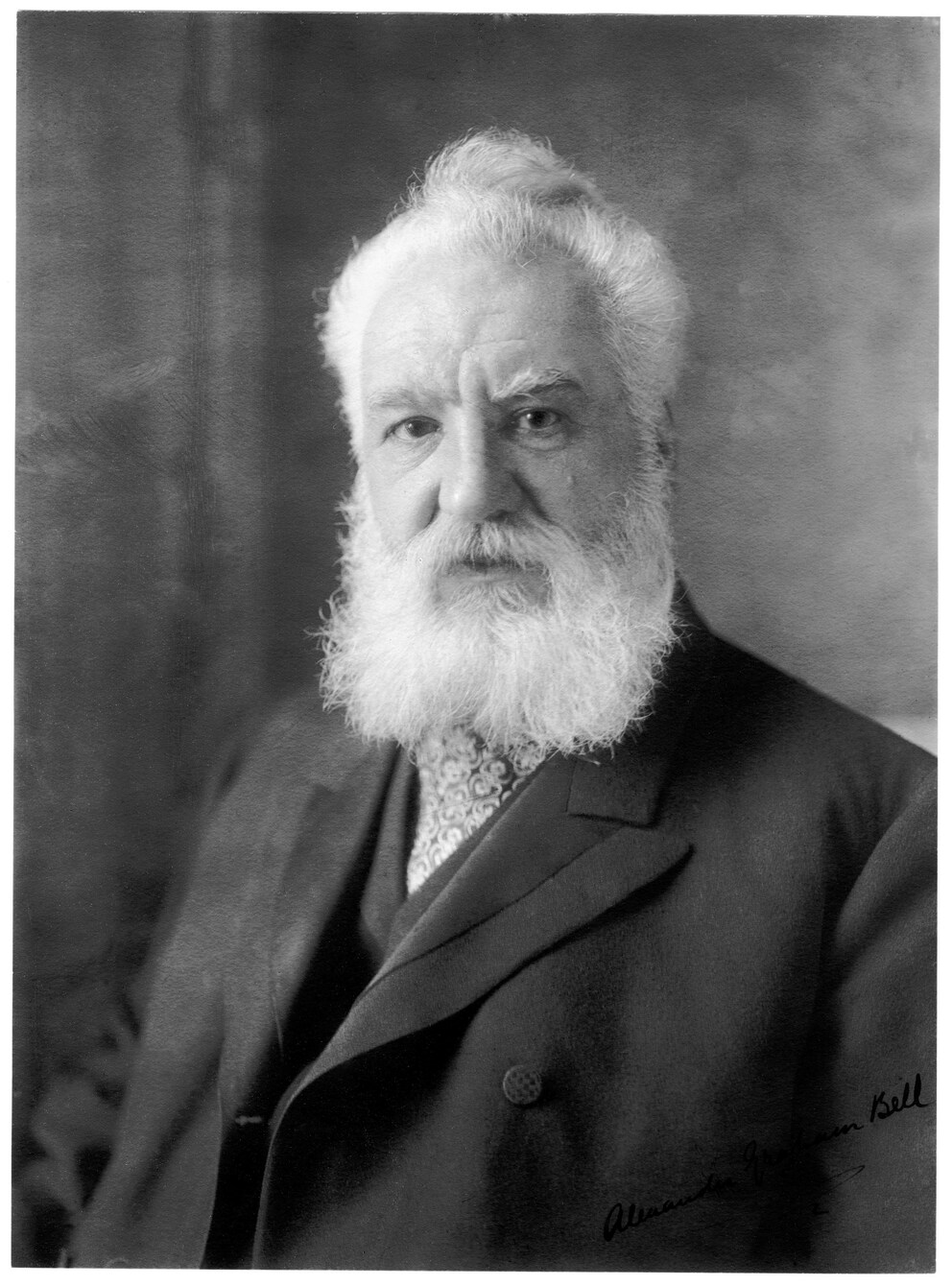
However, Bell’s invention was controversial from the start. At the same time, others such as Antonio Meucci, Elisha Gray, and the German Johann Philipp Reis were working on similar devices. Meucci had publicly presented a telephone as early as 1860 but did not receive a permanent patent. Gray filed his application on the same day as Bell—just a few hours later. This led to one of the largest patent disputes in history, which Bell ultimately won. In 2002, the U.S. House of Representatives posthumously recognized Meucci’s contributions.
Also of interest: How the Bildschirmtext BTX brought the internet to Germany
Bell did not remain idle
Bell continuously developed his technology. In 1877, a carbon microphone was introduced, significantly improving voice signals. However, it wasn’t until 1881 that the telephone was considered practically usable.
Besides the telephone, Bell dedicated himself to numerous other projects. He developed the photophone, which allowed speech to be transmitted via light beams, and worked on improving the phonograph into what became known as the graphophone. He also invented an audiometer for measuring hearing ability and a metal detector. For his achievements, he received the Volta Prize in 1880, which was worth 50,000 francs.
Bell was also active in aviation and the construction of hydrofoil boats. In 1907, he founded the Aerial Experiment Association, and in 1919, his hydrofoil boat Hydrodrome IV set a world speed record on water.

Do you still have a landline phone?

Cell Phone Manufacturer Sagem – From Former Market Leader to Decline
Commitment to the deaf
Bell’s interest in acoustics was closely tied to his biography: His mother was hard of hearing, and his wife was deaf. He taught the deaf and advocated for oral education methods. In 1890, he co-founded the American Association to Promote the Teaching of Speech to the Deaf.
At the same time, Bell held eugenic views. In several writings, he opposed marriages among the deaf and warned of a “deaf race.” In 1921, he was honorary president of an international eugenics congress. This stance continues to affect his legacy today.
Despite the controversies, Bell is considered a pivotal figure in the history of technology. With more than 18 patents in the field of communication, he laid the foundation for a development that began 150 years ago and permanently changed global communication.
Also of interest: The beginnings of mobile communications–how the world of cell phones was created
Impact on Germany and the transformation of landlines
Bell’s invention quickly spread in Germany as well. Starting in the 1880s, a comprehensive landline network was established, enabling voice connections over long distances. For decades, the wired network was the central infrastructure of telecommunications.
In the 1990s, the market was liberalized with the postal reform. The Deutsche Bundespost became Deutsche Telekom, and new providers like Vodafone emerged. The competition invigorated the business and fundamentally changed the structure of landlines.
Meanwhile, traditional landline telephony is losing significance. Standards such as GSM, later UMTS and LTE, made mobile calling and surfing possible. Today, the 5G network forms the basis of digital infrastructure.
According to the Federal Network Agency, the volume of calls handled over landlines fell to 57 billion minutes in 2024 compared to the previous year. At the same time, the expansion of fast internet connections is progressing. Fiber optic cables enable high data rates and new digital applications, while DSL technology is on the verge of obsolescence.