


January 26, 2026, 9:13 am | Read time: 3 minutes
The French mobile phone brand Sagem is only known to a few people today. At the end of the 1990s, it was one of the largest cell phone manufacturers in Europe. Why has the company disappeared?
The Sagem Group was a driving force in the French technology industry. Founded in 1924, the company grew through innovations in communication technology and became one of the leading manufacturers of cell phones in the 1990s. Despite its success, the strategic realignment led to a merger with Snecma, which resulted in the Safran Group in 2005. This change heralded the end of the Sagem brand in its traditional form.
Overview
From Market Leader to Withdrawal
Sagem was founded in 1924 as “Société d’Applications Générales Électriques et Mécaniques” and was initially active in mechanical engineering. As early as the 1930s, the company diversified its portfolio and began producing precision equipment for the French Navy. The company entered the telecommunications market in the 1940s with the production of teleprinters. In 1939, Sagem took over the “Société Anonyme de Télécommunications” (SAT) and became an important player in the telephone and telecommunications industry.
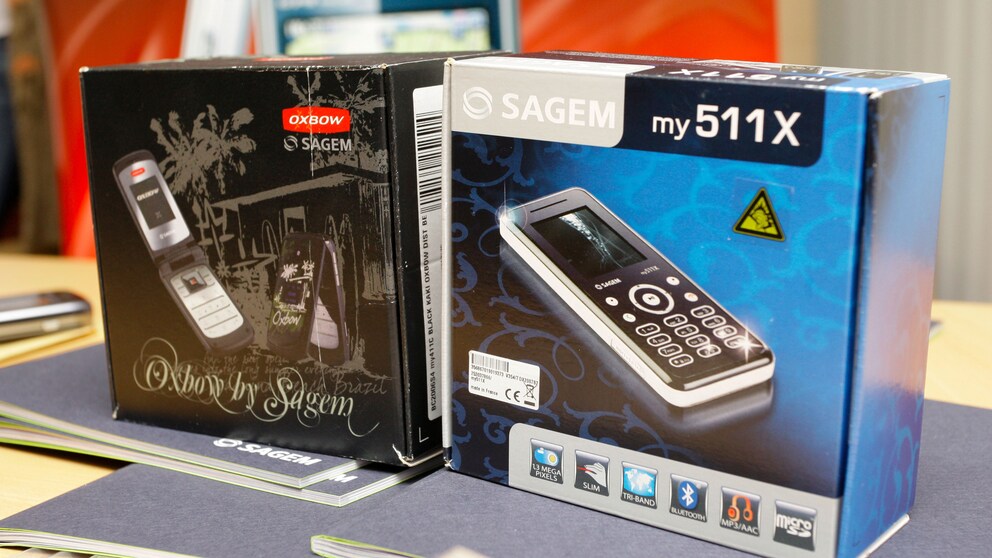
Decades later, Sagem was regarded as one of the leading manufacturers of mobile telephones. In 1995, the mobile phone division was founded for international sales. In France, Sagem soon became the market leader, while in Germany the company was one of the five largest providers. The manufacturer invested heavily in research and development, making it an innovation leader in areas such as digital set-top boxes and biometric security systems. By 2003, Sagem employed 14,675 people and generated a turnover of 3.18 billion euros, of which 1.08 billion euros came from the cell phone division.

What Really Lies Behind the TV Brand TCL

What Actually Happened to Mannesmann?
Merger with Snecma and realignment
In May 2005, Sagem merged with the engine manufacturer Snecma to form the Safran Group. The aim of the merger was to combine the expertise of both companies in the fields of aviation, defense, and security technology. While Safran focused on high technology, the mobile communications business was continued under the name “Sagem Communication.” In 2007, the mobile communications division was spun off as the independent company “Sagem Wireless”.
The division focused on the development of customized lifestyle devices for mobile phone providers and consumer brands. To this end, it cooperated with various partners. In 2009, Sagem Wireless launched exclusive cell phones such as the “Vodafone 533 Crystal” with Swarovski crystals and the “PUMA Phone.” Despite these innovations, the company ran into financial difficulties. In spring 2011, it was renamed MobiWire. Insolvency followed shortly afterwards, whereupon Sagetel Mobiles took over some of the assets and continued to run the company as an original design manufacturer (ODM).
The End of the Sagem Brand
Today, Sagem no longer exists as an independent brand. The various divisions were either integrated into the Safran Group or sold to investors. Only Sagemcom, a former subsidiary, still exists today. Sagem’s legacy lives on in numerous technologies that it has helped to shape. The company’s history is an impressive example of how a technology pioneer can transform itself in the wake of market changes and strategic realignment.