

June 9, 2023, 9:39 am | Read time: 5 minutes
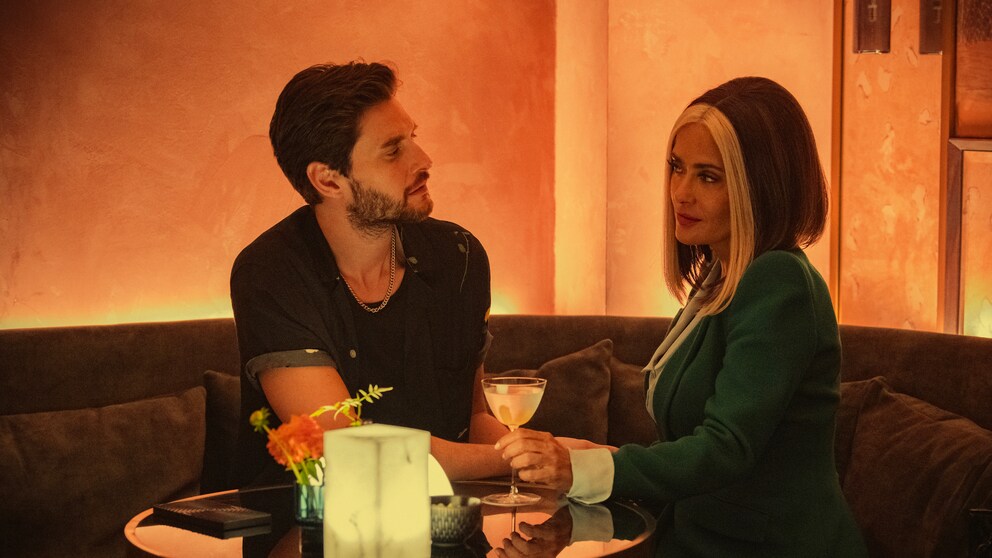
ChatGPT can do a lot, but can AI also write screenplays? “Black Mirror” creator Charlie Brooker asked himself this question and had the chatbot write the script for an episode of the new sixth season–with a clear result.
Since the release of ChatGPT in 2022, the chatbot has been a topic of interest in many industries. Beyond the opportunities such AI offers, the creative sector is particularly concerned with whether ChatGPT can truly replace humans. The chatbot’s task is to generate text based on existing information. This led to an intriguing experiment with the Netflix series “Black Mirror.” The idea was for ChatGPT to write the script for an episode of the series. While it can be dismissed as a humorous anecdote, it also has a political dimension.
Overview
ChatGPT Was Supposed to Write an Episode for “Black Mirror”
It sounds almost absurd, but it likely did happen. Charlie Brooker, creator and showrunner of the successful dystopian series “Black Mirror,” had ChatGPT write an episode for the new sixth season. In an interview with the British magazine “Empire,” the Brit said he “played around a bit with ChatGPT.” “Black Mirror” is certainly not the worst series for such experiments. After all, it deals with dystopian future scenarios often related to technology. Previous topics have included the impact of social networks, human-like robots, and video game addiction.
Having ChatGPT write scripts for such a series could be a brilliant move and marketing trick. However, Brooker made it clear in the interview that the experiment backfired: “It produced something that reads plausibly at first glance, but on closer inspection, it’s rubbish.” The problem was that the AI created something based only on existing episodes, not anything original.
Read also: What the Children of Popular Celebrity Couples Would Look Like
The Debate About AI and (Screen)Books
ChatGPT did make Brooker aware that he often used the same patterns for episodes. “I realized that I had written many episodes where someone says, ‘Oh, I’ve been in a computer the whole time!'” Brooker told Empire. ChatGPT can indeed be helpful in writing screenplays.
The overarching question is whether ChatGPT and other AI solutions will eventually be provided with enough data to derive new creative concepts. For instance, a children’s book titled “Mia, Finn, and the Robot Ki” has already been published, written by AI. Although there were certain guidelines for the bot, and the author team ultimately adjusted and supplemented quite a bit, large portions of the writing were retained.
Read also: Artist Uses AI to Show How Deceased Celebrities Might Look Today

‘Black Mirror Experience’ Brings Dystopian Series to Life

Why There Likely Won’t Be Another “Terminator” Film
How Creative Can AI Be?
The mentioned children’s book also includes a comment from Professor Robert Katzschmann, an expert in robotics. He argues that AI can support human creativity in the future but cannot replace it. While ChatGPT and similar tools can be used for a basic framework, the detailed development should still be done by humans. The main reason for this is the quality of the facts. An AI can only reproduce the information it is fed. “In the future, we will need to tailor our education to ask the right questions and generate truly new ideas. ChatGPT can then articulate these questions and ideas,” Katzschmann writes in his commentary.
A similar conclusion is reached by a recent preprint study. Researchers from Humboldt University in Berlin, in collaboration with the University of Essex, subjected several AI bots to a creativity test. It showed that the six tested AI programs performed similarly to human test subjects in terms of everyday creativity. However, a certain percentage of these individuals consistently outperformed each of the tested programs.
AI still needs human input from the outside, says Antonio Krüger, director of the German Research Center for Artificial Intelligence, to Tagesschau. AI programs can indeed find creative solutions to everyday problems. However, Krüger also says: “What they cannot do is venture into completely abstract new territory, as the architecture of the programs is not suited for that.”
Hollywood Strike Also Involves AI
The debate about AI and screenplays is particularly relevant and contentious because screenwriters in Hollywood are still striking for better working conditions. Since early May 2023, various members of the WGA (Writers Guild of America) have halted their work; the dispute involves, among other things, the pay of several thousand writers. The WGA is on one side, and the major studios are on the other.
The main reason is the changed conditions due to the popularity of streaming services. As a result, more films, but especially series, are being produced. At the same time, seasons are shorter, and writing teams are smaller than before, limiting the long-term compensation and security of writers. Additionally, WGA members are not involved in further rights if a series later airs on other streaming platforms or TV.
Another major criticism from the WGA concerns AI technology. The strikers demand that the use of AI in the film industry be significantly regulated. Alternatively, there was a proposal to deviate from this demand if the use of such AI does not affect the pay of screenwriters. So far, all negotiations have failed. While chatbots like ChatGPT do not seem ready to write entire screenplays, which is good news for writers, the situation is far from resolved.