

July 5, 2026, 2:43 pm | Read time: 5 minutes
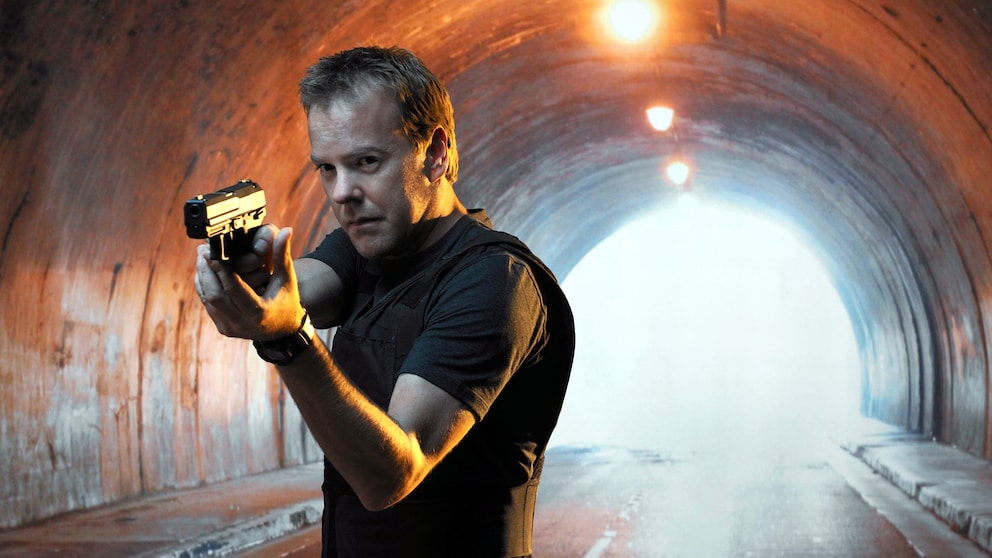
It all begins with perhaps the most stressful intro in TV history. Accompanied by machine-like beeping, increasingly rapid sequencer tones, the number 24 forms on the screen from scattered light points. This nerve-wracking start marked the beginning of the TV series “24” 25 years ago. The iconic opening ushered in a new era of visual storytelling. The dramatic stories of U.S. federal agent Jack Bauer captivated viewers for nearly a decade.
Few TV series have embedded themselves acoustically and visually in viewers’ minds as much as “24.” Once started, you quickly become immersed in the “24” world, finding the power button only hours later, drenched in sweat. Binge-watching is closely associated with “24.”
The series premiered in the U.S. in November 2001, shortly after the September 11 attacks. This dark chapter of U.S. history played a significant role in the production and further development of “24.”
A Countdown Digital Clock as a Stress Factor
From the start, adrenaline surges to the max, as a digital clock constantly appears, counting down. The ticking clock symbolizes an almost hopeless race against time. Each season tells the relentless battle of Jack Bauer, played by Kiefer Sutherland, against conspiratorial evil, against the terror threatening all of humanity.
Each season consists of 24 episodes. The entire plot is told in real-time, with each episode depicting exactly one hour. The real-time factor was not new to the film industry at the time.
A few years earlier, in 1995, director John Badham made a film called “Nick of Time,” in which the main character, played by Johnny Depp, must kill a politician to save his kidnapped daughter. He has 85 minutes to do so, the exact length of the film.

What performed only moderately well in theaters became the ultimate thrill in “24.” This is mainly due to the unique visual language combined with a narrative style that offers no breaks. The stress federal agent Jack Bauer faces in each season is palpably transferred to the viewers.
Also interesting: These are the most expensive series in the world
Innovative Visual Language and Constant Cliffhangers
Rapid scene changes and split screens showing events at different locations leave no time to catch your breath. From the start, this creates a dynamic that no TV series had generated before.
Cliffhangers were previously known only as dramatic climaxes at the end of an episode. In “24,” the writers use every commercial break to place a cliffhanger. This adds extra stress, as viewers are constantly on edge, eager to know how the story continues.
The writers also break with other typical series conventions. Usually, the main characters of a series are clearly defined. In “24,” the lines between good and evil blur. Sure, Jack Bauer is the “good guy.” However, the creators of “24” repeatedly devised scenes to give the main character a dark side.
And something else runs disturbingly through all the seasons: Viewers shouldn’t get too attached to the other main characters. At any moment, a beloved series character could take their last breath. These surprise moments leave “24” fans breathless and compel them to keep watching without interruption.
The writers also show vision. The series not only features the first Black U.S. president but later also a woman as president of the United States.
“24” Makes Kiefer Sutherland a Star
For Kiefer Sutherland, the role of Jack Bauer marks a milestone in his acting career. Until then, film enthusiasts knew him as the son of the famous Canadian actor Donald Sutherland. In the late 1980s, Kiefer Sutherland managed to gain some attention from movie audiences, including in films like “Stand by Me,” “The Lost Boys,” and “Young Guns.”
“24” made him instantly world-famous, albeit with TV audiences. The series ran from 2001 to 2010, spanning eight seasons. There are also various special formats and spin-offs like “24: Redemption,” “24: Live Another Day,” and “24: Legacy.”
The visual and dramatic storytelling of “24” was later adopted by similar series formats such as “Homeland” or “Person of Interest.” Meanwhile, the creators of “24” received a lot of criticism.

The Best TV Series of All Time
10 Series Featuring Quirky Detectives
Between Innovation and Criticism
This criticism is directed at the way torture is depicted in the series. The intense portrayal suggests that torturing people is a legitimate method to obtain information. A reminder: “24” started shortly after the September 11 attacks. At the time, journalists regularly reported on the torture methods used on the 9/11 masterminds at the U.S. military prison in Guantanamo Bay, Cuba.
The portrayal of U.S. state enemies in the TV series is also criticized as stereotypical. In “24,” people from Arab countries often plan attacks or terrorist actions, catering to common prejudices among viewers.

Rumors of a “24” Revival
Recently, rumors have surfaced that “24” might return to the screen this year. These rumors were fueled by statements from Kiefer Sutherland, who mentioned new scripts. Whether his character Jack Bauer will be included is entirely open.
Whether the creators of “24” are doing themselves a favor by reviving a once successful, genre-defining format is debatable. Fans would certainly love it. However, perhaps the memory of a time when the ticking of a digital clock created real stress moments in front of the screen is enough.