

July 20, 2022, 11:00 am | Read time: 5 minutes
More and more people are ordering online. As a result, the workload for delivery personnel has increased significantly. This is why there can be delays in delivery. But what can you do if your package is significantly delayed or doesn’t arrive at all?
Have you ordered something online and, despite the promised delivery date, the goods don’t arrive? This is not only annoying but can also have consequences if the ordered goods are urgently needed. In these cases, there are clear legal options you can pursue. We explain what you can do if a package is delayed or doesn’t arrive at all.
Overview
Your Rights if a Package Is Delayed
For online orders, retailers must specify an exact delivery date. Often, there are notes such as “available immediately,” “delivery in 3 to 5 days,” or “delivery within the period…”. What many don’t know: These statements are binding. The goods must arrive at the recipient by the specified dates. If they don’t, the retailer is automatically in default–even without a reminder from the customer. You can then cancel the purchase contract without justification.
Consumer protection agencies, however, also advise setting a reminder with a reasonable deadline for online purchases. This includes an explicit note that you can withdraw from the contract if the deadline is missed again. Lawyers call this a deadline with a threat of rejection–there is an online template from the consumer center. This saves unnecessary disputes later.
If you only exercise your 14-day right of withdrawal and then order the product from another retailer, it may happen that the goods from the first order still arrive late. You bear the return costs for the then unnecessary delivery. Therefore, it’s better to set a deadline first.
Some retailers may no longer be able to deliver the originally ordered product on time and offer you a product with similar features instead. You don’t have to agree to such a deal. In this case, consumer advocates also advise insisting on the delivery of the original goods within a reasonable period.
By the way: Special legal conditions apply when ordering smartphones. Here, lawyers distinguish between actually purchased devices and so-called “use transfers.” These are smartphones that customers, for example, pay off over a certain period as part of their mobile phone contract. The purchase of the smartphone and the conclusion of the contract are two different legal transactions. Since delivery delays often lead to legal disputes, the consumer centers offer expert help.
Read also: With a trick, your package arrives faster
Rights if the Package Does Not Arrive
If a package is not only delayed but doesn’t arrive at the recipient at all, action must be taken. If the online retailer can prove that the goods were sent to the address you provided, customers can ask them to initiate a search request.
The recipient also has the right to start a search request themselves. Some parcel services claim that the request must be made by the retailer because they paid the postage, but that’s not true. While the parcel services’ argument is understandable, it is not legally correct. According to § 421 HGB, recipients are also allowed to commission a search. Insist on your right in this case.
The search for a lost package usually takes at least four weeks or longer. Therefore, it is probably sensible to contact the online retailer before commissioning a search. Reputable retailers are generally accommodating in personal conversations and will resend your ordered goods.
If such an agreement is not possible, you can now easily start a search request online or via a contact form. Here is a list of the most well-known parcel and delivery services with links to the corresponding page:

Package Damaged? How to File a Claim Correctly

Police warning! Do not accept parcels for neighbors
Package Left at the Door or Stolen, What Now?
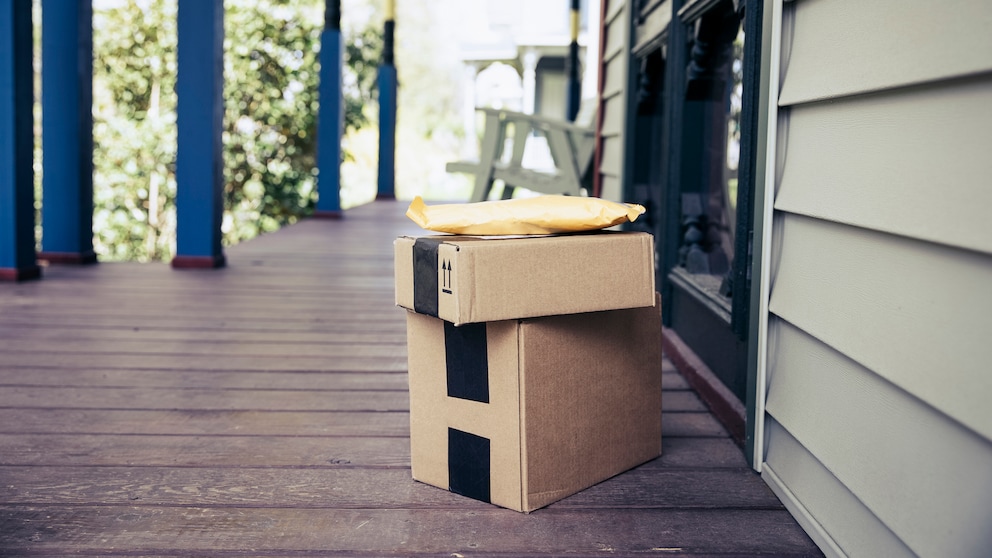
Some delivery personnel like to leave a delivery in the hallway or at the door. In such cases, the package may be stolen or damaged. But who is liable in this case?
Read also: Accepting packages for neighbors can be costly
In principle, recipients must consent to the placement of a package at a specific location. Only then is the delivery person allowed to leave it, for example, at the door. The same applies to delivery to neighbors. Consent from the recipient is also required for this. If this is not the case, the package is legally considered transported but not delivered. However, few parcel service providers adhere to this, and some even set different delivery rules in their terms and conditions. In serious cases, these terms and conditions rarely apply, as the shipping service provider must prove that the package reached the recipient. This is not the case when handing it over to a neighbor or leaving it at the door. Thus, the delivery person is liable for loss or damage.
When users order goods from an online retailer, the seller is obliged under the purchase contract to ensure that the goods arrive in perfect condition. If the package is lost, damaged, or stolen during shipping, customers are entitled to a reshipment of the ordered goods.