

August 29, 2026, 1:41 pm | Read time: 2 minutes
Consumer advocates criticize the presentation of tip options on card readers. According to consumer protection agencies, guests feel pressured when paying by card. The design of many payment terminals is particularly criticized.
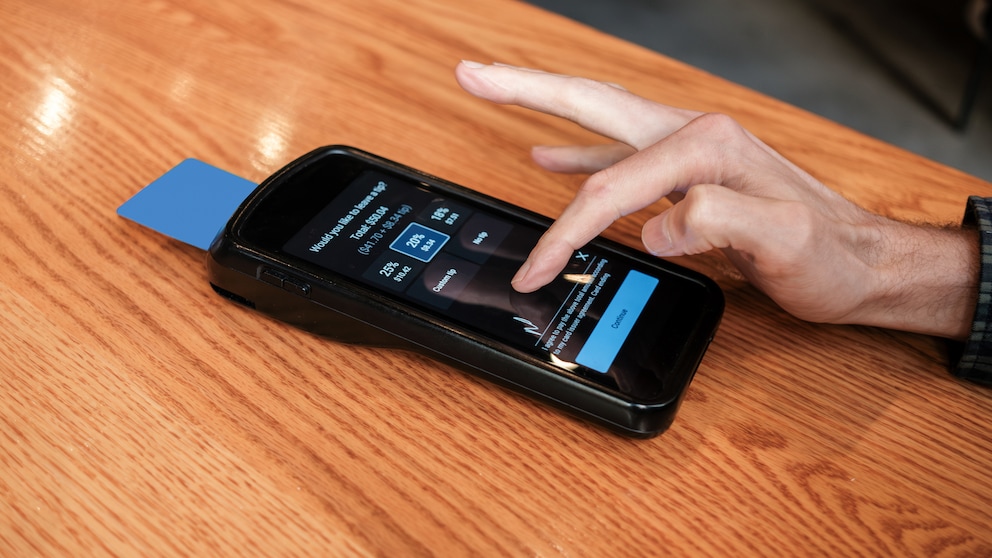
When paying by card in restaurants, customers often see several suggested tip amounts directly on the reader. Values such as 7, 10, or 20 percent are often prominently displayed. In contrast, the option to give no tip is often less visibly placed. This design is exactly what consumer advocates criticize.
Consumer Protection Agencies See Problematic Design
Ramona Pop, head of the Federation of German Consumer Organizations, warns against “manipulative design tricks.” She demands: “It must be immediately clear how guests can decline to tip or set the amount themselves.” The consumer protection agency is therefore advocating for a ban on such designs at the European level.
A Forsa survey commissioned by the consumer protection agency comes to a clear conclusion. More than half of the 1,009 respondents aged 18 and older feel pressured by prominently placed percentage suggestions. Pop emphasizes that many people like to tip voluntarily to appreciate good service. Her appeal is therefore: “No one is obligated to tip.”

Germans Feel Bothered by Digital Tips

What to Consider When Giving Cashless Tips
Union Demands Transparency in Digital Tipping
The “Food, Beverages, and Catering” union generally views digital tipping functions positively. As more guests pay by card, they might otherwise not tip at all.
However, Chairman Guido Zeitler demands that digital tips reach employees fully, transparently, and traceably. He also points out that employers are primarily responsible for fair compensation. In his view, the option to give no tip should be just as visible and easy to use as the preset amounts.
Also interesting: What to Consider When Tipping Cashlessly
Surveys Also Show Significant Reservations
A Bitkom survey of 1,004 respondents aged 16 and older comes to a similar conclusion. Only 29 percent find preset tip options convenient.
Sixty-four percent of respondents believe that suggested amounts lead to giving more tips than originally planned. The results show that many people view the preset suggestions on card readers critically.