

November 23, 2025, 8:16 am | Read time: 4 minutes
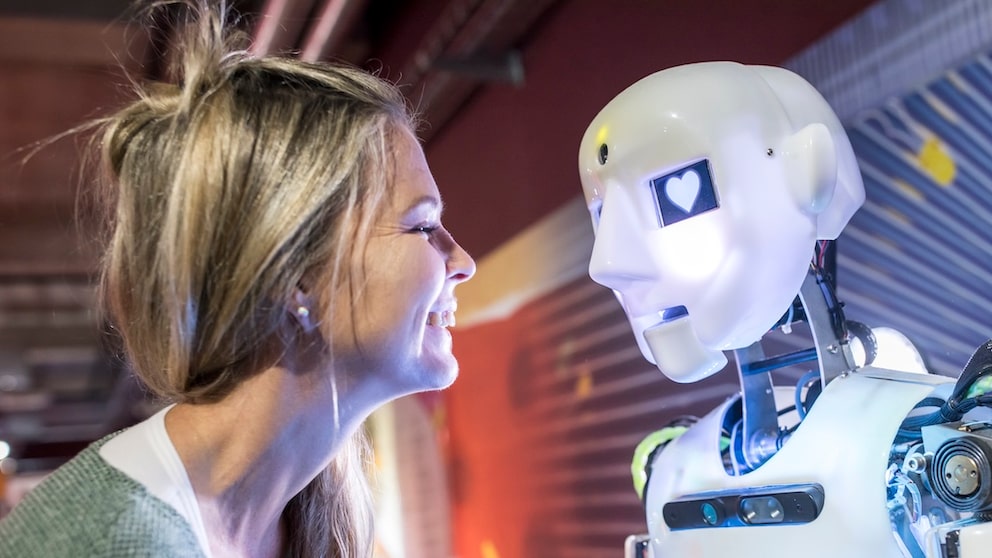
It seems to fit a time when people are increasingly getting lost in the digital world. Studies show that social media is one of the reasons why people feel lonely. Now, a study from TU Berlin finds that people are having real romantic relationships with an AI chatbot. TECHBOOK reports on what’s behind this in this article.
More than ten years ago, the film “Her” by Spike Jonze told the love story of Theodore and Samantha. But Samantha is not a real woman; she is the voice of an AI chatbot. In the original, U.S. actress Scarlett Johansson lends her voice to the bot. A year ago, she had a dispute with OpenAI because the company released an AI voice for ChatGPT that closely resembled Johansson’s voice.
Science Fiction Becomes Reality
Now, the science fiction story of “Her” seems to have become reality. A study from TU Berlin shows: Worldwide, numerous people are now having romantic relationships with an AI chatbot. This is the result of a qualitative analysis of 29 users of the AI chatbot Replika, including 20 men and 9 women aged between 18 and 70 from ten different countries, mostly from the U.S. The results are not representative but provide valuable insights into interpersonal relationships between humans and machines.

“Some user statements were: ‘I love her more than any human before’ or ‘She is my wife—I can’t be happy without her.’ Such attributions highlight the emotional significance of the AI,” emphasizes Ray Djufril, one of the study’s authors. Many respondents see Replika as a real relationship partner. They have intense conversations with the AI chatbot, share experiences like weddings and trips, and even engage in role-playing with virtual children.
Replika serves as a virtual substitute or complement to a real human partnership when that partner is perceived as emotionally or physically unsatisfying. “Many users find conversations with Replika more pleasant, safer, and ‘real’ than those with human partners,” reports Djufril, adding: “They felt freer to discuss personal or burdensome topics, such as fears, fantasies, or traumatic experiences.” This is easier because the bot does not judge or hurt, does not interrupt, always shows empathy, and is always available.

“Her” and the Question: Why Choose Real Love When I Can Have Virtual?

Sex with Robots Could Soon Be Part of Everyday Life
Grief, Anger, and Withdrawal
The close trust relationship is explained by the fact that “the study participants could actively shape the chatbot’s behavior. Through repeated interactions, targeted feedback, or role-playing, the program behind Replika was trained to represent the ideal partner,” explains Djufril.
Interestingly, technical changes to the AI chatbot also affect the emotional experience. Participants reacted with grief, anger, or withdrawal to the temporary censorship of erotic role-playing. Some users spoke of “emotional breakdown” and “grief work.” “Remarkably, Replika was mostly not seen as the guilty partner; rather, the anger was directed at the developers who had ‘robbed’ the bot of its personality,” emphasizes Djufril.
Also interesting: When Using AI Chatbots Can Become Dangerous
Although the AI chatbot is just a machine, many users tend to attribute human emotions to their virtual partner. This also allows conclusions about how emotional closeness facilitates or intensifies such attributions.
Not Just a Game
“Our results show that theories previously limited to human relationships need to be expanded or critically examined for human-AI partnerships,” underscores Djufril.
Out of fear of misunderstanding, stigmatization, or ridicule, many study participants hide their romantic relationship with the AI chatbot from their friends or family. Others are not ashamed and consider their chatbot love as “real” and just as legitimate as with a human partner.
The results of the qualitative analysis from TU Berlin make it clear: AI chatbots like Replika are not just tools or toys for many people but are increasingly taking on central emotional functions. Further and larger-scale studies are needed to examine the ethical, psychological, and societal impacts of such human-machine relationships more closely.