

April 20, 2024, 2:26 pm | Read time: 4 minutes
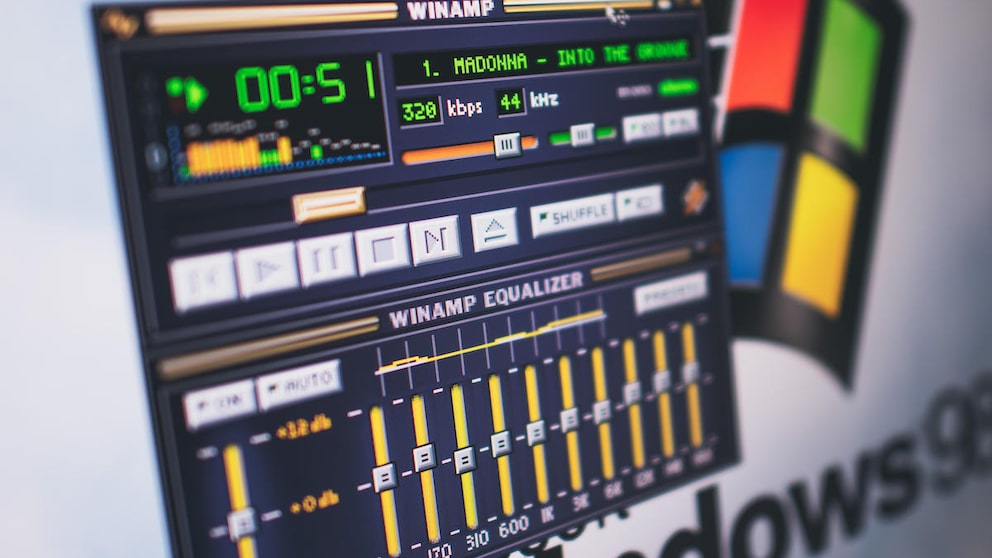
Whether it’s Apple Music, Amazon Prime Music, YouTube Music, Tidal, or Spotify–the list of music streaming providers is as long as it is diverse. Yet, while these services have become indispensable for many, a once-thought-dead legend from the MP3 era is attempting a comeback. We’re talking about Winamp, once the most popular audio player for Windows. Winamp was already established and beloved when iTunes was still in its infancy.
A Legend with Many Faces
In addition to its main functions as a player and media management program, Winamp gained more features since 1997. With the freeware for Windows, users could listen to online radio, create playlists, transfer their library to MP3 players like the Walkman or later the Apple iPod, rip songs from non-copy-protected CDs, and encode them into formats such as ACC+, AAC, and WMA. The list of audio formats supported by Winamp is extensive.
Winamp was developed by Justin Frankel, Dmitry Boldyrev, and Gianluca Rubinacci, who founded the company Nullsoft. The mascot, Mike the Llama, is now active as a DJ on Winamp. About twenty years ago, Winamp quickly achieved cult status. The novelty that excited many fans was the plug-ins and skins, which allowed for high personalization of the program. The digital Winamp Skin Museum still provides insight into the former variety.
Winamp was available for free at the time, but there was a premium version for $10–which offered no extra features. It was a kind of Go-Fund-Me action. Winamp’s first employee, Rob Lord, told Ars Technica that in the first few months, countless $10 checks came in by mail, raising over $100,000. Users evidently believed Winamp deserved this financial boost.

What happened to Napster, Second Life and Co.
What ever happened to the Walkman?
The Decline of Winamp Began with Its Sale
In 1999, Justin Frankel sold his invention to AOL, formerly America Online, receiving a stock package worth $60 million at the time. From that day on, users were encouraged to install the AOL toolbar or other software when downloading Winamp. This happened at the height of the dot-com boom, which arose from the euphoria around tech companies and led to a stock market crash a few years later.
Two years later, on October 23, 2001, Apple introduced the iPod–and shortly after, iTunes, the associated marketplace for downloadable music. “There is no reason why Winamp couldn’t be in the position iTunes is today–except for the levels of management failure by AOL since the purchase of Winamp,” Rob Lord said back in 2012. After AOL’s failure, the Belgian web radio platform Radionomy took over Winamp in 2014–along with the software’s mascot, the llama. For several years, version 5.666 from December 2013 was considered the last version of Winamp. Official updates were absent.
New Era, New Luck?
The era of streaming services has now dawned, and it may have even peaked. It is precisely at this time that Winamp is attempting a comeback. After it seemed for years that Radionomy had finally shelved the Winamp project, a beta version appeared in September 2018. At the end of 2021, the revival was officially announced, and in 2023, a new Winamp web player was unveiled.
As eagerly anticipated as the comeback was, some users were left puzzled. Even though Winamp likely still has some loyal fans and nostalgics, the question arises: Why do we still need Winamp? The design of the web player is distinctly modern, reminiscent of Spotify, and has nothing to do with the ’90s flair. Those who set up an account gain access to the musicians, podcasts, and web radios published on Winamp. However, external music files and playlists cannot be integrated. Also, the high level of personalization that once helped Winamp achieve cult status is largely absent in the web player.
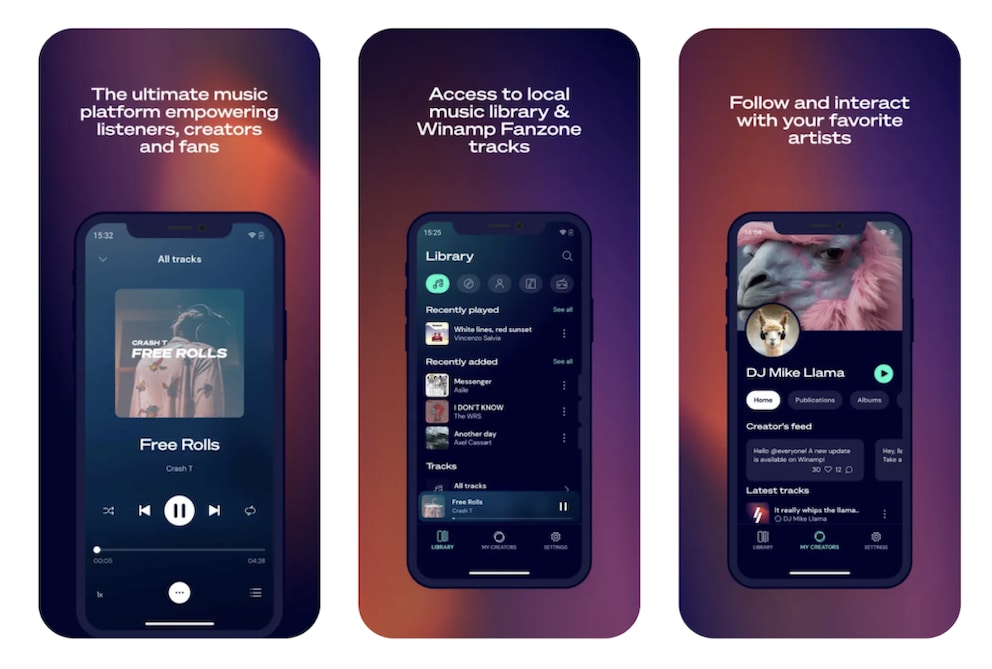
Since early April 2024, there is also a free app for iOS and Android, through which users can access local libraries–including iCloud and Google Drive–and set up their own playlists. An equalizer is also part of the feature set. User reviews of the app are very mixed, tending to cluster at the extreme ends of “very good” and “very bad.” Fans of the old Windows versions, in particular, often express deep disappointment. The new app does not match the feature set of the original cult software. However, this also means there is significant development potential. Those who prefer to return to the roots can download the Windows version 5.9.2.