

June 17, 2024, 10:08 am | Read time: 4 minutes
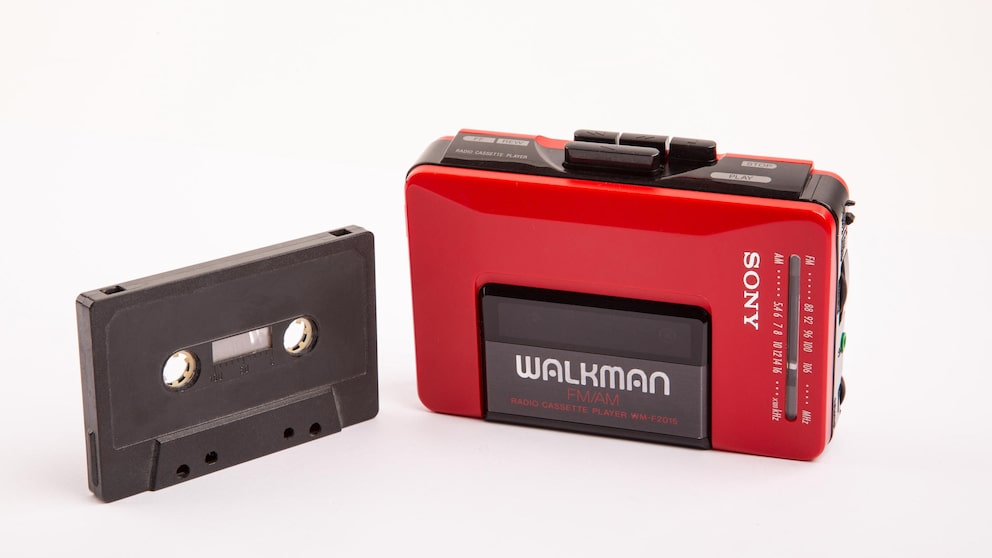
Some may still remember it as a loyal companion from childhood days, while for others, it was simply the accessory to be cool in the ’80s: the Walkman. About 45 years ago, Sony launched the first portable cassette player, revolutionizing the music world–and today it’s making a surprising comeback.
There are things without which life wouldn’t be the same. The Walkman is one of them. Who doesn’t know that incredible moment on a crowded bus when all worries fade away as soon as the play button is pressed and that song hums through the headphones, making the world seem to stand still?
What is now easily done with apps like Spotify or Apple Music on a smartphone wasn’t always a given. Being able to listen to music on the go was long considered impossible. It was only the Walkman from Sony that changed this. The mobile playback device achieved cult status among many teenagers in the ’80s. But how did it come to be, and what has become of it today?
The Walkman–from Portable Tape to Take-Along Soundtrack
In August 1963, the Dutch electronics company Philips introduced a 10.16 by 6.35 by 1.27 cm plastic rectangle with a magnetic tape wound on two reels at the 23rd Great German Radio Exhibition in Berlin. What no one knew at the time: It was the starting point for an era without which Spotify or the iPod wouldn’t have been possible.
However, the real triumph of the compact cassette, the official name of the innovation, began over a decade later. Specifically, when in the late ’70s, then-Sony chief Norio Ohga outsmarted Philips engineer Lou Ottens. At that time, he and his team were negotiating in Japan over licenses for compact cassette players–and, as he believes in an interview with “Zeit,” were fed a brazen lie.
Also interesting: These old iPods are worth over 4,000 euros!
Allegedly, Grundig wanted to give Sony the licenses for the competing product to the compact cassette for free. So Philips relented, and Sony was able to bring the first Walkman to market in August 1979 at a low cost–and sold more than 335 million devices under the brand name until 2004. From 1984 to 2009, they also sold portable CD players. The Walkman still exists, but under that legendary name, Sony now sells an Android MP3 player. The Japanese tech company no longer manufactures cassette players.

The history of the Japanese global giant Sony is full of twists and turns.

What Ever Happened to the Tape Recorder?
The Classic Walkman Is Not Dead
In fact, the Walkman has been experiencing a real renaissance for some time. This is mainly due to a film: “Guardians of the Galaxy.” When the second part of the film series hit theaters, the plot-driving “Awesome Mix” was released on cassette in style–and landed in the top ten of the best-selling records in the U.S. in 2017. Nowadays, you can even buy albums by Taylor Swift, Billie Eilish, and others as classic MCs at the fashion chain Urban Outfitters. Sales figures are rising.
In the Walkman’s country of origin, Japan, the format is even experiencing a real boom. Numerous J-Pop artists are releasing their singles exclusively on cassette, according to the online magazine “Vice.” Additionally, the demand for blank cassettes has recently increased there. However, only the company Maxell still produces them worldwide.
Retro Technology Is Experiencing a Renaissance
Especially among the young Generation Z, those born between 1997 and 2012, the format is well-received. The retro sound carriers therefore need a playback device. For example, on the portal Kleinanzeigen, vintage models of the original Walkman or the counterparts from Panasonic are in high demand. They are still being offered for several hundred euros.
Also interesting: Why the cassette is making a comeback
But new models in a retro look are also available on the market, such as the designer model from the company We are Rewind for just under 150 euros MSRP. It’s cheaper in the transparent Y2K look at Urban Outfitters for about 28 euros or various models at Amazon for around 20 euros. The Walkman remains robust–whether a Discman comeback will follow soon remains to be seen. Millennials would be delighted.