


May 11, 2026, 3:11 pm | Read time: 3 minutes
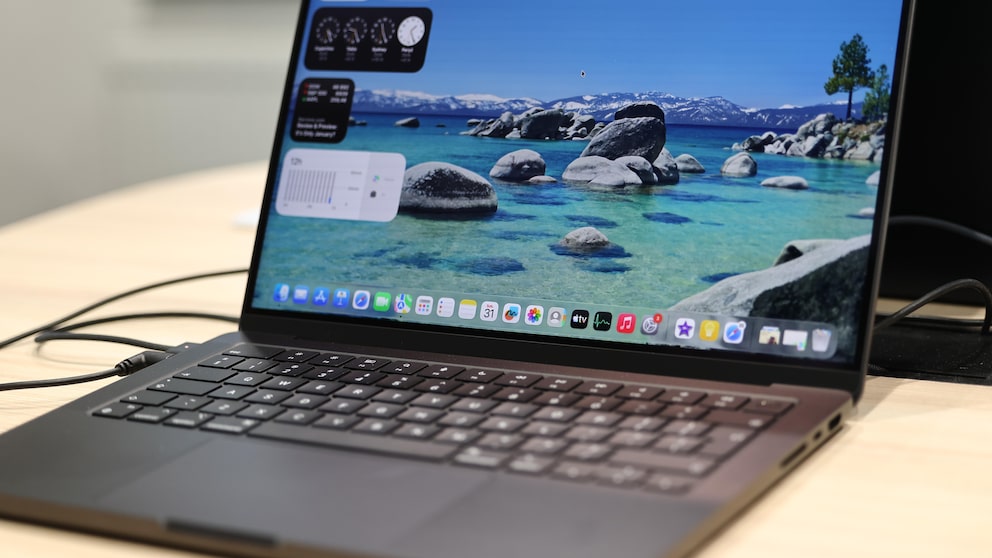
Last year, Apple introduced the new Liquid Glass interface for all operating systems and faced a lot of criticism for it. Users were unhappy with the sometimes poor readability and display of elements in the foreground and background. Although several updates have been made to improve it, issues persist, especially under macOS Tahoe. According to a report from Bloomberg, macOS 27 is expected to address these issues.
macOS Features in Focus
Similar to iOS, macOS has already provided improvements following the major 26 updates, which help with readability through a “darkened” option. However, macOS 27 is expected to bring Mac-specific adjustments.
In his current Bloomberg newsletter, Mark Gurman writes: “Apple aims to address the quirks with shadows and transparency.” According to Gurman, the Liquid Glass design language is less suited for large screens and the mouse as an input method compared to the iPhone. The interface was primarily developed for OLED displays, which better render shadow and transparency effects than the LCD panels in MacBooks.
Redesign According to Original Plans
Under macOS, Liquid Glass can lead to poor readability with a lot of text—especially in the Control Center and Finder, as TECHBOOK can confirm. In many cases, it is difficult to discern what belongs to what in overlapping windows. Buttons in the Control Center often do not stand out enough from the background to be easily readable.
With the update, Liquid Glass in macOS is expected to look as Apple’s design team originally intended. They plan to make adjustments with a “slight redesign,” as Gurman has learned from internal sources. The improvements are part of a comprehensive optimization of the operating system, which is also planned for iOS 27.
Made for MacBook Ultra
Liquid Glass is expected to truly impress with the “MacBook Ultra,” which is set to be released in 2026. It is the first MacBook with an OLED screen, which is also touch-enabled for the first time.
Additionally, there is a newly designed case that refreshes the previous MacBook Pro look from 2021. Changes are also happening inside: The MacBook Ultra is expected to launch directly with M6 Pro and M6 Max, replacing the M5 Pro and M5 Max.

Exclusive iPhone Feature Likely Coming to MacBook

New MacBook Design May Be Exclusive to OLED Version
New Features for Safari
In addition to visual changes, Apple is also working on a new feature for Safari in macOS. The focus is on automatic tab organization, supported by artificial intelligence. The feature is intended to help structure open websites more efficiently.
According to Gurman, users will be able to decide whether the grouping occurs automatically. The option is expected to be integrated into the existing tab management and could significantly improve the overview with many open pages.
Release and Availability
The presentation of macOS 27 is planned for the WWDC 2026 developer conference. The keynote will take place on June 8 and will also cover all other operating systems such as iOS, iPadOS, watchOS, and tvOS.
Also interesting: What new devices does Apple have planned?
Immediately afterward, Apple will release a first beta version for developers. The public beta usually follows in July. After the testing phase is completed, the final version is expected in September.