

July 9, 2026, 6:02 am | Read time: 2 minutes
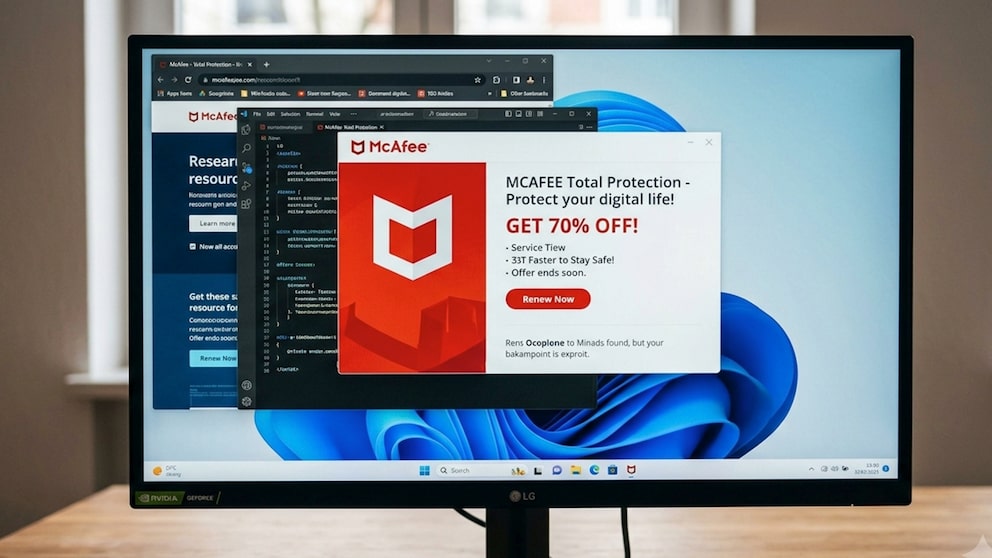
A monitor is typically just for displaying images. However, some LG devices are reportedly installing software automatically via Windows, which includes ads for antivirus programs.
User Discovers Unexpected Software on Their PC
The case began with a post on Reddit. A user reported that ads for the antivirus software McAfee suddenly appeared on their Windows PC–despite never having installed the program. In search of the cause, they found clues in the reliability history and Windows event log.
There, the “LG Monitor App Installer” appeared. According to “Caschys Blog,” the application supposedly installs itself automatically via the Microsoft Store or Windows Update. Particularly problematic: The software reportedly cannot be easily removed. However, it remains unclear which LG monitors are affected and under what conditions the installation occurs.

LG Removes Ads from Monitors
New Loophole Allows Fire TV Users to Install Any Apps
How to Disable the App Again
Those who want to get rid of the unwanted ads have several options. In many cases, it is sufficient to disable the automatic start of the application under Settings > Apps > Startup or to uninstall the software completely. However, it is not guaranteed that this will permanently prevent the app from being reinstalled.
Users of Windows Pro can also use the Group Policy Editor. This can prevent Windows from automatically installing manufacturer-specific device apps. As a more extensive measure, the Microsoft Store could also be disabled. However, this step restricts numerous Windows functions and is therefore unlikely to be a practical solution for most users.
Also of interest: Microsoft completely revamps Windows 11 interface
The Case Raises Questions About User Control
It’s not new for manufacturers to offer additional software for their devices. Typically, however, users decide for themselves whether they want to install such applications. In the current case, the apparent automatic installation via Windows is drawing criticism.
If this behavior is confirmed, it raises questions about transparency and control. Users primarily expect a monitor to be a display device–and not software that lands on the PC uninvited or displays ads. Whether LG will adjust this behavior or officially comment remains to be seen.