

October 3, 2026, 11:08 am | Read time: 3 minutes
AI applications are consuming more and more energy. Google wants to test whether part of the computing power can be operated directly in space in the future.
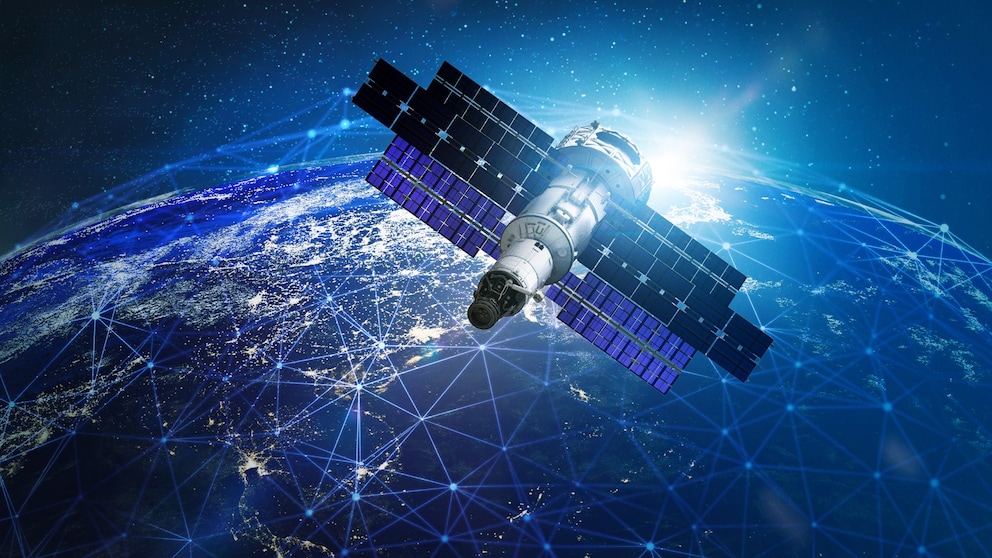
Google is launching a test satellite for the “Suncatcher” project next week. Onboard are specially developed processors for AI calculations. With the flight, the company aims to test whether the hardware can withstand space conditions and operate reliably there.
Behind the project is a long-term idea. In certain orbits, the sun shines almost continuously on satellites. According to Google, up to eight times more solar energy could be available there than on Earth. Data centers in orbit could thus relieve power grids and simultaneously reduce the need for cooling water.
How Google Prepares the Hardware
The journey into space is considered technically challenging. During the approximately ten-minute rocket launch, forces of up to ten times Earth’s gravity act on the satellite, according to Google. Individual components must even withstand stresses equivalent to one hundred times Earth’s acceleration. Therefore, the company subjected the hardware to extensive vibration tests.
Additional risks are also present. In space, radiation can cause computational errors. Google tested the AI chips in the lab under proton radiation while they were already performing AI tasks. According to the company, the processors withstood more radiation than they would encounter in five years in space. The cooling system also had to prove itself. Since there is no air in a vacuum to dissipate heat, special pipes transport the heat to surfaces that radiate it into space.
The Big Goal Behind “Suncatcher”
The current flight serves only as an initial technology test. For larger AI tasks, numerous satellites with many processors would be needed. These are supposed to exchange their data via laser. The challenge: The beams must hit their target precisely despite the constant movement of the satellites.
Also interesting: Google Gemini now takes calls for users
This part of the project will follow later. Google plans to test the laser connections between two satellites in 2027. Other companies have similar plans. For instance, SpaceX applied to the U.S. Federal Communications Commission in January 2026 for permission for up to one million satellites. According to Elon Musk, the first data center satellites are expected to launch at the end of 2027. Whether AI data centers in space will actually become feasible remains to be seen in the coming years.