


February 28, 2024, 2:14 pm | Read time: 6 minutes
After years of seeing transparent TVs at tech fairs worldwide, the technology is now featured in a laptop for the first time. Appropriately named ThinkBook Transparent, the manufacturer is Lenovo.
The “Lenovo ThinkBook Transparent Display Laptop Concept,” as the device is officially called, could come straight out of a sci-fi movie. Transparent displays fascinate and are a tried-and-true method to depict future technology. Manufacturers have been trying to realize this idea for years. Lenovo has come significantly closer to the goal with its transparent laptop. However, the concept vividly demonstrates why transparent displays have little practical use in reality.
Watch the ThinkBook Transparent in the video here:
Overview
Lenovo Unveils the World’s First Transparent Laptop
Transparent displays are not new to the market. As early as 2009, Sony released the Xperia Pureness—the world’s first commercially available transparent device. The feature phone, with a mere 1.8-inch screen and classic buttons, suffered from poor readability both outdoors and indoors.

In 2011, Samsung introduced the first large-format, mass-produced transparent display. At the time, the company saw advertising as a primary application. Since then, we’ve seen transparent TVs from brands like LG, Xiaomi, and even Metz at nearly every tech fair.
With the ThinkBook Transparent Display Laptop Concept, Lenovo is bringing the technology to a new form factor at MWC 2024. As the company reveals at the fair, it aims to enable interaction with physical objects by overlaying digital information. Although Lenovo doesn’t explicitly name it, this is essentially Augmented Reality (AR). Could the device compete with AR glasses or headsets? We have our doubts.
Laptop with Borderless and Transparent Display
At Lenovo’s booth at MWC 2024, crowds gather from morning till night to catch a glimpse of the event’s most futuristic device. It’s no wonder, as the laptop with its transparent display seems like it was brought straight from a “Star Trek” film to the fair.

The screen is borderless, measures 17.3 inches diagonally, and uses Micro-LED technology. Similar to the OLED alternative, the pixels—or the subpixels for red, green, and blue—light up in Micro-LED panels themselves. A backlight, which would obstruct the view, is not necessary. Instead, the pixel layer is encased by two glass plates on both sides.
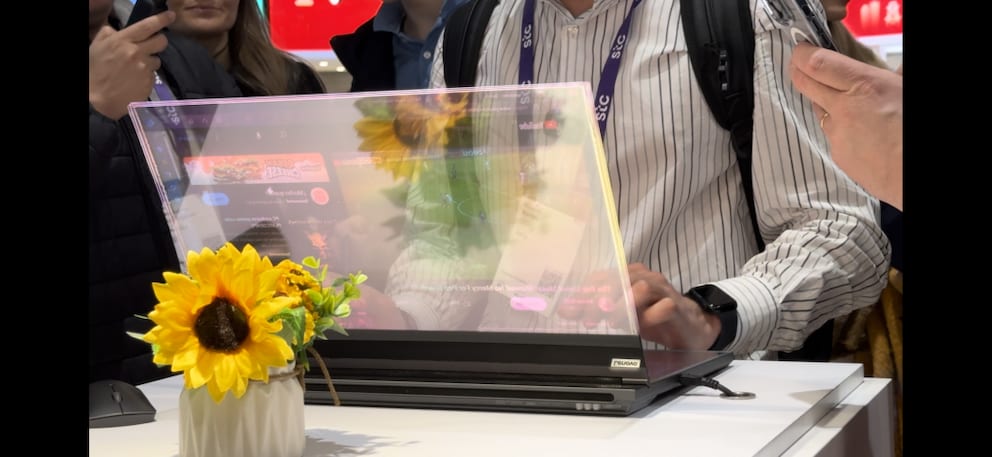
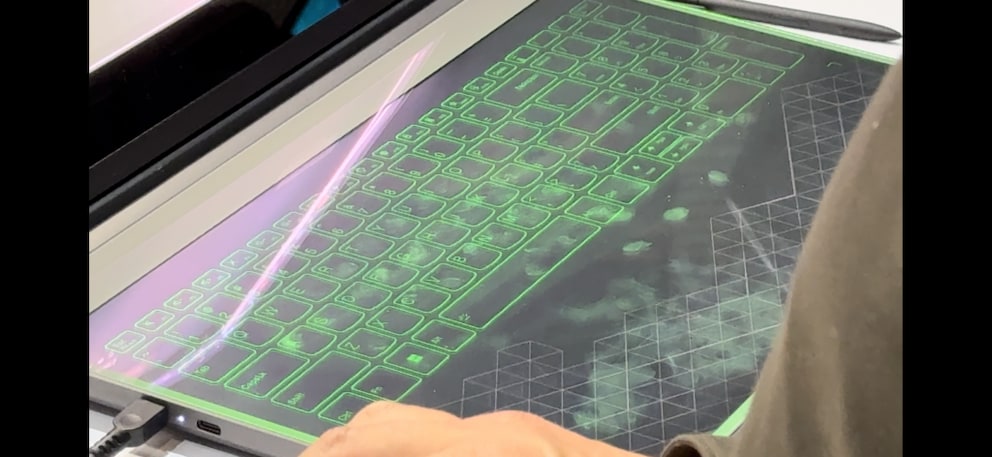
From a frontal view, it appears as if the displayed screen content is floating in the air. According to Lenovo, this allows the transparent laptop to “naturally integrate into its environment.” Users should be able to create content based on physical objects—or generate it using artificial intelligence. Interaction occurs via a (semi-)transparent, illuminated, touch-sensitive keyboard and stylus input.
Read also: Nubia Flip is probably the cheapest foldable smartphone—but is it any good?

Our Highlights from MWC 2024
Lenovo Presents ThinkBook Flip — a Laptop with a fFolding Display
High Brightness, Low Contrast
However, the Lenovo concept laptop suffers from the same issues as all previous transparent displays: contrast and brightness. Even at the maximum brightness of an impressive 1000 nits, content on the display is only moderately visible. For comparison, current MacBook Pro models reach just 600 nits, making them among the brightest mainstream laptops on the market. Such a bright display requires a lot of energy, but that’s at least a problem Lenovo’s engineers can solve with larger batteries.
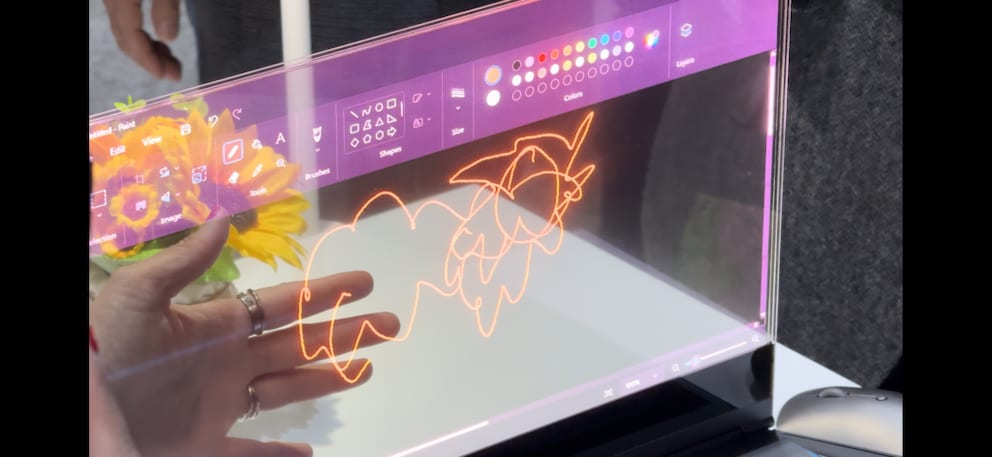
Contrast, on the other hand, is a much bigger problem. Without contrast, the display can be as bright as it wants—colors lose their vibrancy and appear washed out. The color contrast value of a display is crucial because colors only achieve their precise value through their relationship to each other. In Lenovo’s transparent concept laptop, however, the colors do not remain stable. Objects behind the display and their own colors are visible through the display, thus altering the pixel coloration.
This is less of an issue with very bright colors, such as white, because the display can practically mask the background. But dark gray tones, for example, don’t provide enough light for that. Pure black (color code #000000) is particularly problematic because the pixels simply remain off. Wherever black appears in the user interface, the display is completely transparent.
A Promise of the Future with No Practical Use
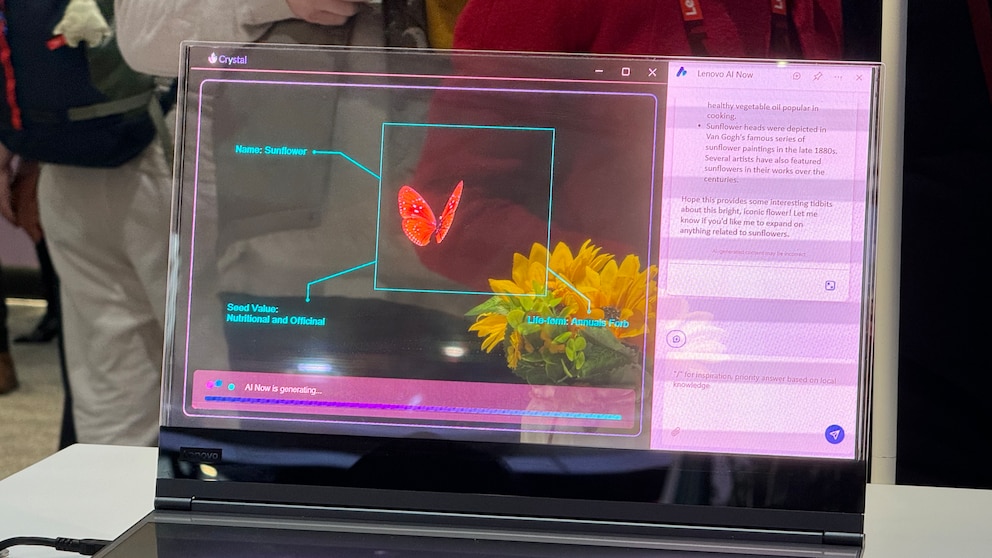
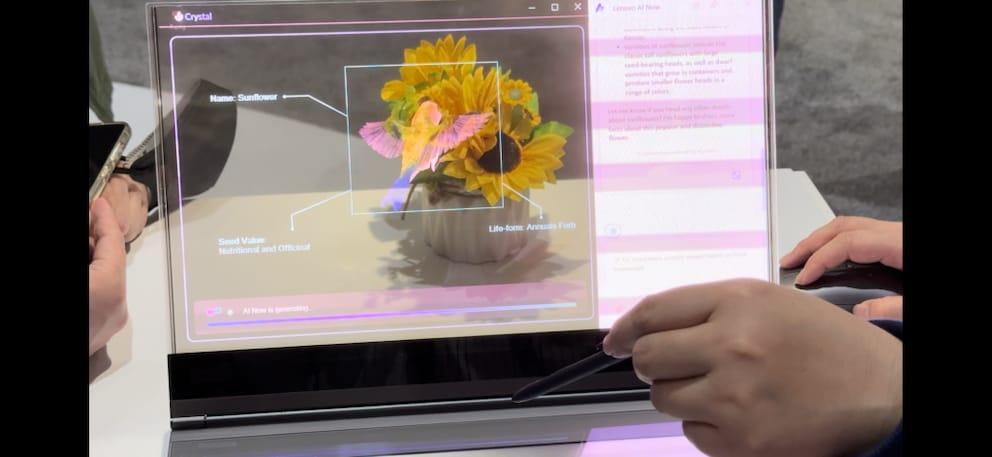
Lenovo clearly demonstrates this fact with its own demo at MWC. The demo is intended to show how Lenovo’s “AI Now” can identify objects and describe them on the display. Behind the laptop stands a vase with sunflowers. On the display, a glowing frame appears around the vase, with small information texts about name, seed value, and plant type extending from it. The pixels around the vase remain off to keep the view clear. Only a column on the right side with more text about the plant suggests that the AI generated this information. The bright colors of the frame and text column show the ideal case for the transparent display. They effectively stand out from the background and are thus easily visible.
However, when the amazed visitors ask the Lenovo exhibitor to play a YouTube video, the technology’s weaknesses become apparent. Even in the user interface of the video platform, the elements that are supposed to be gray appear in bright pink tones. The opened video reveals the same problem: skin tones are barely recognizable, and the entire image sometimes looks as if someone has adjusted the color contrast. Additionally, the vase with sunflowers in the background is permanently visible—sometimes more, sometimes less.
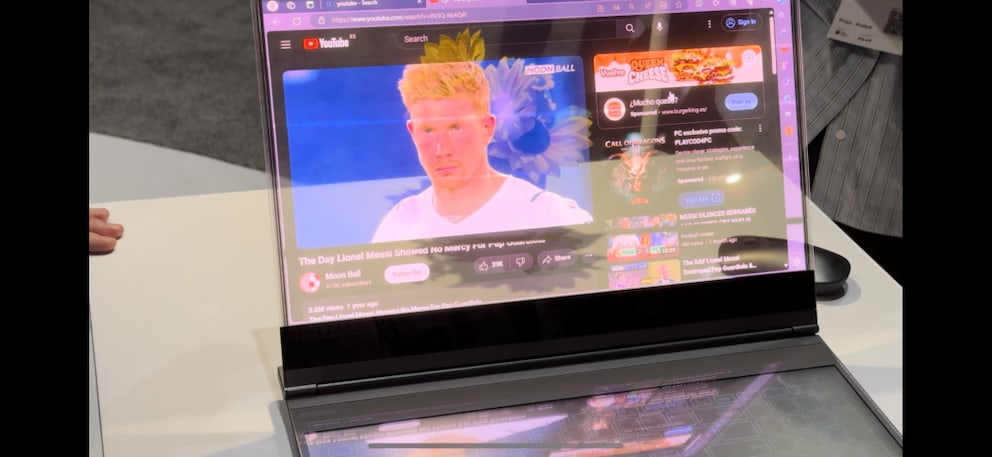
Especially when used outdoors and in brightly lit rooms, the readability of the display is likely to approach zero. Usage is therefore only possible under controlled conditions. The promised natural integration into the environment thus becomes a distant prospect. Lenovo itself admits that it needs to continue working on the technology to regulate the display’s light transmission. LG’s transparent TV, for example, uses a black film that rises behind the display panel to make it opaque. In its current form, however, the transparent laptop is little more than an idea that is certainly interesting but hardly practical.