



February 29, 2024, 2:09 pm | Read time: 9 minutes
The MWC is the first major tech fair of the year in Europe. TECHBOOK editors Rita Deutschbein and Adrian Mühlroth were on site and reviewed some innovations. Here are their highlights.
The Mobile World Congress, or MWC, took place this year from February 26 to 29. However, even on the Sunday before, there was plenty of activity, as many companies held their press conferences on this press day, and the Showstopper event also took place. Whether Samsung, Motorola, Xiaomi, or Honor, Telekom and Vodafone, AVM or Qualcomm–numerous well-known exhibitors used the fair in Barcelona to showcase, network, and exchange ideas. TECHBOOK summarizes the personal highlights from MWC 2024:
Overview
- From Concept to Finished Product
- Energizer Unveils Smartphone with 28,000-mAh Battery
- Xiaomi Unveils Smartphones and a Car
- Most Affordable Foldable Smartphone
- Clicks Turns iPhone into Blackberry
- Lenovo’s Concept Laptop with Transparent Display
- AI Phone to Make Apps Obsolete
- Nothing Phone (2a) Already Previewed
From Concept to Finished Product
A lot is showcased at a fair. Some use it to remind people of already known products, others present completely new devices and technologies, while others show concepts that provide a glimpse of what might be possible in the future. At MWC 2024, this colorful mix was present, but it was mainly the concepts that stood out as highlights in our memory.
In advance, Telekom announced its AI smartphone without apps, and Lenovo its transparent laptop. At Xiaomi’s booth, we were also able to examine the manufacturer’s first electric car, which is even road-ready. Motorola brought a smartphone for the wrist, Samsung a smart ring, and Energizer a smartphone with probably the thickest battery.
There were also manufacturers who showcased market-ready products. Some of these were not necessarily new–for example, Honor’s devices had been available in China for some time before celebrating their European launch. The router manufacturer AVM also showcased known products but mainly used the fair for networking. In general, conversations were highly valued–whether with companies or colleagues from other media. After all, it’s a place to meet, at a fair like MWC.
But back to the products and technologies showcased. Here are our MWC 2024 highlights:
Energizer Unveils Smartphone with 28,000-mAh Battery
Common smartphones with their 3,500 to 5,000 mAh batteries can’t compete here. The battery manufacturer Energizer showcased a smartphone at MWC 2024 with a battery that breaks all records, making it one of the highlights. It offers a whopping 28,000 mAh capacity, making the smartphone quite thick and relatively heavy at 570 grams. In hand, the device is a real brick–but at least it lasts a long time. Energizer claims that the smartphone, called P28K, only needs to be charged once a week. Apple, Samsung, or other smartphone users can only dream of that.
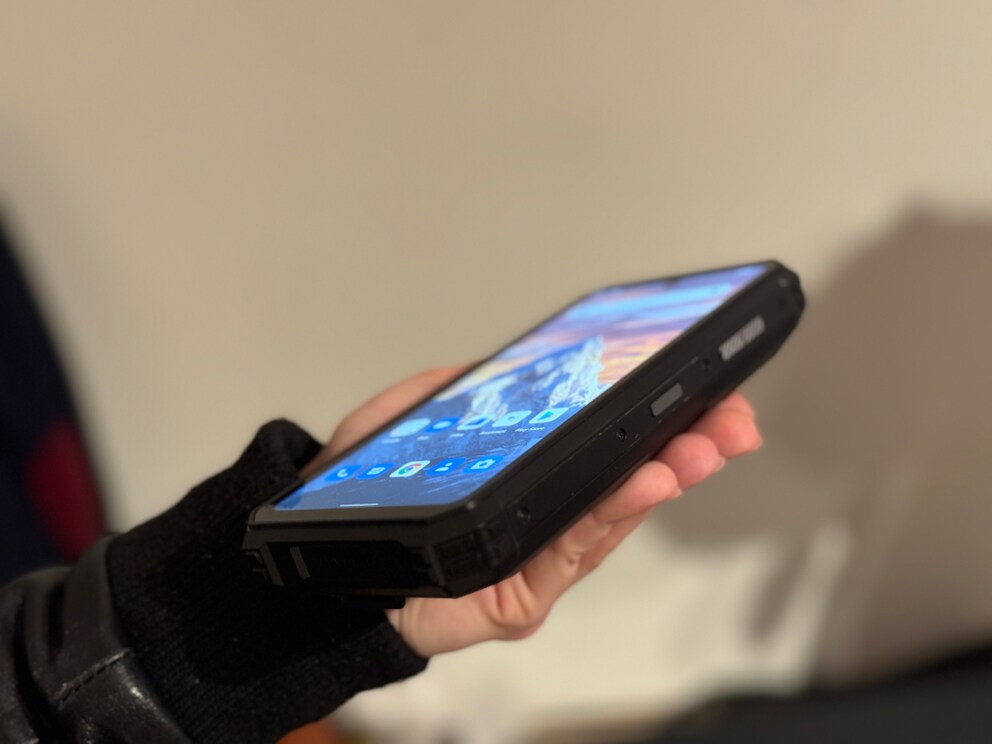
Technically, the device is not that spectacular. The P28K offers a 6.78-inch screen, an IP69 water-resistant casing, 8 GB of RAM, and 256 GB of internal storage. It is powered by the Mediatek Helio G99 from 2022, which is in the upper mid-range. The camera offers a 64-megapixel wide-angle and a 20-megapixel ultra-wide-angle. At just 250 euros, the Energizer P28K is relatively inexpensive, but a market launch in Germany is not expected until around fall.
Xiaomi Unveils Smartphones and a Car
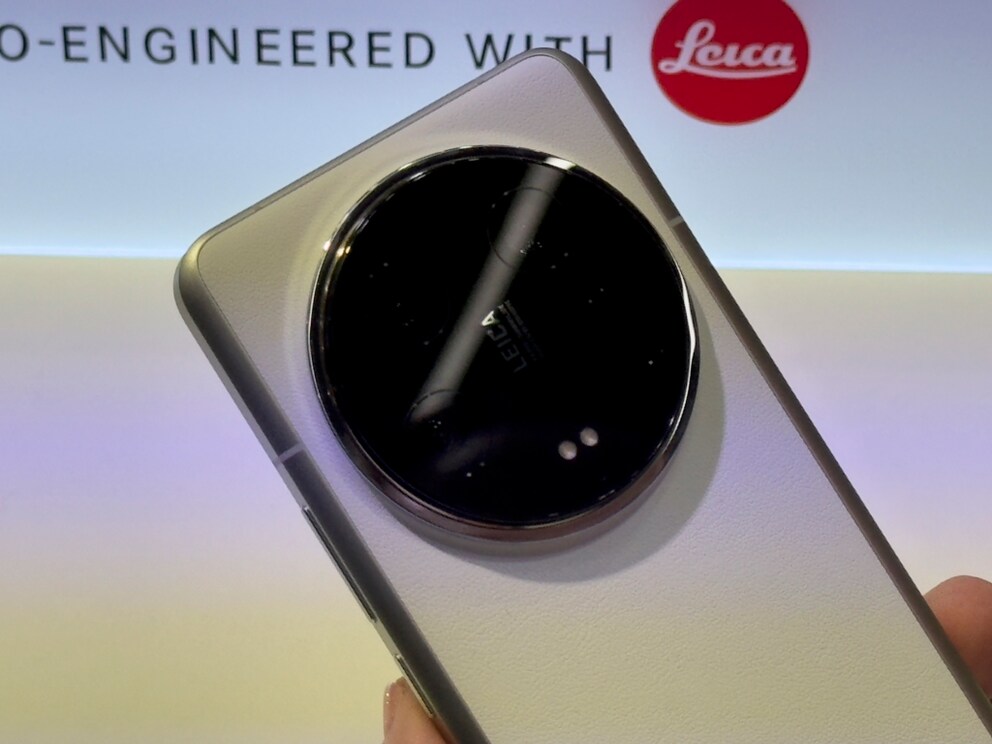
We actually visited Xiaomi’s booth for the new smartphones. The Xiaomi 14 Ultra stands out, featuring an exceptionally good Leica camera that can almost transform into a classic camera with the help of a Photography Kit. It offers a special mount, a zoom control, and a shutter button, and also extends battery life. You can read detailed information about the Xiaomi 14 and 14 Ultra in a separate report.
The secret–and not to be overlooked–star was the SU7 electric car. In light blue paint, it circled the Xiaomi booth and caught the attention of many MWC 2024 visitors. It was displayed in the Max version, with dual motors, sports equipment, and even more power under the hood. From 0 to 100 km/h in just 2.78 seconds, a top speed of 265 km/h, and 673 horsepower are the key specs of the Xiaomi SU7 Max. Xiaomi did not provide specific details on the charging and battery technology, motor, or range.
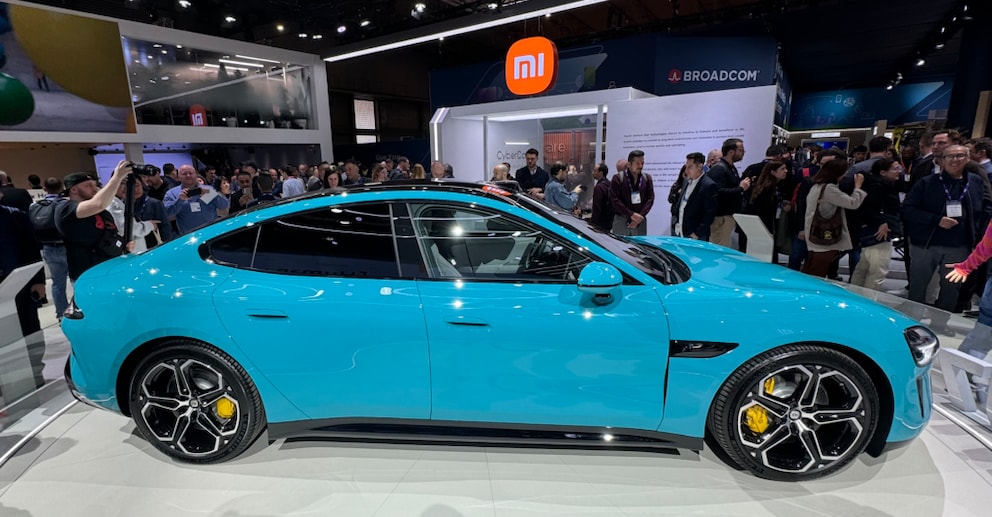
They also remained tight-lipped about the launch date. However, the electric car could be available in its home country of China later this year.
Most Affordable Foldable Smartphone
At ZTE, we were able to examine some interesting smartphones–mostly colorful, with special speakers and dual jacks, or unique form factors. Among the latter is the ZTE Nubia Flip, a foldable smartphone modeled after the Samsung Galaxy Flip. It impressed us visually with its attractive color scheme and circular outer display. With its black frame, it reminded us of a washing machine door. It is intended to display quick information such as weather, steps taken, notifications, or similar. Conveniently, the display allows scrolling like on a smartwatch, so you can keep track of several things without opening the smartphone.
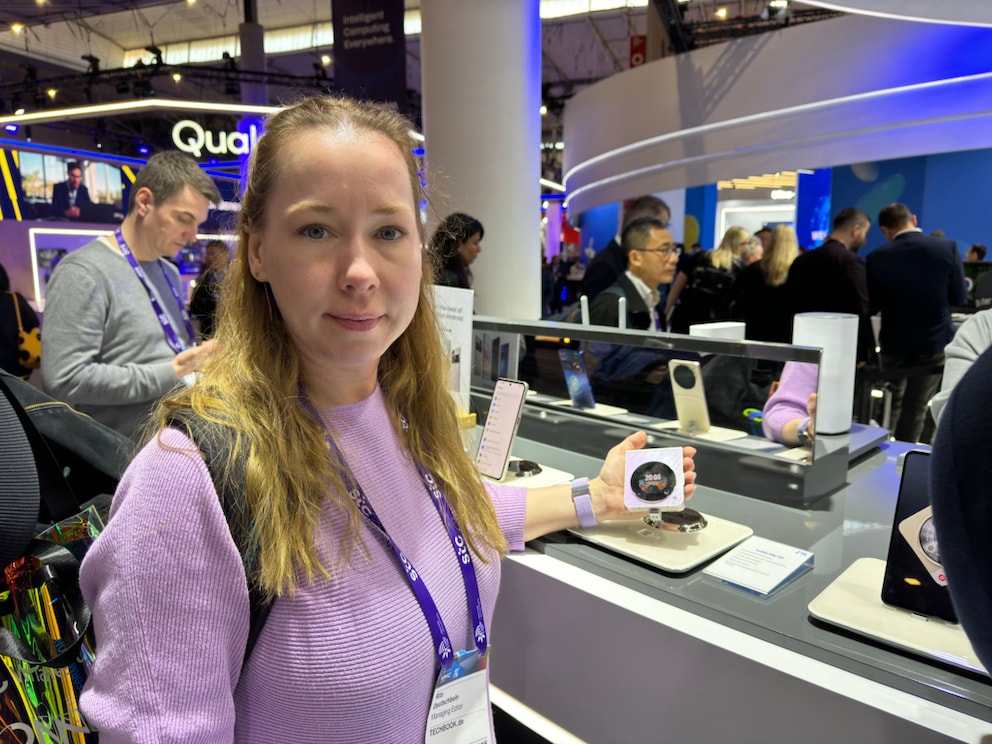
The folding mechanism doesn’t need to hide. The ZTE Nubia Flip closes as flush as the current models from Samsung or Motorola. Technically, users will find the standard fare of a mid-range device. However, the Nubia Flip from ZTE costs less than the competition. The manufacturer quoted a price of 699 euros for the German market, which is about 200 euros less than the Motorola Razr 40. You can read detailed information about the device in a separate news article.
Clicks Turns iPhone into Blackberry
On the eve of the fair’s start, some exhibitors were already present at Showstoppers. One of the most exciting products was Clicks, from a multinational team from the UK, Canada, and the USA. It is co-designed by the well-known YouTuber Michael Fisher, aka “MrMobile.” Clicks is a smartphone case with an integrated keyboard that aims to make typing exciting again.
Fisher told TECHBOOK that today’s smartphone keyboards take up about 40 percent of the screen. Compared to the earlier mini-keyboards–most prominently in Blackberries–something has been lost: the click. Clicks aims to bring back the tactile keyboard.
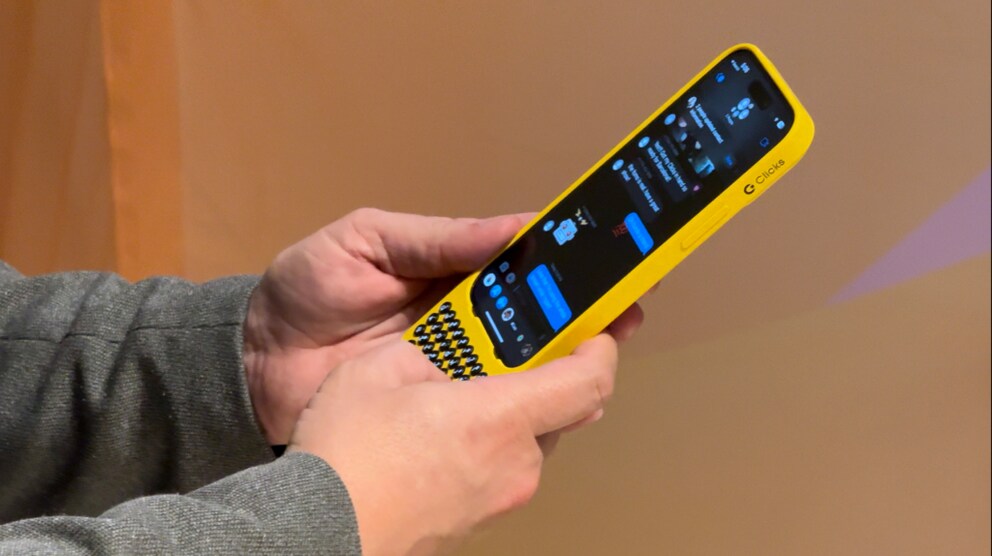
In the hands-on, it quickly became apparent that we are no longer used to typing on a physical smartphone keyboard. Editor Adrian Mühlroth had trouble pressing the keys correctly before moving on to the next letter. But with a little practice, typing quickly becomes second nature. The keys have a crisp pressure point and are slightly raised to be felt with the finger.
The keyboard is backlit but does not have its own battery to save weight. Instead, it draws a minimal amount of power directly from the smartphone. Conveniently, those familiar with the shortcuts on the Magic Keyboard for the iPad will find all combinations–such as for copy and paste–again.
Clicks is not yet widely available and is initially only compatible with certain iPhone models. However, the company told TECHBOOK that a QWERTZ version for the German-speaking market is expected to be released in the first half of 2024.
Lenovo’s Concept Laptop with Transparent Display
Lenovo showcased a laptop at MWC that could have come straight out of a sci-fi movie–and is undoubtedly one of the absolute highlights of the fair. Transparent displays are not new, but this is the first time the technology has been used in a laptop. The concept features a frameless, 17.3-inch micro-LED display and a semi-transparent, illuminated, and touch-sensitive keyboard.
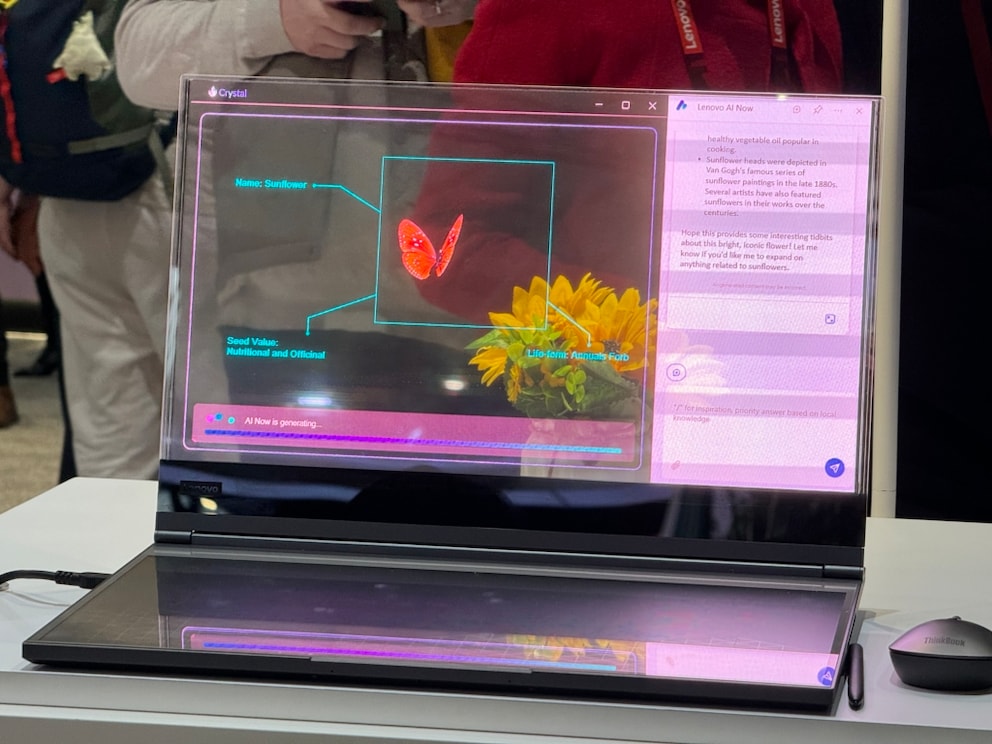
Despite a high brightness of 1,000 nits, content on the display is only moderately visible, as contrast is a major issue. Colors lose their luster and appear washed out because objects and their colors behind the display are visible and affect the coloring of the pixels. Lenovo itself admits that it needs to continue working on the technology to control the display’s light transmission. In its current form, the transparent laptop is little more than an interesting but hardly practical idea.

Editor on Lenovo’s Transparent Laptop: “Pure Sci-Fi, but Practically Unusable”
Lenovo Presents ThinkBook Flip — a Laptop with a fFolding Display
AI Phone to Make Apps Obsolete
Deutsche Telekom was also present at MWC and showcased the AI Phone–a concept that uses artificial intelligence (AI) for smartphone operation and aims to ease the transition from apps to digital assistants. As part of the showcase, TECHBOOK was able to try out the AI Phone. On voice command, the assistant could book flights and create personalized product suggestions.
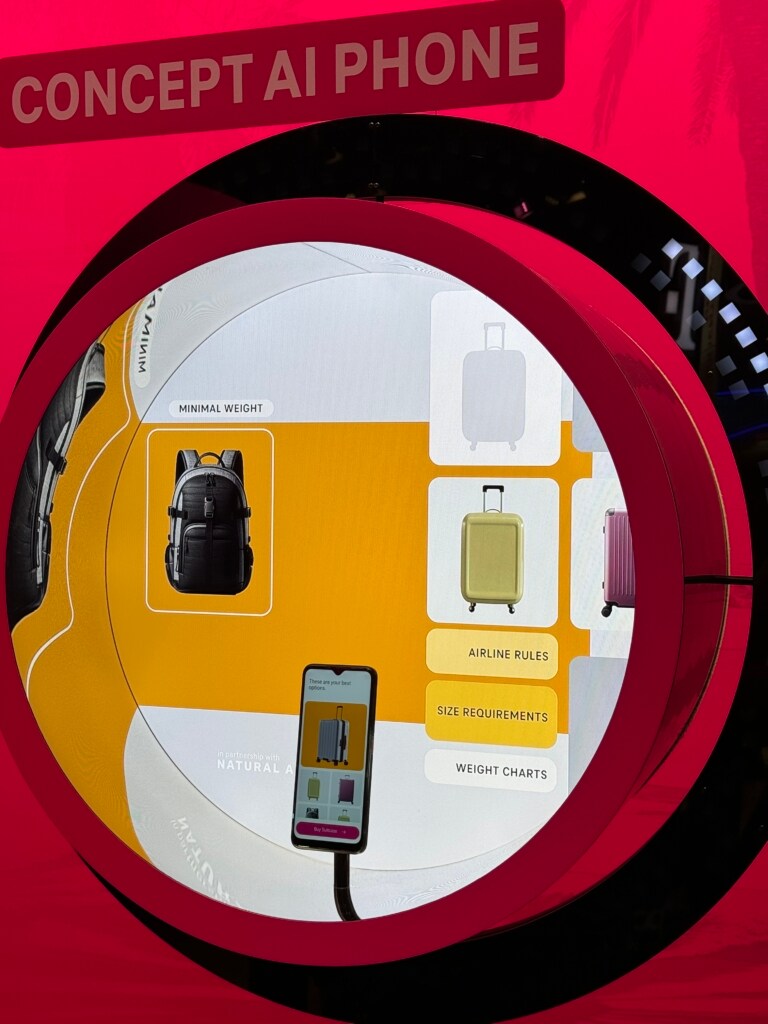
The technology is designed to learn from users and utilize services, but only with their consent. Telekom developed the concept together with Qualcomm and Brain.ai. The AI Phone is intended to work on virtually any smartphone, as it processes data in the cloud. Only devices with Qualcomm chips can execute commands directly on-device. An exact launch date for the AI Phone is still unclear, but it is expected to be available for all providers and manufacturers.
Nothing Phone (2a) Already Previewed
The Phone (2a) from the London start-up Nothing is actually set to be released on March 5. However, TECHBOOK was able to preview the device at MWC. While we are not yet allowed to comment on the specs, Nothing has already revealed the design and chip.
The Phone (2a) is immediately recognizable as a Nothing smartphone. The transparent, slightly milky surface reveals a detailed design on the back. The manufacturer has incorporated familiar elements such as screws, ribbed surfaces, and color accents. New is the winding surface on the lower half, which is meant to resemble a flex cable. The designers were inspired by Massimo Vignelli, who designed the maps for the New York Subway, among other things.

The smartphone simplifies the Glyph Interface introduced with Phone (1). Instead of distributing LEDs across the entire back, three separate elements are now arranged around the dual camera. This has moved from the left corner to the center, giving the device more character. Nothing describes the cameras as eyes, behind which, fittingly, the “brain” in the form of the Mediatek Dimensity 7200 Pro sits. The chip is specially adapted for Nothing to “ensure optimal power consumption.” Unlike Phone (1), which is equipped with the mid-range Snapdragon 778G+ chip, the Dimensity 7200 Pro in Phone (2a) is said to deliver 18 percent more performance with 16 percent more efficient battery consumption.