


May 8, 2026, 2:31 pm | Read time: 3 minutes
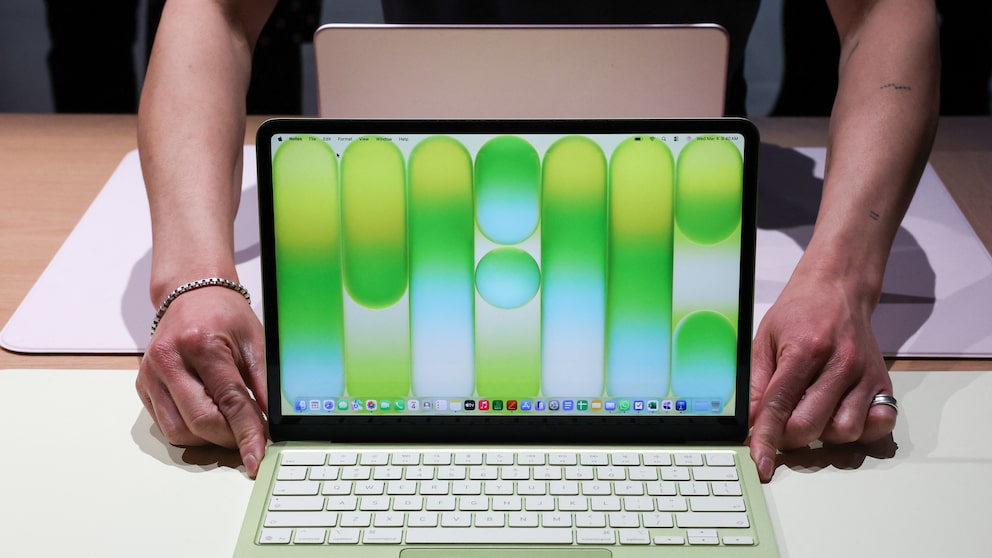
Apple’s budget laptop, the MacBook Neo, has struck a chord. Demand is so high that delivery times now extend to several weeks, and manufacturers are struggling to keep up with production. Additionally, Apple is running out of chips that were leftover from the iPhone 16 Pro. However, restarting semiconductor production is likely to be significantly more expensive for Apple than the original production run. Whether the company can maintain the price of the MacBook Neo is therefore questionable.
Production Goals Doubled
In an investor conference on the current quarterly figures, outgoing CEO Tim Cook openly admitted that Apple is currently “limited by supply shortages for the MacBook Neo.” The “enthusiasm” for the device had been underestimated. Until now, it was unclear how the company would navigate the discrepancy between supply and demand. By limiting the number of units, Apple’s profit margin would remain stable. However, to reach more user groups, an expansion is necessary—at least if the Neo is to pose a threat to Google’s market share with Chromebooks.
Now, the company leadership seems to have committed to resuming production of core components. This information comes from a report by “Culpium,” which cites sources from Apple’s supply chain. According to the report, Apple has raised its production target from five to six million units to ten million units. Manufacturing partners in Taiwan are working under high pressure, with current delivery times between three and four weeks.

Apple Raises Starting Price for Mac Mini to Nearly 1,000 Euros

Apple Discontinues 15 Products–iPhones, Macs, and Displays Affected
Apple Is Running Out of Chips
For production, Apple needs additional A18 Pro chips, originally developed for the iPhone 16 Pro. However, there is a significant difference: The chips for the iPhone 16 Pro came with all six GPU cores, while the A18 Pro in the MacBook Neo has only five GPU cores.
During production, defects frequently occur, causing a chip not to meet the specified design and thus not be sold as a full-fledged product. In the case of the A18 Pro, all chips that did not have all six GPU cores usable were sorted out. Manufacturer TSMC provided these so-called “down-binned” chips to Apple at a low cost—one of the main factors for the low price of the MacBook Neo.
Restarting A18 Pro production, however, is costly for Apple. Now, the company cannot just take the “sorted out” chips but must pay for full-fledged units. Both variants with six and five GPU cores are likely to come from production. “Culpium” suspects that Apple will disable the sixth GPU core via software to meet the MacBook Neo specification.
Additionally, since the original production run, memory prices have risen significantly. Overall, this increases the material cost per device considerably, which is likely to negatively impact Apple’s profit margin.
End for the Cheapest MacBook Neo?
To respond to the increased costs, Apple is apparently considering adjustments to the product portfolio. One option is to discontinue the cheaper version with 256 gigabytes of storage and only offer the model with 512 gigabytes and Touch ID.
With the discontinuation of the Mac mini base model, the MacBook Neo at 699 euros (599 euros with an education discount) is currently the cheapest Apple computer on the market. Even if the 256-GB version is discontinued, this does not change immediately, as the 512-GB variant costs only slightly more at 799 euros (699 euros with an education discount). The cheapest Mac mini (also with 512 GB) currently costs 949 euros.