

November 28, 2025, 9:52 am | Read time: 5 minutes
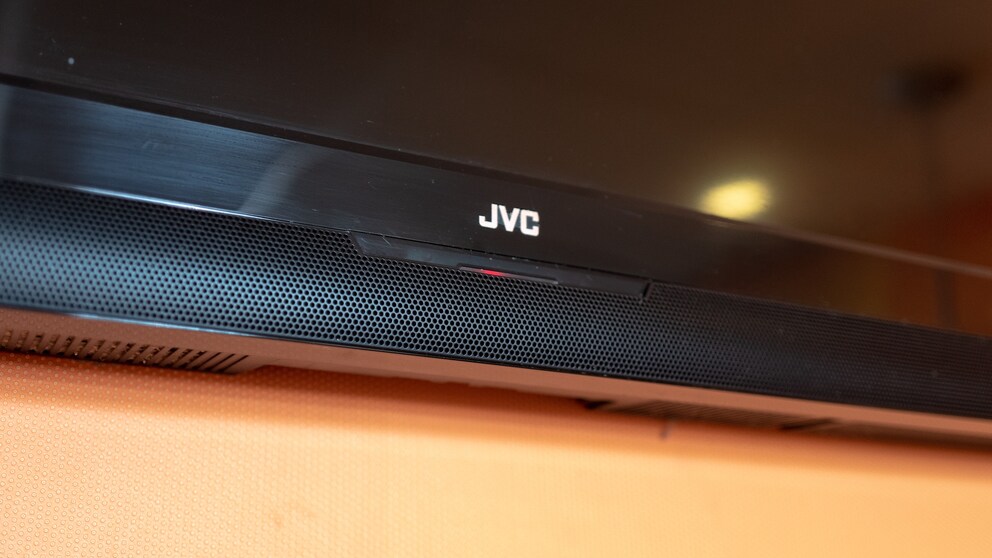
There are brands that everyone knows, yet not much is really known about them. JVC is one of those. Many have likely encountered the electronics of the Japanese manufacturer, but unlike Apple and others, there’s no immediate face or specific image that comes to mind. So, who is behind the JVC brand?
If JVC had a figure like Steve Jobs, the brand’s glamour factor might be greater today. Behind the three letters of the Japanese manufacturer of hi-fi equipment, televisions, video devices, and camcorders lies a nearly 100-year history. Without the Japanese company, there would be no VHS and thus no worldwide standard for video devices. Samsung, Hitachi, Panasonic, Sony–these Asian electronics giants are known by almost everyone today. JVC should also be in this league, but for specific reasons, it remains a quiet giant.
The company’s noble restraint cannot even be explained by its Asian roots. Behind JVC actually stands the American manufacturer of gramophones and shellac records, Victor Talking Machine Company.
In the early 1920s, the name Victor made eyes shine worldwide. The American company was a pioneer in making sound recordings audible. To increase its fame, Victor established locations around the world. Thus, the Victor Company of Japan, Limited–or simply JVC–opened its doors in 1927.
As a subsidiary of Victor based in Yokohama, JVC focused on improving records from the 1930s onward. The necessary playback device, the phonograph, was produced alongside.
The corporate marriage between the U.S. and Japan did not last long due to historical developments. World War II ended the connection. JVC operated independently during and after the war.
An Acquisition as the Starting Point for JVC
From the early 1950s, JVC resumed production. By then, the Japanese were manufacturing not only phonographs and records but also radios, speakers, and the first televisions.
In 1954, the Japanese competitor Matsushita took over JVC’s operations. The Matsushita Group also included the brand Panasonic, which was being developed as an export brand abroad at the same time.
After acquiring JVC, Matsushita did not make the mistake of forcing all of JVC’s business areas into a predetermined mold. On the contrary, JVC retained its brand name and all the freedom to make its own decisions.
This decision proved advantageous for both companies. JVC had long been considering not only making sound recordings reproducible but also playing sound and image simultaneously. The first ideas for a video device were taking shape.
Matsushita, on the other hand, focused more on the audio sector, benefiting from the experience of the new subsidiary brand. The first joint device was the first stereo record player under the JVC brand name in 1956.
What Ever Happened to the Well-Known Manufacturer Sanyo?
What You Should Know About Panasonic
JVC Makes VHS a Success
From the 1960s, JVC’s development team worked on a technical solution to record image and sound and play the recording on a television. Many companies were tinkering with a home video recorder at the time. A veritable race began.
Alongside JVC, Philips, Sony, and Grundig were also in the race. In the so-called format war, the Dutch initially had the upper hand. Philips introduced the VCR format in 1971, the first commercially successful video format at the time. In 1975, Sony followed with Betamax.
JVC observed the entire development and delivered its own format a year later, in 1976: VHS. The Japanese were not the first, but they had learned from the mistakes of the competition.
Therefore, JVC had a plan from the start to market the VHS format as quickly and globally as possible. First, JVC introduced the HR-3300, the first VHS video recorder for home use.
More crucially, JVC generously licensed other manufacturers. As a result, many VHS devices soon flooded the market, technological development advanced, and device prices fell. With this approach, JVC managed to establish VHS as a global video standard within a few years, pushing competitors with their formats out of the market.
In the following years, JVC invested a lot of energy in further developing the VHS format. At the same time, the Japanese electronics company developed other video devices for ambitious hobby filmmakers.
Here too, JVC quietly and unobtrusively set a mark. In 1995, the company introduced the first digital camcorder in pocket format. However, things became noticeably quieter around JVC afterward.
Resale and a New Chapter
With the turn of the millennium, the consumer electronics market craved new devices at ever shorter intervals. A company like JVC, which always placed great value on development, could or would not keep up with the pace.
The strict separation of domestic and foreign business now proved to be a burden. In Japan, JVC marketed high-quality hi-fi equipment under the brand name Victor, the original founding name.
Abroad, the company’s products bore the JVC brand name. These devices also met the highest standards but did not reach the high standard of domestic devices. This now took its toll with significant sales declines in foreign markets.
This development led to the separation of Matsushita and JVC. The electronics company Kenwood took over the company shares. In 2008, JVC Kenwood Holdings Inc. was formed, which became JVCKENWOOD Corporation with headquarters in Yokohama three years later.
Even though an American company helped with its birth, JVC never denied its Asian roots. Perhaps the company held onto its dual-track distribution model for too long. In an ever-faster spinning world, possibly the wrong strategy.
However, JVC is still around. While other competitors speculated on quick profits and failed, JVC always invested a lot of time in the quality of its products. This never catered to the masses but made a tech-savvy fan base happy. And for them, JVC remains a quiet giant.