

October 29, 2023, 6:15 am | Read time: 5 minutes
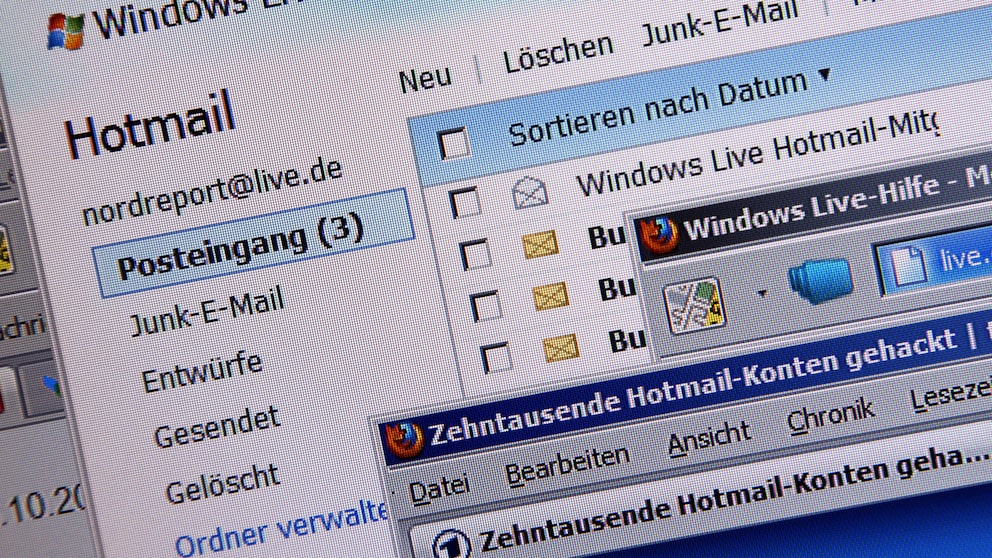
The internet is familiar with various indicators and codes that serve as synonyms for certain areas. Currently, the name change from Twitter to X is causing a stir. Many internet users associate the letter X more with the red-light districts of the World Wide Web. Similar thoughts emerged in 1996 with Hotmail.
However, developers Sabeer Bhatia and Jack Smith had a completely different direction in mind. The name of the new service alludes to the then relatively unknown abbreviation HTML–HoTMaiL. Two years later, Microsoft bought Hotmail for $400 million, leading to a 15-year success story.
Along with RocketMail (later Yahoo Mail), Hotmail was one of the first webmail services. At the time of its launch in 1996, it was common to use the email service of one’s own internet provider. Webmail, on the other hand, promised freedom from providers and the ability to access emails from anywhere in the world. Within just one year, the service attracted 8.5 million users.
Overview
Also of interest: Can the Boss Read My Work Emails?
Hotmail Initially Without Competition
Hotmail was one of the first major email providers at the time. With Microsoft’s entry, interest skyrocketed. From an initial 12 million users, the number rose to over 400 million at its peak.
Microsoft didn’t have to do much for this success initially. Of course, the well-known name helped as a draw. Technically speaking, there was little ‘hot’ about Hotmail. Technical shortcomings later became just one of the reasons why Hotmail ran into troubled waters.
As early as the early 2000s, reports surfaced that a hacker had bypassed Hotmail’s already weak access restrictions with just a few lines of code. The online thief stole the credit card numbers of unsuspecting Hotmail users.
As a result, similar stories reinforced critics’ claims that Hotmail did little to protect user data.
Also of interest: Sold only three times! The biggest flop in Microsoft’s history
Gmail Overtakes Hotmail
Serious competition only emerged in 2004. That’s when Google launched its email service, Gmail. At that time, the search engine was just climbing to the top of the most internet searches–ahead of Yahoo. As befits an emerging internet giant, Google equipped its mail service with several additional features that suddenly made Hotmail look quite outdated.
Microsoft responded to the powerful competition by sprucing up its own Hotmail service. In 2005, Microsoft introduced its new online service, Windows Live Hotmail. The service was originally supposed to be called Windows Live Mail–like the corresponding email client for Windows 7. This name was intended to be more serious, but it confused beta testers, so Microsoft kept the old name.
The new Hotmail also came with storage that grew with the user. Although there were limits, they were “so large that you probably won’t even come close.” This was Microsoft’s response to Gmail, which from the start attracted users with one gigabyte of free storage space.
Although the renaming of Hotmail initially didn’t work out, doubts spread within Microsoft about whether the name Hotmail still fit a globally operating IT company. As a result, Microsoft continued to experiment. In 2012, the company launched a beta test with Outlook–a new email service similar to the well-known client, to which Hotmail users could switch for free.

Outlook Sends Email Content to Microsoft–But This Goes Unmentioned in the Test

What Happened to MSN Messenger?
Hotmail Puts Microsoft Logo in the Spotlight
By the late 2000s, it was known on the dark side of the World Wide Web how to use Hotmail addresses as spam generators. This development increasingly posed problems for Microsoft.
In fact, the somewhat disreputable name was now threatening the future of Microsoft’s email service. Email addresses like jaqueline@hotmail.com or longjohnsilver@hotmail.com appearing more frequently online put the Microsoft logo in the spotlight.
Many users also turned away from Hotmail. The service’s name had become too sexualized and thus unsuitable for serious purposes.
It wasn’t until 2012 that Microsoft finally decided to change the name Hotmail. It had already become apparent which direction the company was heading. Therefore, the new name Outlook for Microsoft’s email service surprised no one.
Outlook stands for a straightforward mail program and message management. Since 2013, all former Hotmail accounts have been converted. Over the years, Microsoft has added a few extra features to its service with the change. For example, Skype is now an integral part of the Outlook world, as is the Microsoft Office package.
Top Email Providers in Germany
In Germany, according to Statista figures from 2022, completely different email providers dominate. Here, the services of Web.de and GMX lead by a wide margin, each with 25 percent. Both providers now belong to the 1&1 group. Outlook only appears in fourth place on this list. Microsoft can certainly handle this ranking–as Outlook is widely used for professional purposes. Overall, the acquisition of Hotmail has been a good business for the IT company, despite the (not actually) suggestive name.