

November 8, 2025, 3:07 pm | Read time: 3 minutes
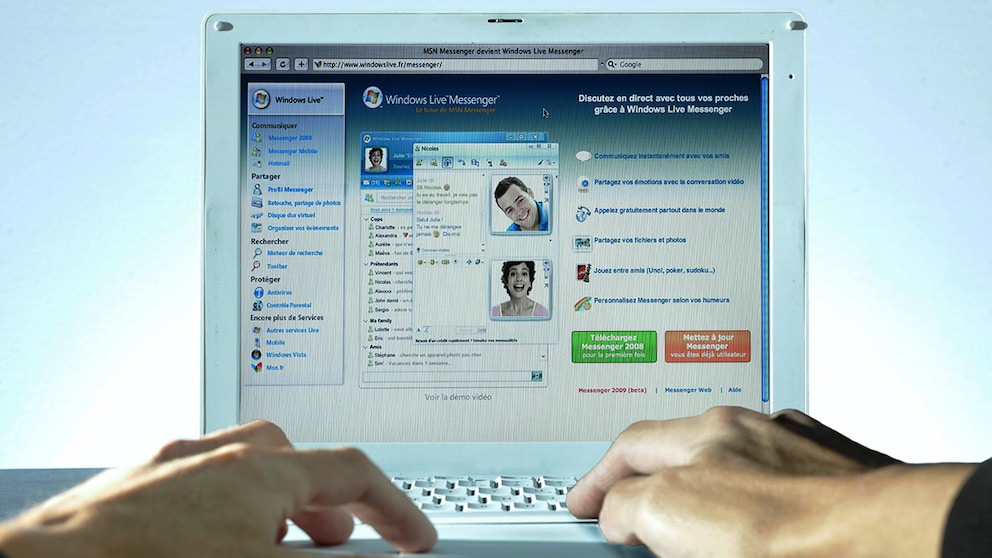
Instant messengers have become a staple in our daily lives—specifically on smartphones. But think back a few decades: You had to sit at a PC to chat. And you probably had MSN Messenger open. After its launch in 1999, the service quickly became one of the most popular communication programs of its kind. TECHBOOK tells its story.
Chatting in real-time—in the late 1990s, this was an incredible innovation! The first services to enable this type of communication were ICQ, founded by the Israeli company Mirabilis in 1996, and the instant messenger from the internet service provider AOL, which launched the following year. In July 1999, Microsoft entered the competition with its own service: MSN Messenger. It soon became a globally popular and widely used service—by the mid-2000s, it had more than 300 million active users, as reported by “Yahoo Finance.”
From MSN Messenger to Windows Live Messenger
If you paused because you remember it, but “Microsoft Messenger” doesn’t sound quite right, you probably knew the service by its later name, Windows Live Messenger. It adopted this name in 2005. The goal of this change was to better integrate the brand into the emerging Windows Live ecosystem at the time. This also included the email service Hotmail and the file hosting software SkyDrive.
The renaming also came with visual and technical modernization. The former MSN Messenger, now Windows Live Messenger, could be used for group chats and video calls, and games and connections to social networks were integrated. This was well received. After 2005, the user base initially continued to grow. But towards the end of the decade, it began to decline.
Microsoft Announces the End of Skype

What happened to Napster, Second Life and Co.
Smartphones Soon Made MSN Messenger Obsolete
Starting around 2007, smartphones conquered the mass market. Mobile apps like iMessage, WhatsApp, Facebook Messenger, and others made it easy to chat on the go, making desktop-based services less attractive. The user numbers for MSN Messenger noticeably declined from 2008, 2009. Microsoft had no choice but to recognize that users were increasingly switching to mobile and cross-platform services.
The End of an Era: From Messenger to Skype and Teams
By this time, Skype was already well-established for internet telephony and video calls. In 2011, Microsoft purchased the service, which started in 2003, for about $8.5 billion. This was the most expensive acquisition in the tech company’s history at that time. Microsoft aimed to transfer the user base of Windows Live Messenger to Skype to create a unified service supporting chats as well as audio and video calls. In 2012, Microsoft announced the impending shutdown of its older messenger. It was finally discontinued in favor of Skype in 2013.
Even Skype was slowly but surely considered technically outdated. In March 2025, it was permanently shut down and transitioned to Microsoft Teams.