

February 19, 2023, 3:51 pm | Read time: 4 minutes
It should sound as if you’re in the recording studio or at a concert: 3D audio. But how does it work? What does it cost? And is this technology actually worth it for music streaming?
The listening experience of live music is hard to replace. Or is it? At least that’s what a technology called immersive audio streaming promises. 3D audio or spatial audio are other terms for it, used largely interchangeably.
Sound Objects Placed Freely in Space
3D audio is like the big brother of surround sound. While surround systems like 5.1 or 7.1 carry the number of speakers in their name, 3D audio is not tied to a specific number of speakers.
Instead, it’s about sound objects that are placed or moved freely in space, always adjusted to the available speakers. And although 3D audio was originally developed for film, the concept is also supposed to work with music.
What does it bring? “More spatiality, more depth, you can perceive the instruments more distinctly,” says Munich-based 3D audio producer Martin Rieger. “You feel like the musicians are sitting around you.” At home, this can work with just a single soundbar or a Wi-Fi speaker, as long as they are 3D-compatible.
Devices Must Be Compatible
This also applies to headphones. Additionally, you must pay attention to the 3D compatibility of the player. Older smartphones or tablets may not be compatible with 3D audio formats.

There are several formats for streaming 3D music: Sony 360 Reality Audio and Dolby Atmos Music. “The former is based on a codec developed by the Fraunhofer Institute,” explains Rieger. Additionally, with Sony’s “Headphones Connect” app, it’s possible to further enhance the immersive listening experience through personalization, taking into account the individual’s ear shape into account.
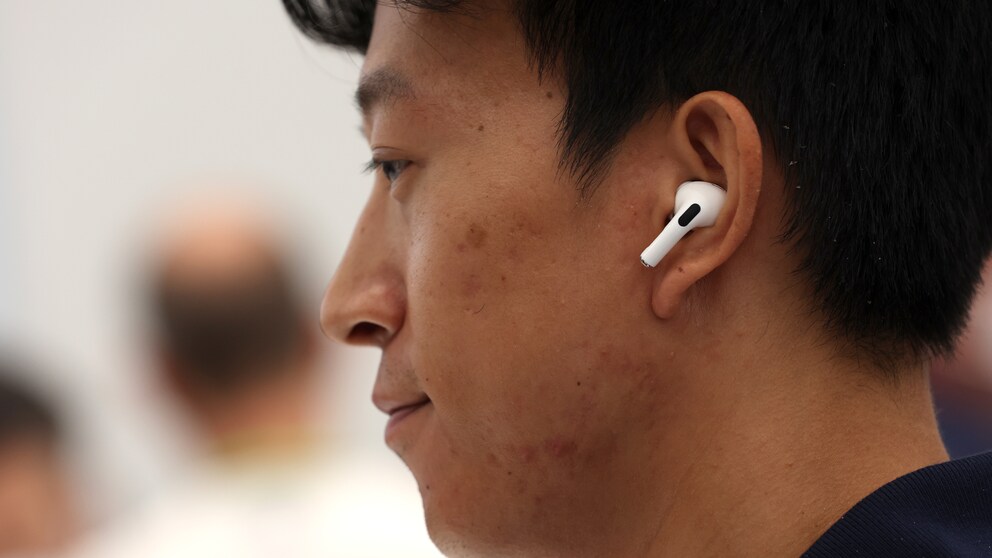
U.S. company Apple also offers its own immersive audio technology with Spatial Audio–known as 3D audio in Germany. It is compatible with some AirPods and Beats models, newer iPhones and iPads, Macs with Apple Silicon, and Apple TV. The unique feature of Apple’s implementation of 3D audio is the interaction between headphones and playback device. Spatial Audio can track the user’s head movement and adjust playback accordingly.
New and Old Albums in 3D
Dolby Atmos, on the other hand, comes from the cinema and home theater sector. “It was probably only a matter of time before the music market was tackled,” says Rieger. Sony and Dolby are working with various major labels to offer new albums, as well as older music, for streaming in the 3D format.
However, not all music lovers are convinced by 3D audio. “It’s just another attempt to sell something new to tech enthusiasts without insight,” says Wolfgang Saul, owner of a hi-fi studio in Oberhausen. 3D audio is “a great idea in theory,” but not necessary for perfect sound.
Saul is an advocate of two-channel music playback. His credo: “Stereophony shows us the three-dimensional world in a natural way.”
Also interesting: Nokia introduces improved call technology

For the First Time, the Battery in These Sennheiser Headphones Can Be Replaced

Netflix Now Offers Cinema-Quality Sound With New Audio Feature
3D as a Genre Question
Even Martin Rieger, who works intensively with this technology, limits it in terms of music: “There are many tracks that sound better in stereo than in 3D.” Not every genre fits as well with 3D audio as jazz or classical, according to the expert. However, various pop or electronic exceptions confirm the rule.
This likely includes “Kraftwerk 3D,” produced by Tom Ammermann, who is considered a pioneer of immersive audio. “It was also my inspiration to produce the album in 3D; initially, we had only thought about 7.1,” says Ammermann in the “Sound & Recording” podcast about the Kraftwerk live album.
And What Is Hi-Res Audio?
Another trend in music streaming concerns quality. On one hand, it’s about Hi-Res, a shortened form for High Resolution, which refers to high-resolution music data that is supposed to exceed CD quality. On the other hand, it’s about compressing these data losslessly.
Those who want 3D or Hi-Res from music streaming services usually have to pay between 15 and 20 euros per month for a corresponding subscription, instead of the usual around 10 euros. In return, providers promise recordings up to studio quality.
However, lossless sound quality is not necessarily for the masses, says Martin Rieger: “With high MP3 quality, you’re already very close to lossless audio. In a blind test, most people wouldn’t be able to perceive the difference.”