

April 6, 2026, 2:12 pm | Read time: 5 minutes
Ever heard of the brand Rollei? If not, ask your parents, or maybe even your grandparents. More than a century ago, Rollei shaped photography: With iconic cameras like the Rolleiflex, the company was long considered one of the most innovative manufacturers in the industry. And the traditional brand still exists today. TECHBOOK looks back at the history of the camera manufacturer founded in Braunschweig, which was at times an impressive success story–from its beginnings to the present.
It should be noted that the company did not initially bear the name Rollei. It was founded in 1920 in Braunschweig as Franke & Heidecke, named after the two founders–Paul Franke and Reinhold Heidecke–as was customary at the time. The goal was to develop high-quality roll film cameras for professional needs. In the early years, the company primarily produced roll film and stereo cameras, including models like the Heidoscop, some of which are now exhibited at the German Camera Museum. Today, old Rollei cameras are also valuable collector’s items. On the Rollei website, you can learn more about the key milestones in the company’s history. The company’s real breakthrough came in 1929, which also had a significant impact on its branding.
The Emergence and Breakthrough of Rollei
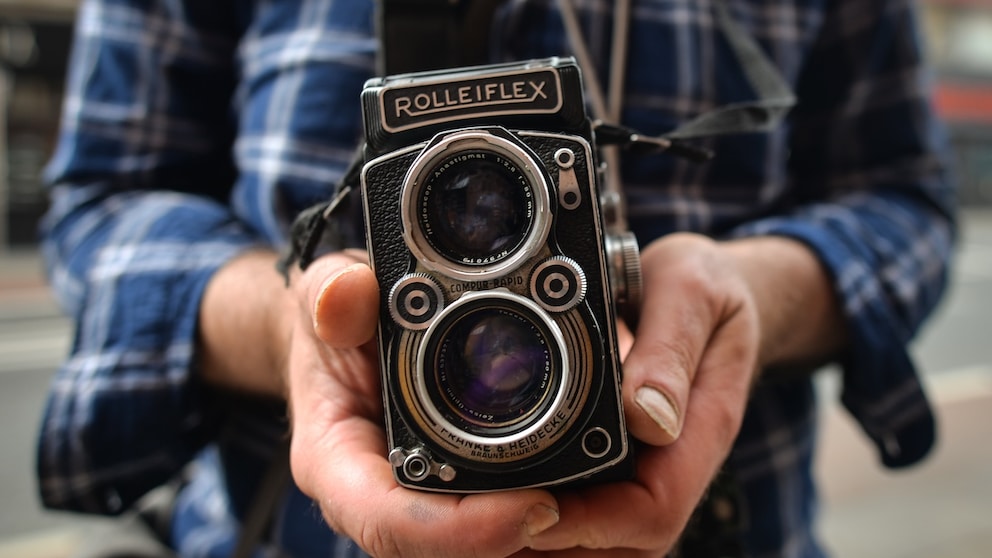
This refers to the introduction of the Rolleiflex (see large photo above). The twin-lens reflex camera immediately attracted attention–its image quality was exceptionally high, its construction robust, and its innovative handling quickly won over photographers. They soon referred to it simply as “Rollei.” The product became an international success and shaped the company’s image for decades. However, it wasn’t until 1962 that the company responded by changing its official name to Rollei-Werke, Franke & Heidecke. Colloquially, only part of this name caught on: the simple Rollei. Today, the old founder name Franke & Heidecke only appears in historical contexts.
Rollei Products Beyond the Famous Rolleiflex
In the years following the launch of the Rolleiflex, the company continued to grow. Between the 1930s and 1940s, the Rolleicord was developed for amateur and semi-professional photographers, more about which can be found on the German Camera Museum website. It was a simpler version of the twin-lens reflex camera, or TLR. TLR cameras have two vertically aligned lenses: one for capturing the image on film and one for the viewfinder. This allows users to continuously view their subject. The Rolleicord used medium format film (about 6 × 6 centimeters)–significantly larger than 35mm film, for sharper, more detailed images. Compact and easy to use, the camera was ideal for hobby photographers.
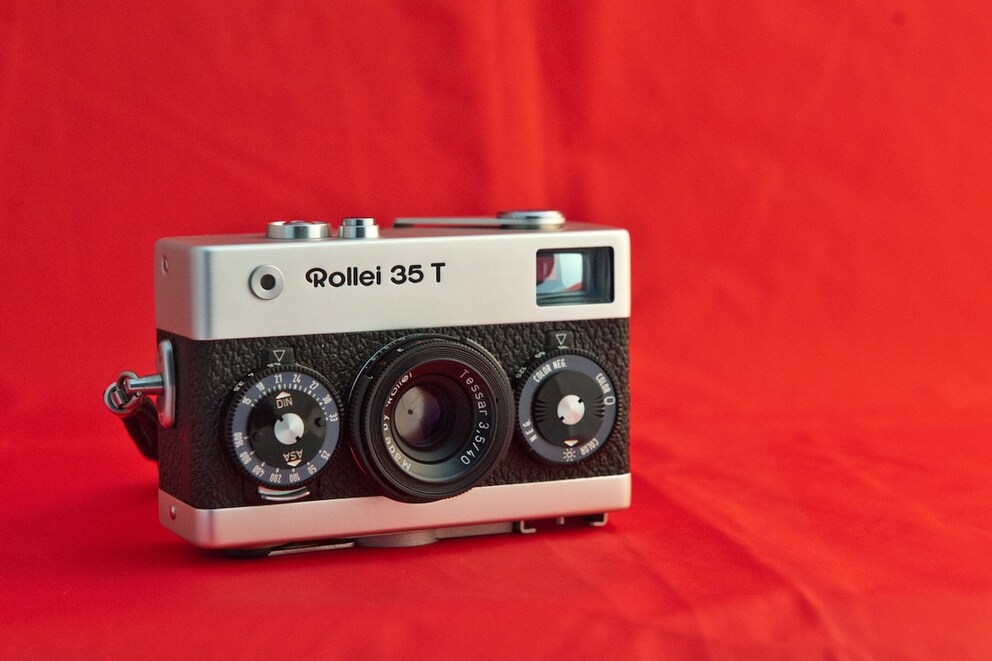
The next real product innovation after the Rolleiflex was the Rolleimarin in the 1950s: an underwater housing for the Rolleiflex that opened up entirely new photographic possibilities. Meanwhile, the Rolleicord remained popular as a compact TLR camera among beginners and semi-professional photographers. Finally, in the 1960s, Rollei introduced the Rollei 35, a revolutionary 35mm camera. Smaller than a letter-sized sheet of paper and extremely handy, it quickly became a bestseller.

What to Know About the Manufacturer GoPro

Kodak on the Brink of Bankruptcy After 133 Years
Expansion and Associated Challenges
Soon, Rollei expanded its international presence. To serve the growing Asian market, the company opened a production site in Singapore in the early 1970s. At that time, it was considered a technological leader in the industry. However, the competitive pressure also became increasingly noticeable. Japanese manufacturers (such as Canon, Nikon, and Minolta) scored with highly modern, smaller, and comparatively affordable 35mm cameras with autofocus and modern electronics. In contrast, Rollei’s adaptation to new trends was slow, and the German competitor could not keep up.
The following decades were marked by internal changes. Until the 2000s, the company’s ownership changed several times. Rollei increasingly lost its position as a leading camera manufacturer and scaled back its classic production in Germany. However, while the former core competency, camera manufacturing, shrank, the accessories business grew: tripods, flash units, bags, and other photography accessories maintained the company’s market presence. “Rollei has reinvented itself,” it was said in a 2010 press release on the occasion of the company’s 100th anniversary.
Rollei Today–Accessories Instead of Cameras
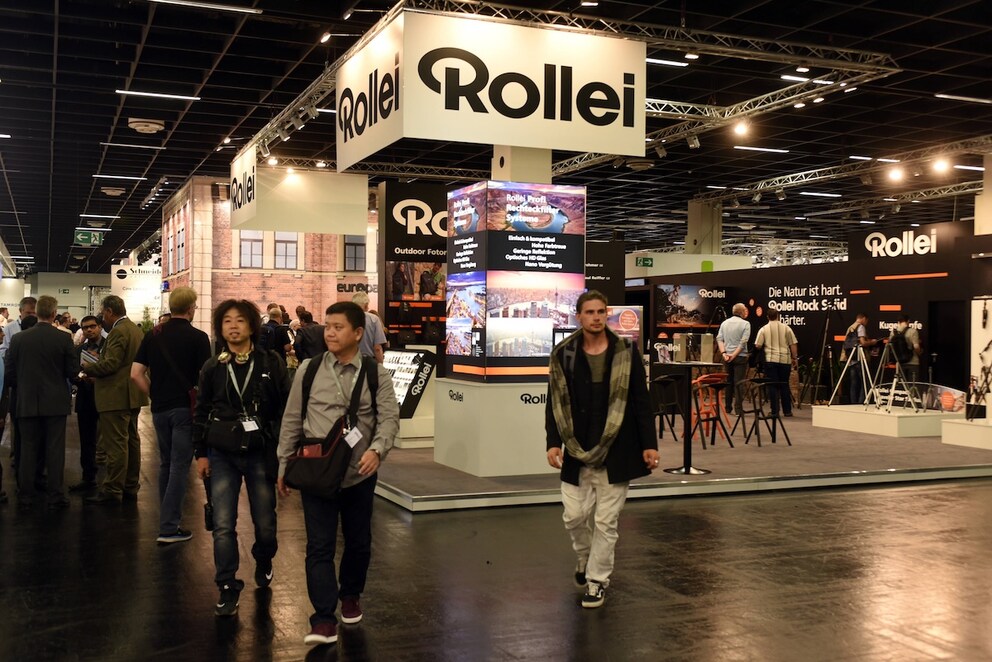
The year 2010 marked a fundamental realignment of the traditional company Rollei. As early as three years prior, in 2007, RCP Technik GmbH began licensing the brand. With the later acquisition of worldwide trademark rights, the young company fully took over Rollei and relocated the brand to Norderstedt/Hamburg. Since then, the focus has been on photo and video products, action cams, tripods, filters, and flash units, with which Rollei engages professionals and other interested parties at trade shows.
The classic camera models of the past are now only historical icons; the Rollei brand today primarily stands for photography accessories and creative applications, no longer for camera manufacturing.