

March 14, 2024, 6:45 am | Read time: 6 minutes
Even before virtual reality was all the rage, Google released its Google Glass. What became of the ambitious AR project?
In innovation hubs like Silicon Valley, there’s always a feverish search for the “next big thing.” In 2007, Apple’s iPhone was considered such a disruptive innovation. By 2012, Google saw its moment and introduced Google Glass–a pair of glasses with augmented reality elements that now seem almost retro-futuristic. The hype and hopes surrounding this product were high, but what followed was a story of failure. While Apple is making headlines today with its Apple Vision Pro–both positive and negative–TECHBOOK traces the path of Google’s once-promising project.
Overview
The Glasses from the Sci-Fi Movie
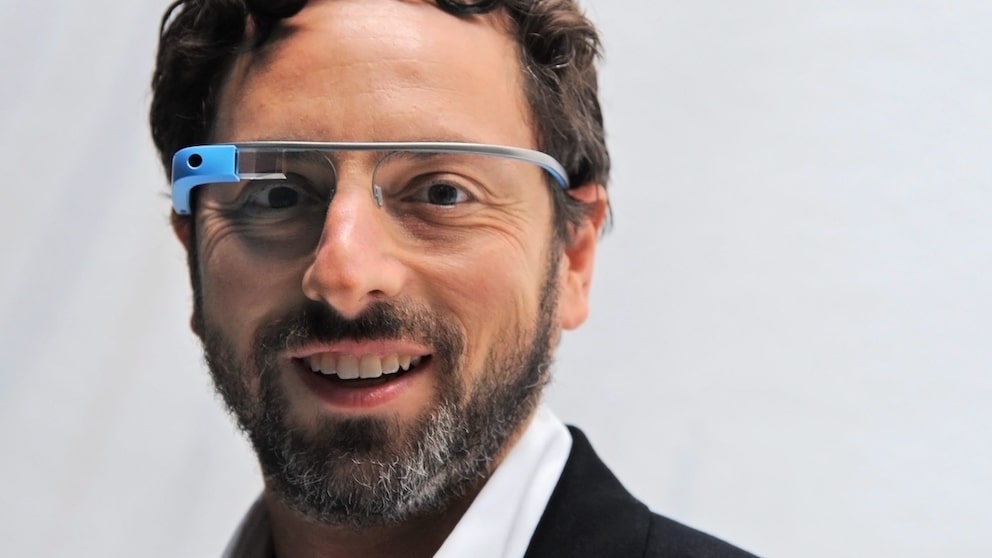
Unlike today’s VR headsets, which are about the size and shape of ski goggles and have considerable weight, Google Glass was designed to look like classic glasses. A small display on the frame projected information directly into the user’s field of vision, such as navigation or weather data. Google Glass was originally an AR device. Augmented reality refers to a live view of the real world enhanced by digital elements.
Virtual reality (VR), on the other hand, describes a fully immersive experience where reality is replaced by a simulation. Today’s Apple Vision Pro offers both VR mode and mixed reality, where digital content blends with the real world, allowing interactions. Compared to today’s developments, Google Glass is more of a precursor model, as AR offers fewer interaction possibilities than VR and mixed reality.
In 2012, however, the AR concept caused quite a hype. Google Glass allowed app control through gestures, facial expressions, and voice commands, keeping hands free. Like with the Apple Vision Pro, developers identified the workplace as the main market for the smart glasses, as such devices were called back then. For example, technicians could have maintenance and repair instructions displayed in their field of vision while working.
In the private sector, the glasses were meant to free users from the annoying glance at their smartphones and offer better user comfort. While traveling, a glance through Google Glass was supposed to be enough to translate foreign-language menus or signs. Yet, despite the revolutionary concept that excited many in 2012, Google Glass never made it to the top of the success ladder.
Pioneering Work vs. Market Conditions
The most obvious problem with Google Glass was that it never really hit the open market. Google co-founder Sergey Brin often wore the smart device during his public appearances. However, the glasses were only available for sale starting in 2014–and even then, only in limited quantities. Priced at a proud $1,500, Google Glass could only partially convince in various hands-on tests.
For instance, Spiegel in 2013 could only obtain one of the 2,000 developer models of the smart glasses through a detour via c’t colleagues. Despite positive wearing comfort, the test stated: “The camera delivers below-average quality, and the battery life–in our test, it was two hours–is unacceptable.” When the glasses were somewhat ready for sale in 2014, a new hurdle emerged: the pronounced privacy concerns of the American public.
The Privacy Problem of Google Glass
Even back then, Google Glass was technically capable of combining photo and video recordings with facial recognition or health functions, such as pulse measurement. This led privacy advocates to fear that wearers could scan and categorize other people without their knowledge.
While the police could have benefited from identifying suspects from wanted lists, this function–whether used by the police or a private individual–is a significant intrusion into the personal rights of others. The fact that these functions seemed more than suspicious to many people was not just due to general technology skepticism.
Additionally, this skepticism sometimes manifested in physical altercations. Just as self-driving cars are repeatedly vandalized today, wearers of Google Glass were attacked multiple times in 2014, as Business Insider reported from personal experience. Movie theaters and casinos banned the glasses from their premises. In the heated debate, the step to the pun “Glassholes” was not far.
All the expert criticism and public fears seemed to have taken the wind out of Google’s sails, as the lifespan of the first Google Glass was limited. From April 2014 to January 2015, the smart glasses were only available in the U.S. through the Google Beta Program in limited numbers. Eventually, then-Google CFO Patrick Pichette labeled them a flop shortly after sales ended.

What’s Behind Apple’s Mixed-Reality Headset Vision Pro
Apple Pulls the Plug on Tim Cook’s Biggest Flop
From a Tech Gadget to a Professional Tool
However, Google didn’t want to completely abandon the smart glasses project. After the sales stop in 2015, Google Glass was to be further developed under the leadership of iPhone inventor Tony Fadell. After all, good things take time, and even now, ten years later, the current VR headsets from various brands have not reached their final stage of development. However, Tony Fadell didn’t seem to be particularly successful either, as he left the company again in June 2016.
The last glimmer of hope came at the end of December 2015. At that time, “real” product photos of the successor to Glass, the so-called “Enterprise Edition,” appeared for the first time–published by the U.S. Federal Communications Commission (FCC). Google had moved away from glasses for everyone and focused on a pro edition.
The notable features of the photos were a foldable frame and a significantly larger display. Rumor had it that the Google Glass Enterprise Edition was to be built more robustly, equipped with fast Wi-Fi and an Intel Atom processor, making it less prone to overheating and longer-lasting in terms of battery life. Google primarily targeted the medical and industrial sectors, but even here, sales between 2015 and 2019 did not achieve great success.
The End of Google Glass Enterprise Edition
On March 15, 2023, Google finally discontinued the sale of its Glass Enterprise Edition 2 and the associated software support. Google had worked on its AR glasses for more than ten years, which can certainly be considered a pioneering project in the context of its time. Whether further research behind the scenes will also end remains open. Meanwhile, competing companies like Meta and Apple are trying to shape the future with VR headsets. They could certainly learn from the weaknesses of Google Glass.
To be successful in the long term, VR sets need to become financially affordable for both individuals and businesses. Beyond the initial beta phase, the software and applications should be practical and easy to maintain. Additionally, Meta, Apple, and others must address the same privacy questions that Google faced ten years ago. Even if the debate is perhaps not as heated today, the risks remain just as high.